Part 18 of the Adult/Child saga.
“When I laid down on my bed
I heard voices in my head
Telling me now, ‘Hey, it’s only a dream.’
The more I thought of it, I had been out of it
And here’s the answer I found instead:
Found out it was in my head, found out it was my head…”
In 1968, sometime shortly after Manson’s supposed session in Brian Wilson’s studio, Brian was briefly committed to a psychiatric institution. Rumors persist that it was Gateways Hospital and Mental Health Center, where clinical director Sol Samuels conducted pioneering research on the use of lithium to treat manic depressive patients. Electroshock therapy was another tool utilized at the hospital, and Thorazine and Stelazine rounded out the classic anti-psychotic drug cocktail. Samuels’s assistant in 1968: Eugene Landy1.
Mike Love’s life was its own kind of a mixed up mess around this time, as he recalled in his autobiography. The center in his life was his new found practice: Transcendental Meditation. Unfortunately, between his extended sojourn with The Maharishi, his typical commitments to the band, and his incorrigible womanizing, his wife decided she had had enough.
In 1968, after I had been at a studio session at Western Recorders, Suzanne met me outside, with Hayleigh in her arms, and there she told me that she wanted to end the marriage. Hayleigh wasn't even two yet, so she didn't understand what was being said, but she knew something was terribly wrong. I'll never forget the look on her face, as if something had crashed all around her. I'm sure my face didn't look much better.
Christian was a baby at the time, and I now have a better appreciation for how much stress Suzanne was under. I was traveling constantly, still free to do what I wanted to do, while she was home with two young children. Those roles may have been the norm in that era, but she had every reason to resent how they played out in our marriage.

I was less forgiving about how the actual process of the separation and divorce played out. Suzanne and I were still living together <...> when she told me she was having an affair with Dennis. I'd be a hypocrite if I said I was angry over her infidelity. I had had my dalliances as well. But I was outraged that she was sleeping with my cousin. More than outraged, actually. Seething.

For Dennis (as he later told me), it was an act of vengeance. I had briefly dated his first wife, Carole, before she had met Dennis, and Dennis resented that. It was just part of our insane competition over women. Now Dennis was going to return the favor and sleep with my wife, tit for tat. And Suzanne obliged.

The day Suzanne told me about the affair, I tried to maintain my perspective, but I couldn't, and the more I thought about it, the angrier I got feelings of disbelief mixed with fury. So angry that I really wanted to kill both of them; so angry that I sat in our den and thought of how I would do it. These were horrible, lethal thoughts. My wife and my cousin, both dead.
I turned to meditation, and in this room all by myself I shut my eyes and began to cool down. At times the anger resurfaced, but it didn't get the better of me. I kept meditating and concluded that that was them, that's what they wanted to do, but it wasn't me and I didn't want to involve myself with them. I continued to meditate until the anger slowly drained from my body. And finally I was relaxed.

I have a certain amount of empathy for people in prison. I can understand how emotions can get the better of you and lead you into doing something terrible. Without TM, I might have done something terrible.
The worst part of Suzanne's affair with Dennis wasn't even the affair. Terry Melcher later told me that after we separated, Suzanne and Dennis would sometimes go out and leave our two young children with a babysitter. On one occasion, the babysitter was Manson disciple Susan Atkins.

I never sought confirmation from Suzanne or Dennis, but Terry was one of the most trustworthy people I knew, and he would not have fabricated such a story. <... Atkins> was convicted of participating in eight murders and was sentenced to death. And she was our babysitter.

"Sometimes 'the Wizard' frightens me. The Wizard is Charles Manson, who is a friend of mine who thinks he is God and the devil. He sings, plays and writes poetry and may be another artist for Brother Records.” - Dennis Wilson, 1968
It was reported in <Record Mirror> that Dennis lived in a house with seventeen women somewhere in Los Angeles. What was the basis of this commune and what exactly happened in it?

"The house was in Pacific Palisades but there were hordes of people with binoculars and the police got the idea that it was an orgy and drug scene <...> and we had to move. Now we have an old movie lot owned by a blind man who lets us run the place. We try to make it productive by helping anyone we can who looks like they need it.” - Dennis Wilson, 1969

Mike Love recalled the time him and Bruce Johnston were introduced to Manson and his Family by Dennis Wilson, when they were invited to his place for dinner and dessert:
Dennis took Manson out to nightclubs, introduced him to people in the industry, and proselytized to me and the other Beach Boys about his new guru's wisdom and depth as well as his musical talents. Bruce Johnston and I finally drove out to Dennis's house to meet his new roommates over dinner. That itself was interesting.
My most vivid memory of Manson occurred after dinner. He told us to come into the den, where he turned on a strobe light and revealed all of his girls lying there, naked. He started passing out LSD tabs and orchestrating sex partners. I love the female form, but this was too much even for me. The place was hot and claustrophobic, so I walked out to take a shower.

No sooner had I stepped under the shower-head than one of the women walked in with me. It was "Squeaky" Fromme, who <...>  thought this would be a fine time to take a shower with me, but before I could tell her to get lost, Manson himself arrived.

He looked up at me with those dark, beady eyes and said, "You can't do that."
 "Excuse me?"
 "You can't leave the group."
 "I'm really sorry, Charlie. But Bruce and I have to get back to the studio."
 We got the hell out of there, and as we pulled out of the driveway, I thought, Denny, you've got a real nut case for a roommate now.
“Squeaky”, as you may remember, had a different recollection than this, claiming the closest she ever came to Mike was 10 feet, but also claiming that the man who wrote “I Write the Songs” was totally ready to strip down and get down at “the orgy”.

It wasn’t just California girls and Beach Boys getting sucked into Manson’s orbit, he was beginning to cultivate a loyal male following as well. He would somehow convert Dean Moorehouse from a strait-laced Methodist preacher on a mission to retrieve his teenage daughter from the family into one of his most devoted acolytes when Moorehouse arrived at Wilson’s place in the summer of ‘68.
Paul Watkins was the one of the next noteworthy guys to come along. He had known the Family early on in Topanga, and reunited with Manson when they were splitting time between Spahn Ranch and Dennis’s place.

Watkins recalled the first time Manson took him to meet Dennis:
He seemed to be easygoing, but his jovial exterior betrayed a subtle sense of agitation. Still in his early twenties, he'd been married, divorced, and was the father of a child. <...> When I first met him he came on like a polished playboy bachelor — glib, loose-jointed, and hip. At the same time (unlike the rest of the Beach Boys), he seemed accessible and amenable to suggestion — less satisfied, perhaps, with his own success.

Earlier that summer he had met and befriended Charlie. Charlie seemed anxious that I meet him. Dennis was standing on his porch, barefoot in a pair of Bermuda shorts, when we drove up and got out of the truck. Charlie introduced me to Dennis and we all went inside the house.

I was blown away by the size and beauty of the estate, once the home of Will Rogers. (If "success" was gauged by material extravagance, Dennis sure as hell had made it.) <...> In addition to his Rolls Royce, Dennis had a new candy-apple-red Ferrari, a fine piece of machinery that Steve Grogan (Clem) and | were to total three weeks later on a drive-up to Spahn's Ranch.
At the time, I viewed Dennis as an all-American middle-class surfer kid who suddenly made it rich and didn't know quite how to handle it. He was a prime target for the Family. Charlie <...> really went to work on Dennis, made him feel guilty for possessing so much wealth, urged him to renounce it in exchange for a simple communal life based on love: Charlie's love.

Because Dennis liked Charlie's music, he was willing to help him and arranged for the Family to hold recording sessions in his brother Brian's Beverly Hills studio. Dennis was equally intrigued with Charlie's impoverished childhood, his criminal record, and his eclectic free-lance spiritual rap. As Dennis once remarked to me, "Charlie is the most tuned-in dude I ever met."
Were it not for the fact that Dennis was deeply committed to the entertainment establishment, committed to people who had their own designs on his dangling purse strings, he might well have renounced everything and joined the Family.

Watkins, like Dianne Lake, recalls the overlap of Spahn Ranch with the Family’s stay at Dennis’s. He remembered hanging with Steve “Clem” Grogan at the ranch in August of 1968, after a memorable experience with Dennis’s Ferrari.
Clem <...> acted most of the time like some bumbling vapid-eyed hippie who didn't care what happened. It wasn't that Clem was dumb, it was just that he adopted Charlie's program of playing the idiot (playing beneath the awareness of people) so completely that he became an idiot.

Still, he was always a likable character-unkempt, lanky, and awkward. He had long blond hair, freckles, and was fair-complexioned. Before joining the Family (shortly before I arrived at Spahn's), he'd lived with the hippies in the back ranch house. He played the guitar and sang pretty well, and <...> he could ball his brains loose.

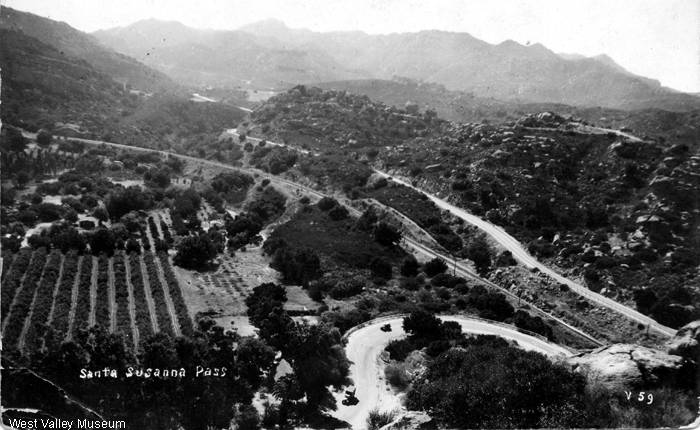
We were both in good spirits that morning, feeling lucky to be alive: the day before, we'd borrowed Dennis Wilson's Ferrari, to make a garbage run and then to drive around the mountains near Spahn's. Clem was at the wheel, hauling ass up the mountain on Santa Susana Pass, speed-shifting and burning rubber on the curves. We came blazing up the hill into the steepest curve on the grade, doing about eighty.

Clem was beside himself: "Yeeya-hoo! he bleated. I knew instinctively that we'd have to accelerate to make the turn. "Go for it, Clem...tromp the son of a bitch!" We boogied into the turn and my heart leaped into my throat. "Yeeow!" Clem bellowed. The tires squealed and Clem lost it, hitting the brakes. We skidded onto the shoulder, then spun out into the middle of the road before smacking into the guardrail. I thought it was all over. But we bounced off again and came shuddering to a halt in the middle of the road.

The car looked like a crushed tin can, nothing left but a twisted mass of glistening metal and broken glass. Miraculously, we were both unhurt. We climbed out through the windows, then hiked back to the ranch. Dennis and Charlie were sitting under a tree in front of the ranch house along with Brenda, Snake, and Sandy, when Clem and I ambled down the road.

"Hey, man," Clem said to Dennis. "Like we kinda had an accident in your car..."

Dennis lay supine on the ground beside Charlie. He raised himself to his elbows. "What happened?"

"Totaled it, man," I said. "Completely."

The cast of characters at Spahn's Ranch that summer was awesome. The day I arrived there were four girls living with Charlie: Snake, Brenda, Squeaky, and Sandy. Two days later, <five more girls> returned from Mendocino, swelling the female population to nine. The males <...> included <... Clem>, and a good-natured Texan named Charles (Tex) Watson, who had been living with Dennis Wilson before joining the Family shortly after my arrival.

Tex was twenty that July, one of the most affable, good-natured people I've ever met. An excellent carpenter and mechanic, he stayed busy keeping the Family vehicles in running order. He also served as a buffer between ranch hands and the Family. Being from the Lone Star State (McKinney), he spoke in a languorous drawl -"I jes come here t'see what was goin' on" and was able to relate to the cowboys on their own terms.

Tex Watson’s path from All-American college kid to failed wig entrepreneur to Manson Family member to life-in-prison would have probably gone a completely different direction if Dennis Wilson’s Ferrari hadn’t been totaled. Now Dennis himself was hitchhiking around LA, where Watson encountered him. He later recalled the life-changing pivot point it became in his own memoir:
Hitchhikers were pretty common on Sunset, and I pulled over to pick one up. When he <...> said he was one of the Beach Boys I was impressed. I remembered all those surfing songs banging out of my brother's room back in Copeville and grinned to myself, wondering what he would think if he could see me now - with Dennis Wilson taking a ride in my truck and explaining how he'd wrecked his Ferrari and his Rolls Royce so was having to use his thumb.
When we got to his house in Pacific Palisades he invited me in. <...> The first thing I saw when we came into the kitchen was a heavyset, bald-headed man with a big gray beard pouring down his chest, sitting at the table with a few girls. He introduced himself as Dean Moorehouse.

Over the next few months Dean and I would become friends, despite the fact he was twice my age. I was to find out that he'd once been a Methodist minister, that up in Ukiah, California, after the Family left San Francisco, he'd gone after Charlie, ready to kill him for seducing his daughter Ruth (the one the Family came to call "Ouisch").

Instead of killing him, though, he ended up worshiping Charlie as Christ, after Charlie turned him on to LSD. Since then, he'd given up whatever Christianity he'd once held and become a kind of wandering guru, teaching a lot of people in the film and music industries that true "awareness" and real "religion" came through opening yourself up with acid.

When people became aware, according to Dean, they could be free to die to themselves, to die to their egos. Then they would understand that Charles Manson was the reincarnation of the Son of God. Finding out all this came later, though. That night in the kitchen he was just a fat old man with a greasy beard, trying to look like a hippie.

Almost as soon as I came in he said there was somebody I should meet in the living room. I followed him. There <Charlie> was surrounded by five or six girls-on the floor next to the huge coffee table with a guitar in his hands. He looked up, and the first thing I felt was a sort of gentleness, an embracing kind of acceptance and love.

"This is Charlie," Dean said. "Charlie Manson."

There was a large ashtray full of Lebanese hash sitting in the middle of the coffee table, and pretty soon Charlie and Dean and Dennis and I were lounging back on the oversize sofas, smoking. Nobody said much. As we got stoned, Charlie started playing his music, softly, almost to himself.
Here I was, accepted in a world I'd never even dreamed about, mellow and at my ease. Charlie murmured in the background, something about love, finding love, letting yourself love. I suddenly realized that this was what I was looking for: love. Not that my parents and brother and sister hadn't loved me, but somehow, now, that didn't count.

I wanted the kind of love they talked about in the songs the kind of love that didn't ask you to be anything, didn't judge what you were, didn't set up any rules or regulations - the kind of love that just accepted you, let you be yourself, do your thing whatever it was- the kind of love I seemed to be feeling right now, sitting around <...> with a rock star and a fat old hippie and the little guy with the guitar who just kept singing softly, smiling to himself. It occurred to me that all the love in the room was coming from him, from his music.
Suddenly the girls came out of the kitchen and started serving us sandwiches they'd made organic, full of sprouts and avocado and cheese. It was as if we were kings, just because we were men, and nothing could make them happier than waiting on us, making us happy. We all lay back and listened to Charlie sing to us about love-make love to us and for us with his music. I'd never known such peace.

Late that night at my truck as I was leaving, Dennis smiled and told me to come by anytime, take a swim in the pool, whatever I wanted. I drove out to Malibu, knowing that what-ever had been going wrong in my life would be okay now. I'd found what really mattered: <...> Charlie Manson was the first person I'd met who really knew what love was all about.
I came back the next day to swim-and then the day after that. It seemed I was always having some reason to take Sunset into town, and on the way back to Malibu I'd turn up that long driveway. <...> Gradually the peculiar domestic situation at the house sorted out: Dennis leased it, but he spent a lot of time away on tour. While he was gone, Dean Moorehouse unofficially ran the place.

It turned out that Charlie didn't actually live there; he spent most of his time out at Spahn Movie Ranch, just coming into town every so often to see the girls, go to parties, and promote his singing career. Three or four Family women lived at the house, along with several other girls who were friends of Dennis's.
Dean Moorehouse took me on my first acid trip. Now it wasn't just the external world I saw differently. It seemed the LSD opened me up to what was inside me as well. <...> Again, there was no fear, no violence, just letting myself go with the changes, letting things slip away like glass beads falling slowly through my fingers.
When I started taking acid, Charlie was not an important figure in my life, not personally. But Dean talked about him constantly, was practically an evangelist for the "gospel according to Charlie," and the Family girls carried on the theme. They said that each one of us has an ego, a desire to assert ourselves and our existence as something separate and cut off from the rest of life around us.
We hang on to that ego, thinking that independent self is the only thing that lets us survive, thinking without it we'd perish. But the truth is that we all are one, all part of the same organic whole, no separate me or you, just ripples in the one wave that is life.
They kept urging me to join the Family, the life they had together with Charlie. Charlie, they said, had died more completely than anyone, not only in this life but long before, on a cross. In becoming one with him, in dying to ourselves so we could really unite with him, we could become one with love itself, with "God."
“Feel the vibrations and all the sensations.”
Every trip Dean and I took together, it all made more and more sense. But I still clung to my ego, my sense of self-sometimes in fear, sometimes in stubbornness. I wanted the love they were talking about, but I wasn't sure I could pay the price.
When Charlie came around, it almost seemed possible. When he looked at you and saw everything there was inside of you and loved you anyway, it seemed worth the risk. One day <...> I walked up to him and gave him the keys to my truck and said that it and everything else I had were his.

For years I'd struggled to accumulate all I could: the right cars, the right clothes, the right things that would somehow complete what I thought was missing inside me. Now I gave all that, everything I had, to Charlie.

Suddenly I felt very free. There was nothing tying me down, nothing I had to be responsible for. Charlie's girls had been right; material things imprisoned us, poisoned us, kept us going in the false sense of self that took away our freedom to die.
By this time, more of Dennis's friends had moved into his house, including Gregg Jakobson, who'd recently left his wife. One night on the way to a party two of them gave me my first sniff of cocaine. At first all it did was make my gums and nose numb, like going to the dentist, but then the rush came and once more life was better, "with a little help from my friends."
Life flowed on through a long easy summer. Then, in August, while Dennis was away on tour again, Dean started putting pressure on some of the women in the house to go to bed with him. Word got back to Dennis, and pretty soon his manager told us that the lease was due to expire and we'd all have to be out.
When Dennis returned to L.A. he avoided us, moving into a place at Malibu with Gregg, not far from the beach house Rich and I had leased. I had nowhere to go, so when Dean told me he had to drive up to Ukiah for trial on an LSD charge I decided to go along.
Until the problem with the women, Dean had continued to be a sort of spiritual advisor to Dennis, and he apparently still had that status with Terry Melcher, because he told me that Terry was loaning us his Jaguar XKE and a credit card for the trip north. We picked up the car one morning at Terry's house <...> at 10050 Cielo Drive. It was the first time I'd been to the house, but it would not be the last.

Dianne “Snake” Lake recalled Dennis’s visit to the Family continuing after their eviction from his old place:
Dennis may have moved out to get rid of us, but he still kept coming around to see us at Spahn Ranch with Gregg Jakobson. Charlie hadn’t given up on his music, and both Dennis and Gregg continued to encourage Charlie and give him hope that his songs could take him somewhere. Dennis and Gregg might have been stringing Charlie along because they didn’t want to upset him, but they genuinely seemed to care too.
None of us <in the Family> had any concept how to break into this world that Charlie had set foot into but couldn’t conquer. As was true of much of his life, he was on the outside looking in, not accepted, not respected, and it was beginning to wear on him. Even though he never said anything to us directly, I got the feeling he was no longer satisfied with garbage and flies
I know that Charlie had his fingers in a lot of things and was doing his best to cultivate contacts in the music industry who could help him become the success he believed he should be. He was reputed to be a drug dealer to musicians, but I never saw any of this directly. He was looking for ways to connect, and good drugs were always a draw.
He had been working on some new songs, and our nightly sing-alongs around the campfire were becoming less free-spirited and more like rehearsals. He would even stop in the middle if he wanted us to do it differently. We wanted it to be perfect for Charlie, so we would redo a chorus as many times as he needed us to do it.
Lake remembered how Dennis finally faded away from Manson’s scene:
Whatever Charlie’s musical future was going to be, eventually it was clear that Dennis would not be a part of it. Though Dennis kept coming by for a time, ultimately his visits stopped altogether. At the time it seemed easy enough to dismiss—after all, people dropped in and out of Spahn Ranch all the time, drifting in and out of our circle—but there’s little doubt that Dennis probably sensed the lack of stability in our scene and in Charlie.

Whatever connection he’d shared with Charlie and with us, however much he believed in Charlie’s potential, none of it was apparently worth the dangers that Charlie posed. <...> Dennis may have stopped coming around, but Charlie’s impact on his life was not going to disappear quietly.
“I once knew a man
Whose heart open you could see
Sadder than a dream
Is that he should pass us by
Sadder than the scheme
Is in the dreams within the sky”
– “I Once Knew A Man”
In 1969, a year after “Passing By” on Friends, Brian Wilson was about as down as you can get. His revival would come from an unexpected place: dear old Dad, Murry Wilson. Pops may not have thought their old songs were worth much more than his remodel job, but he still figured there was a chance for them to team up and kick ass again, especially if his genius was in the songwriting formula.
“Time will not wait for me. Time is my destiny. Why change the part of me that cries to be free? The love that passed me by, I found no reason why…”
Around the same time, Brian’s pal Tandyn Almer was laying down his own thoughts on time:
“Time won’t let me drag my feet anymore. I gotta make it if I can. I know I gamble with my love ‘cause I am sure there’ll always be another chance. But time, when it runs out, won’t ever come back.”
At that point, his career looked like it was in an upswing, with his first release as a solo performer appearing as a 45 rpm single, and an album’s worth of songs soon to be in the can. Today, Tandyn is long gone, and his entire recorded works beyond that one single were never released and don’t even seem to exist “in the can” anymore…
Charles Manson’s music career seemed to have hit its own dead end by the end of the 60’s, with that the recordings that made up the sole promo “Silverhorn” single somehow sneaking out of somewhere that may or may not have been Brian Wilson’s house. A year later, Manson would have an album of his recordings released, while Almer’s unreleased album would disappear for 55 years.
For Almer, his brief flush with the bottom rungs of fame faded quickly. He became one of those mostly-forgotten burnouts known for a hit song written for someone else, like “Eve of Destruction” author P.F. Sloan, who also sank into seclusion while living off royalty residuals from their big break. Almer broke away to Virginia in the mid-70’s, and by all accounts continued to record prolifically in seclusion. Those recordings may be lost for all time now…
Charles Manson’s path wasn’t to any kind of fame or success in the entertainment industry at all. He didn’t have an “Along Comes Mary” in him. By the time he “matured” as a songwriter, the days of groups looking for outside songwriters were mostly over. That his songs have been covered later is more of a morbid joke than an admittance that he wrote anything truly great.
Maybe if Kim Fowley didn’t already exist, that’s the kind of character Manson could have become, if a bit scragglier. He could have had his own recording career as a primitivist freak like Fowley, while taking advantage of young women and leveraging their talent under his control. But since Fowley was already dropping tunes like “Reincarnation” and writing and producing trip to hell records, all the while being a nasty, creepy perv, that slot was pretty well filled….
For Manson, fame wasn’t calling. It was the infamy of some of the grisliest murders ever committed that would define him. And it was that infamy that would get his music out to the world. Without unleashing the Hell of “Helter Skelter”, Manson would be one more “There used to be this guy…” characters that LA chews up and spits out on the regular.
Neil Young would probably mention him exactly the same way he does now, but with a less dark coda than “Revolution Blues”. He’d probably end his anecdote of the guy Dennis Wilson called “Wizard’ with something innocuous like “I heard one of the guys sleeping with his girls wrecked Dennis’s Ferrarri, so they all split for Death Valley and ended up at the old movie ranch where they used to film The Lone Ranger. Who knows what ever became of The Wizard and his family…”
Or perhaps we’ll just let Dennis tell it:
We would make clothes for those who needed them or give the money to charity. We might decide to do all our talking by singing to one another for a day. All of us gave what we had and had a good time. There is so much in the power of love.

This power is spreading. The evolution is continuing. Think of all the history we had to go through to get where we are; to find happiness. Those who fight, let them fight. I went through all that when I was a kid. Even then I knew it was wrong, but I was caught up in what was expected of me. <...> Now I am totally apart from violence. I'm never even approached by it.
“I can breakaway to the better life where the shackles never hold me down
I’m gonna make a way for each happy day as my life turns around”
Meanwhile, his pal “Lance Fairweather” (Gregg Jakobson) had this to say a year later to Rolling Stone:
I wanted Terry Melcher to meet Charlie and make this film of him. If we could sell the man, his music would emerge, so I wanted some backing for the film. I used to think of Charlie almost as a missionary who would take his people out and start communities.
And Terry was impressed the first time he went to the ranch. But the second time he was a little leery of Charlie and didn’t want to follow up the idea any more. Maybe it was the Randy Starr thing that scared him. See, the second time at the ranch Terry and I and Charlie were sitting down by the stream, and Charlie was singing. And Randy Starr, this old Hollywood stuntman, was drunk and goofing off and waving his gun around. And Charlie yelled, “Don’t draw on me, motherfucker!” and went over and beat the shit out of him right in front of us.

Session guitarist extraordinaire Mike Deasy recalled his descent to hell at Spahn Ranch in an interview with Dawn Eden Goldstein:
In June 1969, six months after the wildly successful Elvis special, Mike Deasy was on the verge of losing both his health and his sanity. It started when Terry Melcher, who was then employing him as a guitarist, producer, and engineer, innocently suggested he visit a group of hippies at the Spahn Ranch. "Terry said, 'Dennis Wilson and Gregg Jakobson found this singer up in the hills.'"

The singer was Charles Manson. "I had a trailer with a four-track unit that I was going to use to record the Hopi Indians. Manson and the Family lived like a bunch of Indians, so Terry said, 'Why don't you go check it out?' So a friend of mine and I went up there to record their songs."

Deasy won't go into detail about his three-day encounter with the Family <...>, calling it a descent into hell. "I felt this great fear of the evil that was there." Overwhelmed, he overdosed on LSD. "I took so much acid, I couldn't get down. <...> Here I am, working with Elvis Presley and the Beach Boys, I'm at the height of everything I've dreamed of doing, I've got a wife and beautiful kids, and all of a sudden I've wrecked it. It all crashed down, and I couldn't put it back together."

When Deasy made it home, still in a state of drug-fueled paranoia, he knew he had to get help. "I tried everything I could. I went to Jungian analysis, I went through transcendental meditation, and nothing was working." After facing hell, he was ready for heaven. "I went to a Billy Graham crusade where I heard the gospel of Jesus Christ, and I ran to Jesus to set me free from all the terror of drugs."
Before writing his autobiography, Mike Love had the chance to shape his version of the Beach Boys story for the 2000 miniseries An American Band. Its depiction of Dennis’s brush with Manson and his Family is about as basic and cliched as you can get.
The Los Angeles New Times ran an article called “Heroes and Villains” by Bill Holdship. He reached out to folks who weren’t privy to the production of the film to get their takes. Van Dyke Parks had a *lot* to say, particularly about the fictional character that stood in for him. But his anecdote about Dennis really stands out, ending with this zinger: “Dennis was a total alpha male – something Mike Love wants to be but isn’t .”
Here is the story Parks heard about Manson giving Dennis a bullet:
That movie showed Dennis Wilson cowering in front of Charles Manson! Well, I'll tell you what really happened. One day, Charles Manson brought a bullet out and showed it to Dennis, who asked, “What's this?” And Manson replied, “It's a bullet. Every time you look at it, I want you to think how nice it is your kids are still safe.”
Well, Dennis grabbed Manson by the head and threw him to the ground and began pummeling him until Charlie said, “Ouch!” He beat the living shit out of him. “How dare you!” was Dennis' reaction. Charlie Manson was weeping openly in front of a lot of hip people. I heard about it, but I wasn't there. The point is, though, Dennis Wilson wasn't afraid of anybody!
For Charles Manson, “Heroes and Villains” wasn’t a song, it was a state of existence, one in which he willingly played the villain because *he* knew somehow that *he* was ultimately the hero, even if that meant being the villain in the world’s eyes.
What did you mean when you once said God and Satan are the same person?

If God is One, what is bad? Satan is just God’s imagination. Everything I’ve done for these nineteen hundred and seventy years is now in the open. I went into the desert to confess to God about the crime, I, you, Man has committed for 2,000 years. And that is why I’m here. As a witness. I have been avoiding the cross for nineteen hundred and seventy years. Nineteen hundred and seventy nails in the cross. I was meant to go up on the cross willingly.
All the wars, all the deaths, all the hunger of these nineteen hundred and seventy years of blasphemy against Jesus Christ, all the shame and guilt, all the torture, they can’t hide it any longer. And unless you are willing to die for your love, you cannot love. Jesus Christ died for your sins and for my sins, and for nineteen hundred and seventy years I have been denying Him.

The white man must pay for the deaths of all the Indians that were slaughtered in greed, and now it is time for him to die for them. Hope? You expect hope? [Charlie puts his hands together in prayer.] Ah, yes, there must be a little hope left, yes?
[He spits scornfully.]

There’s no hope! You make your own world. Hope is the last thing you hang onto. Everyone expects to be saved, saved from their guilt. But they’re not going to be saved.

I am not going to take responsibility for society. I can only tell you the truth. <...> I don’t think about myself as an individual. I just think about my love. Every day I love my world a little more. Love makes you stronger. They can’t take that away. If a man has given up everything, what can they take away?
How can you love and threaten someone at the same time?

Who did I threaten?

You sent Dennis Wilson a bullet.

I had a pocket full of bullets, so I gave him one.

Then it wasn’t given as a threat?

That’s his paranoia. His paranoia created the idea that it was a threat. If you gave me a bullet, I’d wear it around my neck to let them see your love for me. The only thing I’d want to do to Dennis is make love to him. You know, I used to say to him, “Look at this flower, Dennis. Don’t you think it’s beautiful?” And he would say, “Look, man, I got to go.” He was always going somewhere to take care of some big deal. What it amounted to is that he couldn’t accept my love. I love him as much as I love myself. I refuse nothing and I ask nothing. It all flows through me.
“But now each day is filled with the love
That very same love that passed me by, and that is why
I can break away from that lonely life and I can do what I wanna do.”
“You can hit out at it or run from it, but you just run into it in the end. You can’t escape your being. I just try to be myself. I don’t feel responsible for all the bad things that go on in the world. I just try to set an example and I know they will eventually follow. I want to have a good time. I’ve been fortunate in that I’ve been able to communicate through music.” – Dennis Wilson, 1969
Mike Love recalled the band’s first trip behind the iron curtain.
In 1969, Czechoslovakia was part of an Eastern Europe Rock and Roll Festival, endorsed by the Soviets, and the festival's organizers approached the State Department and asked if the Beach Boys would participate. We were supposedly the only rock group in America that was acceptable, all others considered too decadent. I of course had wanted to perform in a Communist country for several years and absolutely agreed that music was one of the best ways to bring people together.

We accepted the invitation, and a representative from the State Department flew to Los Angeles and swore us in as official ambassadors. We were given guidelines on how to act, what to say, what to eat, and were told specifically not to have intimate relations with anyone behind the Iron Curtain. We assured them there would be no cross-border liaisons.

It was actually a remarkable time to make the trip, as we flew from Paris to Prague on June 17. The previous summer, in response to reform movements in Czechoslovakia, the Soviets sent in 200,000 troops and 2,000 tanks to occupy the country while arresting the movement's leader, Alexander Dubček.

Czech resistance was mostly nonviolent but included two students setting themselves on fire in Prague's Wenceslas Square. I didn't know what to expect, but when we arrived, and with the tanks still in the streets, we were treated like conquering heroes. Kids peppered us with questions about America and asked us for our autographs-some had us sign on their arms.

We played two shows, and more than 6,000 fans who were unable to get tickets stood outside, forcing the police to bring reinforcements. Inside was hot, stale, and smoky-there was no air conditioning, and supposedly no air conditioning in the country-and with so many people jammed together, the columns were perspiring. One of our keyboardists said the sweat and humidity were so great the piano keys were too wet to play.

I had been wearing a white monk's robe, reflective of the spiritual influences in my life, and the room was so stifling that I took it off and performed bare-chested in white pants. But more than anything, it was just deafening-stomping, whistling, screaming-so loud that you had to scream into the microphone if you had any chance of being heard.

Our performances coincided with the release of our album on a Czech label, making it our first record distributed behind the Iron Curtain. Titled The Beach Boys and featuring liner notes in the local language, it included "California Girls," "Good Vibrations," and "Fun, Fun, Fun." The Czechs wanted our music, but I don't believe that the music alone was our appeal.

In our three days in the country, in Prague and Brno, we were besieged by fans fascinated by the United States. They were desperate for anything Western. In contrast to their own suffocating conditions, the Beach Boys represented kissed beaches and high-powered hot rods. But we also represented freedom, prosperity, and opportunity. The irony: in America itself, we were too sun-closely associated with those values, but abroad, those values made us idols.

All music has a political context, and we performed ours when the Soviets and the Americans were vying for the allegiance of people from across the world, from Europe to Asia to Africa as well as Latin America. Unwittingly, our music exported the American dream in two-minute capsules. And <Soviet citizens> loved our songs, many of which offered a vision of America, and a way of life, that they themselves wanted.

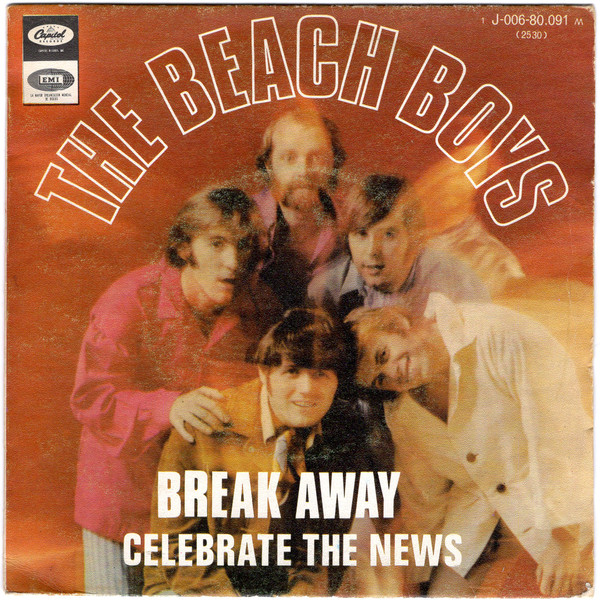
And so on that hot night at Lucerna Hall in Prague, amid the cheers, cries, and applause, I wanted to be heard. We were told that we had a special guest in the audience-the country's ousted leader, Alexander Dubček. I stepped to the mic and, with a song that we had recently recorded, yelled, "We're very happy to be here, all the way from the West Coast of the United States of America! We dedicate this next number, which is called 'Break Away,' to Mr. Dubček, who is also here tonight!"

The place went crazy.
To be continued…
Meanwhile… Peter Ames Carlin told a story relayed by engineer Stephen Desper that showed there was ultimately no way to break the Beach from the Boys:
One afternoon in early 1969 the group was busy working on a track in the studio at Brian's house when he came rushing in through the bright blue, hand-painted door, still in his pajamas and holding a sheet of paper. "I've got a great idea!" he cried, waving the just-typed document in the air.

Brian explained that he was holding a five-way agreement to declare that from this day forward, the group would be known not as the Beach Boys, but merely as the Beach. "We're not 'boys' anymore, right? We're men! So why do we want to call ourselves Beach Boys? All we've gotta do is sign this, and we'll change it for good."
Whether Brian's impulse to create a new identity for the band stemmed from his reading of the marketplace or from a desire to disassociate himself from the past isn't quite clear. But he was obviously fired up about his idea and just as obviously deflated when the other guys brushed it off without much of a thought.

"They all just kind of shrugged and said, 'Aw, come on, Brian, we don't wanna do that. That's how the public knows us, man," recording engineer Stephen Desper remembers. "And that was it. He put the paper on the piano, and it stayed there until I picked it up and took it away."
- Samuels would later be named in the case against Eugene Landy in the 1990’s as the doctor overseeing Brian’s prescriptions, for what it’s worth. ↩︎

Leave a Reply