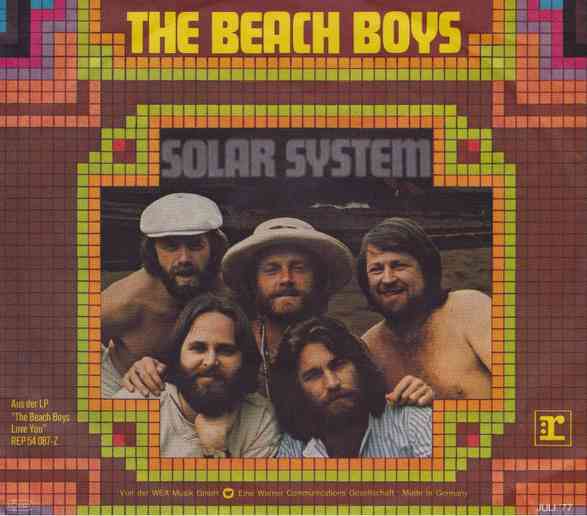
Part 15 of the Adult/Child saga.
It’s hard to imagine a time when LA wasn’t the center of the universe. Back when Hollywood Land was a future housing development in the Hollywood Hills, and a few stunt pilots were launching from a farm field in Westchester.
Today the Land has been long dropped from the Hollywood sign, with Disney immortalizing a myth of its demise being tied to one of those stunt-pilots turning over his experimental rocket pack to a Clark Gable-esque Nazi agent, who promptly Rocketeers into the sign…
Land was too small for what Hollywood became. World is more accurate. Worlds within worlds. Almost any destination that you could reach from that former field-turned-international airport can be conjured by Hollywood’s magic makers. Michael Curtiz was an early master of the form. He would spare no expense in the realization of his biblical epic Noah’s Ark, including the lives of extras.
Hollywood built the entertainment machine of LA. It also built the sex and drugs machine that inevitably goes with any entertainment industry. And it often cared as little for the safety of the extras that filled its perimeters as the great tyrants of silent cinema. To be drawn to the LA dream is to come to be packaged as a product, but that wasn’t always in search of stardom. For every casting couch session that led (laid?) to the discovery of a starlet, there were undoubtedly many more aspiring starlets who came to Hollywood just to get their dreams fucked out of them.
LA’s entertainment industry developed around the movies. When silents turned to talkies, music production became a key part of that industry. The hard thing to imagine now is how isolated that west coast music industry was, with almost all music production tied to the movies. It wasn’t until the 50’s that a music industry to rival the dominance of New York began to emerge. But it was The Beach Boys that well and truly put the LA music scene on the map…
By the time “California Girls” landed, it was like the ultimate invitation to a scene that the band were elder statesmen of. Meanwhile, down on Sunset Strip, the hip rock clubs were launching cutting edge groups like The Byrds, ready to take on The Beatles along with The ‘Boys. And the girls just kept coming, hoping to be a part of the hippest happening around.
The funny thing about the American Dream, it always seems to get twisted into something closer to a nightmare. Only four years separated “California Girls” and “Mister Tambourine Man” from “The Love and Death Cult”, with a player of songs leading his followers to jingle jangle through some of the bloodiest, most shocking murders the city had ever seen.
The weirdest thing about a freaky weirdo like Charles Manson was how welcome he was in LA. And The Beach Boys, the central hub of LA pop, were somewhere in the middle of this dark chapter of the California Dream.
In order to reckon with that, we have to look at what a combination of charisma and product can get you. For Charlie, the product was definitely women, but it was an entirely different game than being a pimp was in the 50’s or early 60’s. Drugs and rock and roll were just as powerful of motivators as sex – perhaps even more so. If Charlie was going to get ahead in this new game, he would have to find a way to leverage his musical talent and the new pharmacopeia that presented itself…
Even before the psychedelic era was in swing, characters in the orbit of Brian Wilson were getting more and more eccentric. Cannabis was the drug of choice in 1965, but speed was really getting up and in it too. LSD gets the most ink in the Brian Wilson loses his mind saga, but it was the speed habit that preceded and followed the peak of the acid era that probably did the most lasting damage.
The stimulant shift to cocaine came with Brian’s BFF Danny Hutton and his new Laurel Canyon pad in 1968. In the same era the Manson Family began stalking the LA music scene, cocaine made its way into LA. It was a year after it had first made a comeback in London, with Paul McCartney developing a brief habit in the Sergeant Pepper era. Now it seemed to be moving into America via Canadian connections, which is another deep hole to go down. For the sake of brevity, we’ll just touch on the fact that one of these Canadian connections was Mama Cass’s lover.
It wasn’t long before Manson and his girls found themselves in the same circles, making regular appearances at Laurel Canyon haunts of the rich and famous. Cass’s pad in particular was a non-stop party, where the sex, drugs and rock and roll that defined the spirit of the times was in full swing.

Unfortunately those times were starting to consider both The Beach Boys and The Mamas and The Papas passe’, yesterday’s news, despite massive success immediately in the rear-view mirror. As their commercial prospects got darker, so did the scene they found themselves in. And Charles Manson knew exactly how to leverage that traumatic decline in his favor.
In the spirit of making lemonade, Manson was the ultimate opportunist. A victim of complete instability and traumatic abuse in his childhood, by the age of 13 he was more the state’s ward than not. By the time he was released from a 7 year prison stint at age 32, he had spent over half his life incarcerated. He’d learned how to not only hone in on the trauma and rejection that others presented to him, but to turn that empathic connection into its own form of imprisonment. He’d also learned how to play guitar.

It was being a pimp that was the final straw in violating Manson’s parole in 1960. During that time he encountered Alvin Karpiss of the infamous Barker-Karpiss gang. “Little Charlie” approached the seasoned inmate for some guitar lessons, with the old gangster taking pity on him, despite recognizing the weaponization of that pity. He would later write “There was something unmistakably unusual about Manson. He was a runt of sorts, but found his place as an experienced manipulator of others. I did feel manipulated, and under circumstances where it hadn’t been necessary.”
In a world that was practically defined by eccentricity, Charles Manson in 1968 didn’t seem like that extreme of a character. As far as The Beach Boys Circus was concerned, he was just one of the more noteworthy clowns on the periphery. Talented at spinning songs seemingly off the top of his head, he would make a charismatic impression on Neil Young, who still praised his inherent talent in the 21st century, regardless of any other infamy the man was known for.
Maybe it’s important to consider the state of that Beach Boys circus in the late 60’s, because even with the big top seeming ever more expansive, the central act itself were quickly becoming outliers in the industry they’d just recently been riding the peak of success in.
Peter Aimes Carlin used one of the weirder side-quest stories in Brian Wilson land to emphasize how toxic the former wunderkid’s reputation had become by the end of the decade:
Tales of Brian's indulgences and eccentricities, along with his growing reputation as a commercial has-been, had spread like a bad odor around Hollywood. In fact, when Stanley Shapiro got Brian involved in rewriting the lyrics of his old Beach Boys songs (a project Murry initiated to sweeten the publishing deal he'd cut with A&M in 1969), the company brass was closer to furious than overjoyed.
The whole story is pretty strange, not least for the fact that Brian (or any song-writer) would agree to participate in a wholesale rewriting of his or her works-particularly those works that had just been sold off by his father against his own most fervent wishes. To Brian, however, the opportunity to revise his own songs felt more like a way to reclaim his musical legacy from the family that had taken so much from him. So when he heard about Shapiro's plan, he jumped at it and even tapped his friend Tandyn Almer (a fellow drug enthusiast and Hollywood weirdo who earned showbiz spurs by writing the Association's smash hit "Along Comes Mary") to help.

Focusing first on the Friends album, the trio worked together for a month or two, even composing original lyrics for Brian's airy instrumental "Passing By." ("I met you on the avenue and stopped to say hello to you and then realized I was just passing by...") When they finished something to their mutual satisfaction, they'd record a demo version of the song, usually with Brian playing piano and singing lead over Almer and Shapiro's backing vocals.
After a few weeks of work, Shapiro took his stack of tapes over to A&M. At first, the execs were thrilled, not just by the songs' new lyrics, but also by the musicians playing them. "They were like: 'Wow, this is great! Who are those voices?' I said, 'Well, it's Tandyn Almer,' and they didn't like that at all." Almer, it seemed, had already worked for A&M and been fired for being, in official terms, "a disturbance" on the company's lot.

But, Shapiro continues, they were even angrier to hear that the main presence on the tape was none other than Brian Wilson. "They said, 'What? Brian Wilson! There's no way we're gonna do work with Brian Wilson. He's crazy, number one. And if we accept anything with him, he'll be down at this lot putting up circus tents!' I was so pissed off, I quit on the spot." Shapiro took the tapes back to Brian, whom he found playing the piano at Almer's cluttered house, and set the only record of their work next to him on the piano bench. "And I have no idea what happened to any of it. It was never heard from again."

Tandyn Almer himself was practically never heard from again after the success of “Along Comes Mary”. The Beach Boys rabbit hole recently turned up a bootleg of his unreleased late 60’s album, and it’s a stunning look at what life was like where boogie men wait to crawl out from under your bed and crawl under your blankets instead, and you can’t get out unless you get in, and vice-versa.
His released recorded output as a solo artist begins and ends with the 1969 45 rpm single “Degeneration Gap” and a collection of earlier demos released shortly before his death, and it was somewhere in that gap, likely over a pile of cocaine at Danny Hutton’s Laurel Canyon house, that Brian and Tandyn became best friends.
Hutton’s entry into Brian Wilson’s life earlier in the decade ultimately brought a whole orbit of pivotal players into Brian’s Smile-era orbit. Hutton recalled:
I had two or three hits in 1965. <...> I had a hit in August of that year with “Roses and Rainbows” with Hanna-Barbera Records. <...> And it said on the record label that “Roses and Rainbows” was written by Danny Hutton and somebody else. <...> I said, OK, I’m just a young guy. They gave the guy half of the writing on my song, which was completely dumb, and some of my publishing. And one day their A&R guy Tom Ayers said to me, ”Danny, do you know you’re paying for everything in this office. All the pencils, pens, everything.” And I had the only hit. And I was so shocked. I finally said, “What am I getting out of this place?” So I left Hanna-Barbera with Derek Taylor, who was my publicist.

And this is when Derek had left The Beatles, and now he had The Beach Boys, Paul Revere and the Raiders, and lots of other groups. So, I left and I went with Frank Zappa. We went to MGM Records. My manager David Anderle got a job over there, and then I was there. I had another fairly OK hit in Los Angeles. And then David was asked to be the president of Brother Records. Oh my God. This was The Beach Boys’ new record company.
Hutton’s longtime girlfriend June Fairchild recalled the era in her unpublished memoir (minus about 50 exclamation points – ed.):
Danny and I would go to Brian's house on Laurel Way. <...> Brian's wife Marilyn catered to everyone. She also weeded out all the bad influences. She wasn't stupid. Her husband would take anything that went passed his nose. Who didn't? We were always carrying. She knew it! We were careful not to be to giving with it.

I must interject how I discovered whipped cream in a can gets you high. In the supermarket I would go to the milk area and take hold of the red top on the whipped cream can and take it off. Then I bent the white nozzle a little until the gas leaked out and sucked it up in my mouth. You get real high! I thought I would share this with Brian. Bad girl me and what a stupid thing to do! Dangerous? I didn't know or seem to care at the time. I told Brian just for kicks to share what I did. What does he do? He orders a case to be delivered to the house!! Oh No! What will Marilyn do! I didn't think he would do such a thing! Now what's going to happen?

Brian just recently had a beautiful Arabian red tent put in his living room. It was huge. It could hold 15/20 people. We thought this is far out! He also brought sand from the beach since the Beach Boys did not live far from where my dad built our house by the beach in El Porto.
He then made a real big sand box and put his Baby Grand piano in it. There was a curtain, baby blue with little teddy bears on it, so he could enclose himself in to create on his piano. What a trip huh?

People were arriving. Time to play in his new red tent! There was a low table to sit on the floor of pillows next to it. Brian then says "Here everyone take a plate, and silverware. Now I'm going to start a rhythm like this: Now you all do the same thing on your plates." We did. How unusual and fun! I think he was creating a new song and wanted to hear in his head how clanging spoons would sound as a basic drum track. Who knows! Who Cares!
Now Brian said someone's at the door. Get that, June! I jump up, open the door. It's a man holding a case of whipped cream. Jesus Christ! It's gonna happen! We're all gonna get high on a new level.  <...> We were all guinea pigs back then, it was the thing to do!

Seeing how long one could stay up on meth was always a challenge. The best I could do was three days at a time! My lips had a big red ring around the outside of my lips from talking so much nonstop. My lower jaw would go from side to side at the same time. Speed was rough and very rough coming down off this stuff. Self destruction! Barry Maguire had it right.
Unfortunately this was the kind of energy which would blow up into the circus tent mythos, before anyone was even aware of how dark the California Dreaming could get. And Fairchild’s clear-eyed assessment on the other side of the Eve of Destruction put a point on it: we sure fucked ourselves up having all this “fun”, didn’t we?
Dennis was spiraling in the aftermath of his divorce in 1968, trying to push forward his creative pursuits while the rest of the band treated him like a joke, and the rest of the world treated the band like a joke. His playboy lifestyle had robbed him of any chance for stable domesticity, and it was in this period of instability and uncertainty that he came across two young female hitchhikers: Patricia Krenwinkle and Ella Joe Bailey. Dennis would recall their meeting to Record Mirror’s David Griffiths in an interview published December of 1968:
"It happened strangely. I went up into the mountains. with my houseboy to take an LSD trip. We met two girls hitch-hiking. One of them was pregnant. We gave them a lift, and a purse was left in the car. About a month later, near Malibu, I saw the pregnant girl again, only this time she'd had her baby. I was overjoyed for her and it was through her that I met all the other girls."

"I told them about our involvement with the Maharishi and they told me they too had a guru, a guy named Charlie who'd recently come out of jail after 12 years. His mother was a hooker, his father was a gangster, he'd drifted into crime but when I met him I found he had great musical ideas. We're writing together now. He's dumb, in some ways, but I accept his approach and have learnt from him. He taught me a dance, The Inhibition. You have to imagine you're a frozen man and the ice is thawing out. Start with your fingertips, then all the rest of you, then you extend it to a feeling that the whole universe is thawing out.”

Are you supporting all these people? "No, if anything, they're supporting me. I had all the rich status symbols-Rolls Royce, Ferrari, home after home. Then I woke up, gave away 50 to 60 per cent of my money. Now I live in one small room, with one candle, and I'm happy, finding myself."

Meanwhile, Lynette Fromme recalled how the Family came into Dennis’ orbit while Dennis wasn’t even home, and departed in a similar fashion:
Then one day Patty and Ella returned from a hitchhiking trip to the city and told us of a young man in a Rolls Royce who had stopped for them. He had taken them to the estate he rented near Beverly Hills where they spent the afternoon in his tree house talking about "coming to consciousness."

Dennis was a handsome musician, the drummer for a well-known West Coast music group. He had invited the girls to bring the rest of us to see him, so one evening a carfull of us went for a drive through the valley to the coast, and up Sunset Boulevard to Pacific Palisades.

Finding Dennis' iron gates wide open, we followed his driveway around woods and well kept lawns to the carport of a wide-ranging ranch house, cabañas, and pool. A smaller version of the big house, a guesthouse, was lit. When no one answered at the big house, we went to the guesthouse and found the door open, but Dennis was not in.

Patty and Ella had assured us that Dennis would have us make ourselves at home, so we entered to wait, resting ourselves on thick white rugs around a fireplace. We lit logs for ambiance; there was no kindling but the phone book, much of it already gone to the same purpose.

The master of the house soon returned and was frightened. He did a quavering dance, mocking himself, as he did not even remember Patty and Ella at first. Then he smiled widely in firelight, inviting us to follow him through the patio into the main quarters, past a massive antique dining table, and into the living room where claw foot brocade couches faced a mantled stone fireplace in the style of nineteenth century hunting lodges.

We talked back and forth, sang a little, and after the evening's exchange, Dennis outright invited us to stay. We told him about the black bus, and the many more of us, and he said to "bring them." Whoever claimed later that we had moved into Dennis' house uninvited was either untruthful or uninformed.

Dennis Wilson did not own the historic Sunset Boulevard estate. Rather, it was leased for him. There were, in the main house, at least four bedrooms off a hallway that led to a bath and a simple master bedroom containing his personal stone fireplace, white fur rugs, a low, wide bed, a high quality stereo system, and a large collection of the group's records.

He had been living in the house alone, paying thousands of dollars rent per month, and he was rarely ever at home. We filled it up, playing all of his records, the grand piano, and the antique harpsichord, swimming in the pool, and between the satin sheets.

Alma, the maid, was aghast to find over a dozen houseguests, but we women were helpful, and listened to her stern instructions on how to clean and polish the good silverware. One day I saw Alma ruffling through the linen closet. Where were the blue satin sheets? Brenda was standing beside Alma in her newly sewn blue satin pants, and volunteered to look for the sheets elsewhere.

Brenda was slowly dressing us like genies. Dennis liked her billowy pants so much she made him a pair that he often wore around the house without a shirt. Chic sheik. He was likable and funny without trying to be, loose, whimsical, and with few reservations, but his body was reserved under contract to the music group made up partly of his blood brothers. He said that he wanted to break those ties to go with us on the road or into the wilderness, so we waited between the bus and the house, exploring the short woods between fences. A high-pitched scream startled me one night just before sleep. It was the pet peacock that roamed the premises freely.

Dennis didn't feed the peacock. That was done by others. There was a man who came to clean the pool, and a gardener for the grounds. They showed up unexpectedly. The black bus loomed large in the yard, the gardener reported to the landlord that he'd seen a man swimming naked, and Alma probably put in her missing sheets report.

After a couple of weeks it all got back to Dennis' band and advisors. They raised a ruff, but Dennis shrugged it off. He bopped into the house at the end of the day, humming, smiling, dancing a little, stripping on his way to the shower. We were there, yet not there. And it was nice.

Still, we felt to be fewer during the day, so when Dennis was gone and others came around, half of us disappeared. Soon we were spending as much time in shadow as in light, so a change was in order. Bruce had always wanted to travel and was considering a voyage overseas, so he took action on it. The two Texas college boys, Robb and Deuce, set off separately to see California. And Mary took the black bus with Sunstone, Ella, Patty, Stephanie, and Sadie to the Mendocino woods for a vacation that would last longer than expected. The rest of us remained at the estate.

Bounding through the kitchen one morning, Dennis told Charlie, "I'm falling in love with Brenda." Charlie laughed. Who wouldn't fall in love with Brenda? It was a nice thought, but Dennis was married to his company. It tied him down. It also gave him security. Before he rushed out the door in the mornings, he went down the kitchen counter unscrewing jars of vitamins, dumping the pills in his hand, and gulping them down with orange juice. That was breakfast. In the otherwise vacant cupboards I counted thirty-seven jars of vitamins.

The refrigerator contained nothing but unprocessed orange juice and dairy products. Dennis told us to order what we wanted from the dairyman, and put it on his tab. He also offered to charge food, but we had other ideas. We floated the Rolls Royce behind high-end supermarkets, and loaded it with Grade-A garbage, winking at box boys who pretended not to be looking. Then we spread big dinners on fine linen and china plates.

When Dennis' friends came to eat, we didn't tell them where we got the food until after they'd eaten it, then snickered to see their expressions of satisfaction sink. But Dennis ate heartily and always thanked us.

Ruth, the preacher's daughter, came from the north, fuller-bodied and fancifully dressed, lugging a big suitcase over the threshold, and barely pausing to say hello before asking to be shown the bathtub. Her father had permitted her a marriage of convenience, so she was legally free at sixteen. Ruth said she wouldn't be staying long because she was on her way to see a boyfriend, but she stayed for a week, then a month, until she was such a part, as a piece to a puzzle, that she apparently forgot she was going at all.

From the house on Sunset Boulevard a drive toward downtown Los Angeles passed the guard booths and gateways to the elegant neighborhoods of Bel Air and Beverly Hills. The real estate then descended in value all the way to the Sunset Strip, once the glamorous gold standard of talent and creativity, but by then just a hodge-podge of glitter and litter.

Farther down, the boulevard was lined with junk yards, liquor stores, and little stucco Hispanic communities, before careening into the flat gray cement surfaces of downtown L.A. But traveling in the other direction from Dennis' driveway, Sunset Boulevard was a clean breeze to the beach, bordered by quiet side streets of modest mansions.
Those of us at the estate sampled lives of leisure, sipping orange juice by the pool, kicking our chlorine-clean feet onto brocade couches while embroidering, flopping on Dennis' bed, or dancing to all of his albums. "Good Vibrations" was still popular, and we heard the first version of Smile over forty years before the final recording was released.

It seemed that Dennis and his brothers did not understand the physics of the "vibrations" they were singing about, but their music was catchy and their harmonies good. They had begun as teenagers fooling with guitars in their garage, then picked up and furthered a music wave that spread from California to the rest of the world: surfer music. By the time I'd hit high school, they were famous, financially successful musicians with a number of albums and yearly concert tours. They were not without problems. <...>

Dennis and his brothers were not surfers by definition. Their music was commercially popular by design. The design was part of the business, which didn't necessarily have anything to do with the singers' lives or beliefs. In keeping with trends, they sang about vegetarianism and transcendental meditation, but most, if not all, ate meat, and Dennis couldn't sit down long enough to meditate. Brother Brian was seriously troubled. It was an accepted fact that he had been holed up in his bedroom for months.

Dennis was troubled too. The opinions of his fans were important to him, but he was seeing the public from a vantage few of its own ever get. They had raised him up to be an idol. In this position, a man might seek someone to look up to. The Christ of our culture was still on the cross, so Dennis and his partners, like the Beatles, had gone instead for a brief  audience with India's most famous living guru, the Maharishi Mahesh Yogi. Dennis did not have a lot to say about the Maharishi. With a facial expression like the sheep in nativity scenes, he said only one word: "Beautiful." <...>

Dennis spent a lot of time with Charlie, and I will never know all the things they talked about, but there was good blood between them. Charlie obviously got a kick out of Dennis, and Dennis routinely referred to him as a "wizard." After roaming the yard barefoot one morning, Dennis stepped into the living room through one of its tall windows, sat down at the piano, and, for the first time since we had arrived, played some of his own music. His music was beautiful when he put his heart into it, and that's what was attractive about him, not just his body and face, but the opening that showed heart.
A short time later in the book she recalls:
Dennis and Charlie walked the grounds, comrades of many moods. Charlie asked Dennis if he wanted us to leave, and Dennis insisted not, but each time he declared he was going to take a vacation to travel with us, he only got wound up tighter, and, in turning, looped himself into even more commitments.

"Okay, I'll see you at 5:00," I heard him tell someone on the phone.

I said, "Dennis, you already said you were going somewhere else at 5:00." He just shrugged and made a funny face. Wasn't he just in a big movie? He traveled the world, played before thousands who paid him for it, had girls in every state eager to lie with him or just get a scrap of paper he had touched. He meant well; what did it matter what he said? But it did, and he was perpetually agitated.
There was good reason for Dennis' dilemma. Popularity and wealth were not entirely satisfying ends to him. Surety and peace eluded him. And while most of us girls were ordinary, Charlie showed more faith in himself than even the most successful people Dennis knew. Dennis was beyond fame and money, but even in his youth he was already spent. He couldn't roam for more than a day. He was owned and operated. Peoples' investments rode upon him. He had signed the contracts long before, and he didn't have the will or the confidence to make the change. He had gained access to half the world through his company. It was a lot to give up for a soul he was unsure of.

Twice Dennis told us he would be home for dinner, and the rest of us waited, and he didn't come, so the next day we left the estate and went back to the valley, where the land is flat and wide, to the foothills above the smog line, to The Ranch.

To be continued…
Meanwhile…
Back at the Al Jardine show over 35 years later, Al shared a story that he found amusing:
“Marilyn Wilson told me a story <…> that she and Brian went to an astrology class at UCLA, to, well, improve their minds about the solar system, right, and the galaxies and all that, and so Brian was so impressed that he wrote a song about it, about the solar system. And it goes something like this:”
Plays song…
“Pretty awesome. Pretty awesome. The class loved it. The teacher said ‘Brian, I don’t think that’s gonna go very far.’ Well, hey, you are certainly wrong, sir. I think it should get a favorite song of the year at UCLA award, I dunno, whatever it should be. I love that thing!”
Al’s enthusiasm for Brian’s quirkiest songs was shared by the entire audience. I never expected I’d have the chance to hear the songs from The Beach Boys Love You done live, and it was a real treat to share that experience. It was especially a delight for Marilyn to reprise the vocal part she once sang as a duet with Brian, his raspy role now ably filled by percussionist Jim Lapesa. Carnie was so excited to introduce her mom, recalling how delighted she was to first hear her parents singing together on the original recording.
The biggest surprise of the evening came with the encore set opening up with the quirky, mildly dystopian bop of “It’s A Beautiful Day” from Americathon. A totally unexpected choice, never before played live. Al’s mention of Keeping the Summer Alive as a “pretty crappy album” got a good laugh from the audience, as he explained the song’s origin from those sessions and how it disappeared on the soundtrack of the flop movie. Al framed Carl’s jubilant chorus as a kind of aria that began as a reverie upon a return to sunny LA from a grueling tour. What an unexpected treat. Old stalwarts “Help Me Rhonda”, “Surfin’ USA”, and “Fun Fun Fun” were just icing on the cake.
Despite being a band with an often incredibly dark story, the music of Brian Wilson and his creative cohorts in The Beach Boys is still the best trip I’ve ever been on, and I know a lot of other folks are feeling the same after sharing that trip with Al and friends. Reckoning with the joy contained in the Beach Boys experience is just as key to the sorrows and suffering. The power of the work continues to resonate, from the greatest hits to the deepest cuts, and we’re lucky there are still a small handful of ‘Boys left to still represent that wave of music for us.
Meanwhile… Lynette Fromme recalled seeing The Beach Boys ca. 1962:
The first time I saw the Beach Boys in person was at a big "Teenage Fair." They had short hair and wore pale, striped, short-sleeved shirts like the dozen or so in Dennis' closets. Most of the group was set to play on an outdoor stage at the appointed time, but the lead singer, Dennis' brother, Brian, was not there. A standing audience grew more and more impatient.

Over half an hour later, when Brian did show, he was stumbling drunk, and had to sit down. Members of the crowd by then were rowdy and merciless. Some had bought raw eggs at the Orange Julius stand and the group got pelted. Watching the yellow yokes splash against their pressed shirts, I'd felt simultaneously embarrassed for them and glad. The words to their music had never meant anything to me.




Leave a Reply