Part 2 of the Adult/Child saga.
In 19831, on the cusp of being anointed Big Brother, Ronald Reagan cursed the Beach Boys with the moniker “America’s Band”. It wasn’t the first curse brought down upon the group, but it would perhaps be the darkest. Before the end of the year, it would claim its first victim in drummer Dennis Wilson2, although it would be hard to say where his own demons ended and the curse began. Before the end of the 90’s it would take his baby brother Carl3, robbing the group of both its soul and its back-bone. In between these tragic losses, the band would have the biggest hit of their career with the concentrated-evil “comeback” of “Kokomo”.
Only one Wilson brother got to outlive Ronald Reagan and experience what it meant to be an elderly Beach Boy, and he left us for the realm beyond the stars last year4. Cousin Mike, less the eternal teenager and more the Gran Torino cranky old geezer, will probably die on the road with the current band that calls themselves the ‘Boys. High school classmate Al Jardine, meanwhile, continues on with dearly departed Brian’s Pet Sound Band, the road-hardened equivalent of the cream-of-the-crop L.A. musicians that Wilson directed in the studio back in the 60’s.
It took a 50th anniversary tour to bring the group’s leader back into the Beach Boys fold, after being almost entirely absent from the band for half that time. Let’s be honest – to paraphrase John Lennon, Brian Wilson wasn’t well5. Each time he withdrew from touring was probably the best thing he ever did… next to avoiding participating in the recording of “Kokomo”6.
Brian’s first retirement from the road was in late 1964, having a nervous breakdown shortly before their plane took off on tour. The moment was brought vividly, agonizingly to life in Paul Dano’s viscerally embodied performance as Brian in the flawed but often brilliant Love and Mercy biopic.
For all that movie delved into, it never tried to reckon with the post-Smile, band-centered era of the Beach Boys, beyond a Brian-in-bed montage and a few lines of exposition from older Brian.
The time jump to the second half is so pronounced he’s now suddenly played by John Cusack in a performance that feels like John Cusack playing Brian Wilson, which, honestly, is pretty entertaining, don’t get me wrong, but… The important thing for us to understand now is where Cusack’s nemesis, Dr. Eugene Landy, first came into the picture, which is left entirely outside the scope of the film. Much like every other villain in the Brian Wilson story, he also proves himself to be a hero…
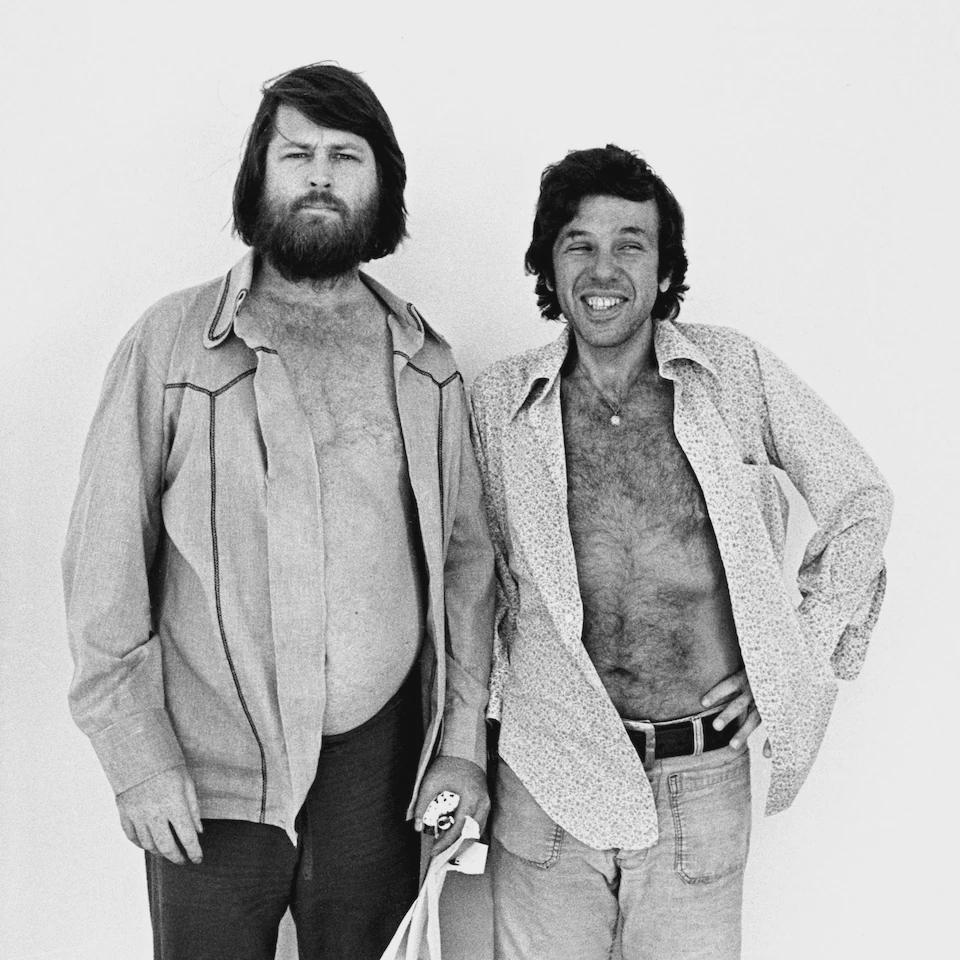
In the mid 70’s, people were taking bets as to who would reach rock and roll heaven first: Keith Richards, or Brian Wilson. No one expected it would take 50 years to collect on that bet. In Brian’s case, it was probably Eugene Landy who was most directly responsible for saving his life in the 70’s, encouraging and enabling his most expressive work of the era. It was certainly Landy who later nearly destroyed that life, in an attempt to control it and milk Brian for all he was worth for over nearly a decade.
Landy’s presence looms large in the Brian Wilson saga. There’d be no way to tell his story without it. His spectre at first almost swirls at you in a svengali kind of hypnotic trance, but then the spinning stops and the man sits there with a concerned but confident look on his face. “I understand,” his eyes and demeanor say, “and I can help.” His sincerity is unquestionable, but… there’s something in that posture of relaxed confidence, as if the devil is in the details…
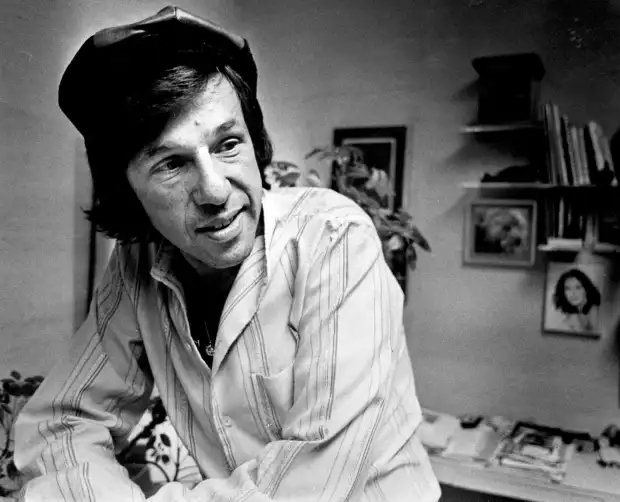
Wilson’s withdrawal during the early 1970s was well known within the industry, but what was less visible was the effort his wife Marilyn had made to find meaningful medical help. As she later explained, Brian had developed a disarming ability to perform functionality in front of doctors, convincing professionals that he was healthier than he really was.
When they first met, Landy framed the situation in stark terms. He told Marilyn that Brian was an undiagnosed and untreated schizophrenic. What followed sounded, at least at first, like a breakthrough. During one of Landy’s early visits to the Wilson home, Brian walked into the room unexpectedly and said, quietly and without prompting, “Something’s wrong with me. I need your help.” Marilyn later said that was the moment everything began.
– Inside Brian Wilson’s Longest Battle: Control, Care, and Dr Eugene Landy
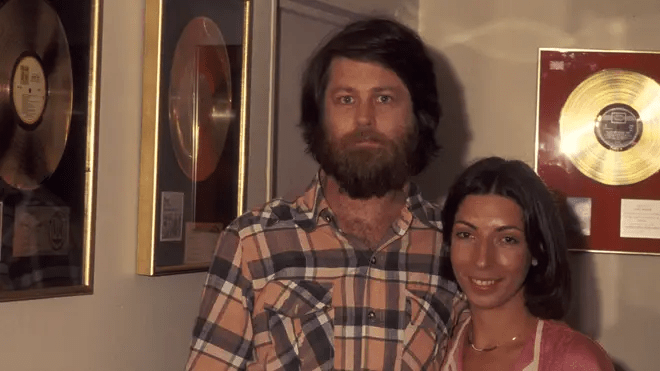
Perhaps the best place to start this story of Heroes and Villains is with the commercial failure of the song of the same name. In 1967 the world was still anxiously awaiting the the followup to the band’s 1966 rule-breaking global smash “Good Vibrations”. Producing that song had taken nearly as much time, effort and tape as the entire Pet Sounds album that preceded it. The end result, stitched together from multiple recordings, is still a completely unique and original creation, a song that exists so far outside of any pop formulas that nothing else compares to it.
Today, “Good Vibrations” seems like the cap of that classic era; in 1966, it was actually a comeback for the band, after Pet Sounds had landed with an atypical thud stateside. Brian’s attempt to cement that comeback was the complete disaster of Smile that followed. In trying to produce an entire album of “Good Vibrations” all at once, Brian recorded every track in modular sections, with pieces like train cars that were endlessly re-shuffled, sometimes even between different songs.
As those increasingly chaotic album sessions began to crumble, the song “Heroes and Villains”, which existed in seemingly infinite variations of segments and fragments, was pulled out of the wreckage and whipped into some kind of shape for single release. The sepia-toned tale of “what a dude’ll do” in a town where he’s been hiding out so long “that back in the city [he’s] been taken for lost and gone and unknown for a long, long time”, turned out to prophecy Brian’s next decade of seclusion, when the single’s flop left an H-bomb sized crater in his ego.
If the more conservative members of the Beach Boys had hoped a return to the hit-making formula would follow the 1967 collapse of Wilson’s avant-garde Smile ambitions, what they got was something completely different than they’d ever confronted before: a reticent leader who simply didn’t want to make Beach Boys music any more. His legendary production prowess was suddenly discovered not to be an infinite resource that the rest of the band were automatically entitled to. No longer willing to take the credit for the success or failure of their records, from now on, the album credits read: “Produced by The Beach Boys.” If it flops, it’s *everyone’s* fault.
The band “produced” record that followed, the un poquito Smiley Smile, was the lowest selling album they’d ever released at that point. It’s obvious the group wasn’t prepared to step up with their own take on the formula. What they end up with is Brian Wilson’s outtakes turned inside out, impishly anti-produced, playing up Jimi Hendrix’s “psychedelic barbershop quartet”7 dig to the hilt.
The album is one of the most lovingly, brutally realized “fuck you” statements ever foisted upon one’s bandmates, an album that is both soothing and deeply disturbing. Brian makes sure to single himself out for crucifixion in the album’s most truly schizo-affective moment, when the eerie, haunted re-cut of Smile’s lost-innocence ballad “Wonderful” breaks into a discarded segment of “Heroes and Villains” halfway through. Here, the Beach Boys actually become the cacophony of self-critical voices in Brian’s head. “You’re not a genius”, one says somewhere buried within the din of mocking laughter. At that point, perhaps the voices in his head and the voices of the group sounded the same…
Smiley Smile as a vibe peaked with the efforts that went into making what was supposed to be a live album, Lei’d In Hawaii, whose lewd pun of a potential title would only be surpassed when their Live in London album was reissued stateside as Beach Boys 69.
You’ll have to forgive me a bit of crude humor here. You’ll have to forgive Brian, too. During the rehearsals that were recorded before the shows in Hawaii, he orchestrated an exorcism over the sound of the band practicing “Heroes and Villains”, giving Mike Love the mic to rant about the single being their “nuclear bomb”.
I’d first encountered this recording while diving into the wealth of Smile-era bootlegs that had suddenly become accessible in the Napster-era a quarter century ago. It’s been said that Brian himself wrote the whole rant; you can certainly hear him cracking up in the background.
With no further context, it was a totally baffling piece of the Smile puzzle. What I hadn’t heard until just recently was the full nearly 8 minute recording, where the band runs through the vocals a few more times before Brian buoyantly sings “Lately I’ve been eating so much pussy!8”
Be that as it may… after the struggle of realizing Smiley Smile as a self-directed collective, the band spent their time honing their abilities and discovering what they all had to bring to the table as writers and producers. They learned to appreciate Brian as a rhizomatic collaborator rather than a leader, a node unto himself who might occasionally merge with what the group was working on, if the spirit moved him.
This state of affairs was enabled by building a home studio for the group directly under Brian’s bedroom. Laying in his bed, he would literally feel the vibrations of the band below; if they felt good enough to move him, he might throw his robe on and come down to contribute a bit.
Carl and Dennis both grew tremendously as writers and producers during that time, with Dennis’ “Forever”9 probably the most Pet Sounds-worthy track10 of anything the group would release after that classic album. Dennis also steered the band towards their most successful hard rocking efforts, proving that the group could deliver more than just re-fried sunshine pop.
Carl never wrote anything quite as transcendent as “Forever”, although he did write the two best Wilson ballads in the 80’s, “Heaven” on his first solo album, and “Where I Belong” on Beach Boys ’85, the latter song the closest to a 80’s update of “God Only Knows” as anyone got. His solo career tended to feel more like a missed opportunity than a successful attempt to rebrand himself outside the group, but at least it didn’t include anything as embarrassing as “Rockin’ the Man In the Boat”11.
The Beach Boys had continued to struggle and strive as a group, but nothing they put out after their mid-60’s peak, no matter how tasty, caught fire with the public the way “Good Vibrations” had. Where that song had placed them at the cutting edge of pop music, their subsequent hits would often find the band looking backwards towards more innocent times.
It’s not that they didn’t continue doing great work; much of their early 70’s material is shockingly contemporary, with some songs still sounding futuristic. Whether the singles chosen off the albums reflected it or not, the band could still deliver state-of-the-art music that remains unequaled.
1973’s Holland was full of slightly awkward but earnest attempts to examine the legacy of colonization and ecological degradation, married to a combo of Stevie Wonder-esque synthesizers and driving rock beats. It was the culmination of a three album run where the band hyper-consciously tried to prove they were more than just eternal teenagers milking “Fun Fun Fun” for all it was worth.
But, if maturity sells, it seemed no one was buying it from a band of men who called themselves Boys. “Maybe we should just become The Beach”, Brian suggested around this time. Meanwhile, new manager James Guercio began wondering if it would be worth trying to start a group with just the creative trio of the Wilson brothers and ditching the other Boys – if the hot mess of those three at the time could even survive the attempt.
And so it was that, after spending the first half of the 70’s as one of the most under-appreciated progressive-pop groups in the world, success finally came back around to bite the Beach Boys square on the ass. When their old record label released Endless Summer, a double LP set of all their greatest hits of the 60’s, it became their best-selling album of all time. Judging from the spooky album cover, where it looks like the bearded, gone-to-seed Beach Boys12 are emerging from the Smiley Smile jungle, you’d think this was the next installment in The Beach Boys Bum You Out, but this is a pure flashback extravaganza. Not entirely, endlessly “fun”, per se, but with the melancholy moments now softened with the warm, hazy glow of nostalgia, comfortably nestled amongst the celebrations of catching waves and chasing girls.
At the center of this flashback was a ghost whose name haunts the credits, the band’s resident genius and notorious recluse. After 7 years of withdrawal from the spotlight, people began asking: what the heck ever happened to that guy, Brian Wilson? Hearing such a well-cultivated collection of classic tunes rounded up and laid out back-to-back, divorced from the early albums that were hastily assembled between tours around hit singles, the unique, exultant genius of Mr. Wilson was undeniable.
In 1973, as far as the record buying public was concerned, the Beach Boys were cringe; in 1974 they were the childhood BFF’s you couldn’t believe you’d left behind. Instead of seeing the group as pathetic has-beens from the pre-Hendrix era, rendered forever irrelevant by the acid-rock explosion, the general public suddenly realized they did, in fact, want to hear surf music again13.
By this time they’d buried half the heroes that had usurped the Boys’ place at the apex of American culture, Jimi included; catching a wave in the wake of Vietnam and Watergate sounded like just the escape that was needed. As their greatest hits returned them to the top of the charts for the first time since “Good Vibrations”, one question hung in the air above all others: could Brian and the Boys come back and “Do it Again”… again?
It probably would have made the group’s comeback attempt easier if it had been a reunion, rather than a change of course for a band that had continued to steadily soldier on as a democracy. In many ways, it would have been better for them to have broken up at the end of the 60’s like The Beatles, but that would have deprived us of a lot of unique music that most likely wouldn’t have existed if the band didn’t.
Which is just to emphasize that, when Brian had withdrawn, he didn’t just leave a cratered void for the duration of his absence; much like when he’d left the touring group, Carl had ultimately stepped up and become the de-facto leader in the studio. But it was never a role he’d sought out; rather, it was foisted upon him as his brother withdrew. Now that eyes and ears were on Brian’s classic work, Carl and the rest of the band started to wonder for themselves: what would it take to actually bring Brian back? And could that old spark come back with him?
Meanwhile…
Scene from Tron: Legacy (2010)
Kevin Flynn: Clu was my creation. A program designed to create a perfect world. We were jamming, man, building utopia. Hours in here were just minutes back home. Just when I thought it couldn’t get any more profound, something unexpected happened.
Sam Flynn: The miracle.
Kevin Flynn: The miracle. You remember. ISOs. Isomorphic algorithms. A whole new life form.
Sam Flynn: And you created them?
Kevin Flynn: (laughs) No. No. They manifested, like a flame. They weren’t really from anywhere. The conditions were right and they came into being. For centuries we’ve dreamed of gods, spirits, aliens, an intelligence beyond our own. I found them in here. Like flowers in a wasteland. Profoundly naive. Unimaginably wise. (chuckles) They were spectacular. Everything I’d hoped to find in the system, control, order, perfection, none of it meant a thing. I’d been living in a hall of mirrors. The ISOs shattered it. The possibilities of their root code, their digital DNA. Disease? History. Science, philosophy, every idea man has ever had about the universe up for grabs. Bio-digital jazz, man. The ISOs, they were going to be my gift to the world.
Sam Flynn: So what happened?
Kevin Flynn: Clu. Clu happened.
Flashback:
Clu: Flynn! Am I still to create the perfect system?
Kevin Flynn: Yeah.
Clu: You’ve been corrupted.
Kevin Flynn: (voiceover) It was a coup. Clu fed on my resistance. The more I fought, the more powerful he became. It was impressive, really. And my miracle… Clu saw the ISOs as an imperfection. So he destroyed them… It was genocide. I tried to get back, but I couldn’t get to the portal. It uses massive power and it can’t stay open forever. And like a safe, it… It can only be opened from the outside. It closed on me, Sam. That’s why I never came home.
- James Watt, Reagan’s Interior Secretary, banned the group from performing at the annual 4th of July Celebration in D.C. because he believed “hard rock” groups attracted the wrong element. See videos below. ↩︎
- R.I.P. Dennis Carl Wilson, 12/4/1944 – 12/28/1983 ↩︎
- R.I.P. Carl Dean Wilson, 12/21/1946 – 2/6/1998 ↩︎
- R.I.P. Brian Douglas Wilson, 6/20/1942 – 6/11/2025 ↩︎
- Alice Cooper later recalled: “I was sitting backstage after the 1974 Grammys with Bernie Taupin (Elton John’s lyricist) and John Lennon. This was when Brian was really having some mental issues. During the course of the conversation, I kept seeing Brian out of the corner of my eye, just kind of staring at us from different angles. Finally, he came up to the table, bent down and whispered in my ear ‘Hey Alice, introduce me to John Lennon.’ I couldn’t BELIEVE that these two men had never met! They were virtually neck and neck in the 60’s as the greatest bands on the planet, and I’m SURE they must have crossed paths at some point. But then I thought to myself, ‘Wow, I’m going to be the one to introduce them and become a part of rock history!’
So I merely said, ‘Brian Wilson, this is John Lennon. John Lennon, this is Brian Wilson.’ Lennon was very cordial and polite, saying things like ‘Hello Brian, I’ve always wanted to meet you. I’ve always admired your work, and Paul and I considered Pet Sounds one of the best albums ever made.’ Brian thanked him and walked away, at which point Lennon went right back to his conversation like nothing had happened.
About ten minutes later, Brian came by our table again, leaned down and whispered something to Bernie, and all of a sudden, Bernie was saying ‘Brian Wilson, this is John Lennon. John Lennon, Brian Wilson.’ Lennon was just as cordial and polite as the first time, saying essentially the same thing about always wanting to meet him. As soon as Brian walked away, John looked at both of us and casually said in his typical Liverpudlian accent, ‘I’ve met him hundreds of times. He’s not well, you know.’ We were impressed by John’s empathy and kindness in dealing with Brian and thankful that Brian has found some mental stability following tumultuous times.” ↩︎ - This was due to the interference of Gene Landy, demanding extra credit/compensation for Brian to participate. This would be resolved by the time the band decided to make a Spanish language version of the song. See the Brian-including monstrosity below. ↩︎
- “Hit Talk by Jimi Hendrix”, Disc Music and Echo, 9/9/1967: “Don’t particularly like The Beach Boys. Reminds me of a psychedelic barber’s shop quartet!” Rumors persist that he actually said this from stage at Monterey Pop Festival, where The Beach Boys had infamously pulled out of their scheduled appearance, but listening to the complete recording of his performance reveals nothing but jokes about Mitch Mitchell being Bob Dylan’s Grandma… ↩︎
- Though the sentiment may be vulgar, at least he’s bragging about pleasuring women rather than just getting some. It’s almost wholesome. ↩︎
- Like many a 90’s kid, my first exposure to the song was being sung as a wedding serenade by Uncle Jesse on Full House. This wasn’t the first (and won’t be the last) time John Stamos makes an appearance in our band’s saga. ↩︎
- I’d honestly rank it as the second-best ballad the band ever released, just beneath “God Only Knows”. ↩︎
- Mike Love recorded two unreleased solo albums before he finally dropped one that included this ode to watching your neighbor masturbate and wishing you could help out. In a perfect world it would be his third unreleased solo album. ↩︎
- Although, funnily enough, Brian is depicted in clean-shaven form compared to his hirsute brothers. This how he appeared (looking miserable) on the back of Holland, although the beard would come to define his look for the rest of the decade. ↩︎
- Scout ship: “Although your world wonders me, with your majestic and superior cackling hen, your people I do not understand. So to you I shall put an end. Then you’ll never hear surf music again.” Star fleet: “That sounds like a lie to me. Come on man, let’s go home.” – Jimi Hendrix Experience, “Third Stone From the Sun”. Turns out this was written as a tribute to Dick Dale, who had been diagnosed with cancer during the recording of Are You Experienced. Dale would repay the tribute during his 80’s comeback when he covered the tune, prefacing his recording with the statement: “Jimi, I’m still here. Wish you were.” ↩︎

 Brian Hildebrand Land
Leave a comment