Colliding Worlds of Justice, Power and Spirituality in the Pacific Northwest
“I wonder if this ground has anything to say? I wonder if the ground is listening to what is said? I wonder if the ground would come to life and what is on it? Though I hear what this earth says. The earth says, God has placed me here. The earth says that God tells me to take care of the people on this earth. The Earth says to the people that stop on the Earth, feed them right. God names the roots that he should feed the people on. That is what the earth says. The water speaks the same way. The water says the same way—stop on the Earth—feed the people. Good-bye, take good care of the earth and do each other no harm. God said.” – Weyliletpuu (Cayuse) leader Tawatoy, 1855
“The songs in the ‘ceremonial response to the Creator’ are repeated seven times by seven drummers, a bell ringer, and people gathered in the Longhouse. … In a pattern of a complete circle they dance sideways, counterclockwise. This ceremony symbolizes the partnership of men and women, the essential equality and balance within the four directions and the cosmos.” – Elizabeth Woody, “Recalling Celilo“
League of Women Voters of Washington State:
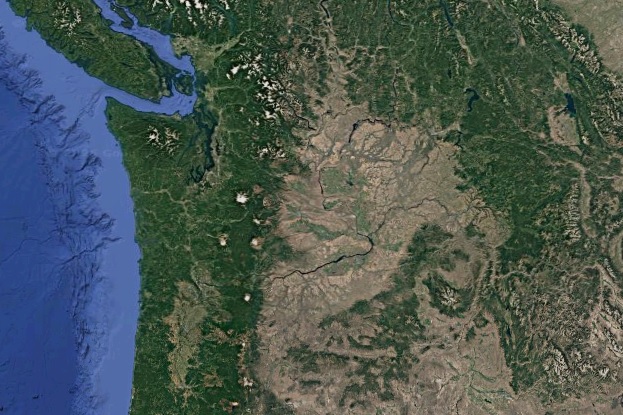
In the long march of history, “Washington” is a recent creation. For thousands of years before white settlers came, native people lived in this part of the world without creating the boundaries that define our state today. The pattern of their lives was shaped by the natural world – by where the rivers flowed, where the berries grew, and where the best fishing spots were located.
Washington’s first people didn’t plant crops or build factories; they fished, hunted, and gathered wild plants for food. They made their homes, their clothing, and everything else they needed from the materials that nature provided.
They knew how to harvest fish without harming future fish runs. They knew how to burn prairie lands to keep them open, so that the camas plant whose roots they ate would flourish.
They managed the natural world, but they also considered themselves part of it.
During the spring and summer, they often traveled and built summer camps where the best berries or the best hunting was. In the winter, they returned to their winter houses or longhouses, where they spent more time indoors, making baskets, clothing, and other necessities, and telling stories around the fire.
Throughout the year, native peoples held special ceremonies to show their appreciation for the bounty that nature provided. They honored the spirits of the fish, the trees, the sun and moon. This powerful connection to the spiritual nature of life was a source of strength and unity.
There were important differences between people on the east and west sides of the Cascades – just as there are today. Much of the east side of the state is drier, more open land, and the climate is hotter in the summer and colder in the winter than the rainy, more heavily forested west side of the state.
As you might expect, the people who lived near the coast or around Puget Sound ate more seafood – clams, oysters, and even whale meat, than people who lived on the other side of the Cascade Mountains. People in different areas also spoke different languages. What all Washington’s first people had in common, though, was that they were very good at catching and preserving salmon. Wild salmon were extremely important to all of Washington’s first peoples.
Defining the Northwest Native American Culture:
Due to the difference in environmental resources, the Pacific Northwest Coast Native Americans differed from the Plateau Native Americans. Yet much was traded among the tribes from both sides, especially along the Columbia River that afforded transportation and a source of food and commerce.
The small hierarchically organized societies in the Northwest Coast of North America evolved autochthonously (in the natural relationship between the native cultures and the lands they inhabited – ed.) and without agriculture. They were not the only societies to achieve inequality without agriculture, but they are our best ethnographic examples.
Many would consider the controlled burns the tribes would do to encourage root crop growth as a form of agriculture. – ed.
Both individuals and lineages were hierarchically ordered on the basis of differential access to prestige, while at the same time, individuals had more or less equal access to natural resources. Lineages owned resource localities and controlled access to them. The relative status of social groups appears ultimately to have rested on the productivity of each social group’s own resource localities.
Pacific Northwest coast [tribes] were active explorers in their region that they defined as their own through strong power dynamics that involved trade, war, and hunting. Necessary to their sovereignty was canoes.
Canoes became one of the central attributes of Coast Salish cultures; they were vital for the gathering of much of the people’s food, social relations, and waging war.
Most, if not all, groups along the coast had hereditary elites who had “sustained or on-demand control over non-kin labour”. The non-kin labour was slaves. Slaveholders not only controlled the labour of slaves, but had the power of life and death over them as well.
Northwest Coast societies were stratified rather than ranking societies because of the existence of slaves on the Northwest Coast, slaves who…. “are clearly slaves, if the notion of slavery is at all useful cross-culturally”. On the Northwest Coast, there were usually three classes – title-holders, commoners, both of whom were free, and slaves. Many groups actually divided these classes further. For example, the Coast Tsimshian divided titleholders into smkiket (real people) and li’qakik& (other people). The elite were “real people”…
Slaves on the coast were primarily war captives, although the children of slaves in many areas were also slaves. In some portions of the southern Northwest Coast. people could sell themselves into slavery to relieve debts. In some such cases, the term of slavery was fixed. In general, though, once enslaved. people were slaves for life unless ransomed by their relatives. That was not common. Ransom could be expensive. Additionally, the taint of slavery clung to the ransomed individual, and to their relatives and descendants. People who were enslaved were usually lost.
On a day-to-day basis. the lives of slaves did not visibly differ from the lives of commoners. Slaves lived with their owners. sometimes sharing the same quarters, but sometimes having to sleep in the least desirable parts of the house. Often, these spots were near the dwelling’s single door. However, the lives of slaves differed significantly from the lives of free members of a household in four crucial ways.
First, the owners of slaves could kill or trade them. Slaves could be killed for many reasons. or no particular reason. Chiefs did not have similar powers over free household members, even the lowliest commoners. The powers of chiefs over free individuals were quite ambiguous, as is often the case among so-called middle-range, or transegalitarian, societies. Chiefs might have great prestige and authority, and people might defer to them, but the power of chiefs was circumscribed in many ways. Slaves could also be traded, and often were. Individuals could pass from hand to hand, ending far from home. In short, slaves were wealth and status markers, and they could be disposed of like any status marker, including being traded away, given away or destroyed.
Second, chiefs used slaves to reinforce their position. Slaves were used as bodyguards and warriors. John Jewitt. who was enslaved by the Moachat chief Maquinna in 1804, reports that Maquinna was fearful of assassination. In fact, Maquinna armed Jewitt and his fellow American slave with guns and cutlasses and set them over him at night while he slept to protect him. In the latter part of the nineteenth century, the Tlingit chief Shakes’ only supporters were his slaves -but this seems quite unusual, if not even unique. There are no reports of chiefs using lesser titleholders or commoners in this way.
Third, slaves were outside gender. The strictness of the sexual division of labour on the coast is somewhat controversial; however, it is clear that slaves did the tasks of anyone, regardless of the appropriate gender for the task or of the gender of the slave. In the standard division of labour for fishing, for example, men fished while women processed the fish for immediate consumption or for storage. Either male or female slaves could be used for the latter tasks. Both male and female slaves paddled canoes.
Finally, slaves were the drudges of Northwest Coast society, doing tasks that were seen as hard. or unpleasant, such as hauling water and collecting firewood. However, there is no evidence for tasks that were the exclusive province of slaves. Interestingly, slaves may have had some control over the products of their labour. Jewitt made iron harpoons for Maquinna. and could trade or sell any excess production.
The crucial point here is that slaves were the only labour that Northwest Coast chiefs could reliably control. Their acquisition through raiding or trade could iron out shortages or bottlenecks in the household labour supply. Disposal of slaves through trade or killing could remove excess consumers. People with crucial skills could be acquired. Maquinna let Jewitt live because Jewitt was a blacksmith. I doubt such calculations were foremost in the minds of all slaveholders all the time. Slaveholding was part of the ongoing habitus of the Northwest Coast elite. Thus, once it developed, it was reproduced for many reasons. However, the calculus for acquiring, maintaining and expanding prestige on the Northwest Coast was the conversion of labour to wealth, which was converted to prestige (labour could also be directly converted to prestige) in a variety of ways. One route for converting labour to wealth was the production of large quantities of processed foods. Labour could be directly converted to prestige by the rapid construction of large houses or by fielding large war parties.
Large, corporate-group households were the context for the authority and power of the Northwest Coast’s elite and for the labour of slaves. Households were the basic (and sometimes highest) economic, political and social unit. Chiefs were first household chiefs.
While there were occasional great chiefs whose influences extended well beyond their household, these individuals were still house chiefs. There were no polities on the Northwest Coast in the eighteenth and nineteenth centuries. However, chiefs operated in regional networks of alliance, exchange, trade and competition.
Meanwhile on the other side of the Cascade Mountains…
The Plateau peoples’ modest levels of population and wealth made for societies characterized by general equality. Very few held slaves, and leaders relied heavily on the consent and support of their people. Women were seldom political leaders but commonly became shamans or healers, religious specialists. But all people were expected to learn the daily and annual rituals required to navigate in a world shaped by powerful spiritual forces. Like other indigenous groups, Plateau peoples put a great deal of emphasis on kinship and intra-group harmony. They traced their descent through both parents and spoke various dialects of Sahaptin that peoples across the region could understand.
Horses appeared on the Columbia Plateau in the early 1700s and quickly changed its economic, social, and political relations. They made it possible to travel and therefore hunt much farther afield, especially across the Rocky Mountains, where buffalo were thick. But horses also made these peoples much more vulnerable to raids from groups that lived several hundred miles away and who were acquiring firearms.
The Plateau peoples tried to protect themselves by giving more authority to war leaders, men who had grown wealthy and powerful by amassing hundreds of horses. Even as they eased hunting and travel, horses caused a widening gap between rich and poor and prompted warfare.
The greatest influences on the Plateau cultures during the protohistorical period (1700-1805) were the adoption of the horse and prophetic religious revival.
The major shared cultural features of the Plateau were relatively simple political organization with leadership through consensus of opinion, riverine settlement patterns, reliance upon aquatic foods, a complex fishing technology, mutual cross-utilization of subsistence resources, extension of kin ties through systematic intermarriage, institutionalized trade, vision quest of a tutelary spirit, and an emphasis on democratic and peaceful relations. The introduction of the horse had a complex effect on the peoples of the eastern Plateau, particularly the Flathead and Nez Percé, who adopted many Plains traits in sociopolitical organization.
According to Cayuse oral tradition, the tribe acquired its first horses as a result of what had originally been a war party against the Shoshone (or Snake Indians). Approaching a group of Shoshones on a tributary of the Snake River, sometime in the early 1700s, Cayuse scouts were bewildered to see their enemies riding what appeared to be elk or large deer. Closer investigation revealed that the prints left by the hooves of the mysterious animals were not split, like those of elk or deer, but were solid and round. The Cayuse chief arranged a truce and asked to trade for some of the strange creatures. It is said that he and his warriors gave away all they had and returned home, nearly naked, with a mare and a stallion.
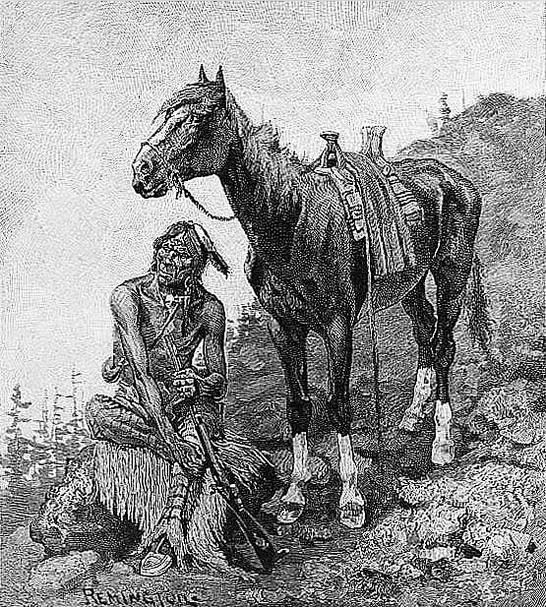
Acquisition of the horse led to what historian Theodore Stern has called “a revolution in perspective” for the Cayuses. No longer restricted to what they could carry or what their dogs could pull, they moved into new areas, traveling as far east as the Great Plains and as far west as California, to hunt, trade, fight, and capture slaves. Meanwhile, their herds multiplied rapidly, a combination of skillful breeding and periodic raids on other tribes. By the early 1800s, a Cayuse who owned only 15 to 20 horses was considered poor; wealthy families controlled 2,000* or more.
*That’s somewhere between $5-10 million worth of horses in today’s money.
Horses improved the range and effectiveness of war parties, making it possible for Cayuses to dominate their sedentary neighbors on the Columbia. They claimed ownership of The Dalles, the great fishery and trade emporium of the Columbia, forcing the weaker bands in that area to pay them tribute in the form of salmon and other goods. “For years to come,” wrote historians Robert Ruby and John Brown, “they would not let its salmon eaters, teeth worn and eyes blinded by river sand, forget their inferiority”.
By making it easier to travel, horses also fostered social and political interaction between the Cayuse and other Indian peoples. They began to take on the role of middlemen in the increasingly extensive trade between the Indians of the Great Plains and those of the Pacific Coast. They incorporated elements of Plains culture into their own, adopting new styles of clothing and personal ornamentation, new methods of hunting, new ways of packing and transporting goods. They added conical teepees, covered with buffalo hides, to their housing options. The idea of choosing headmen on the basis of their skills as warriors came from associations with the peoples of the Plains.
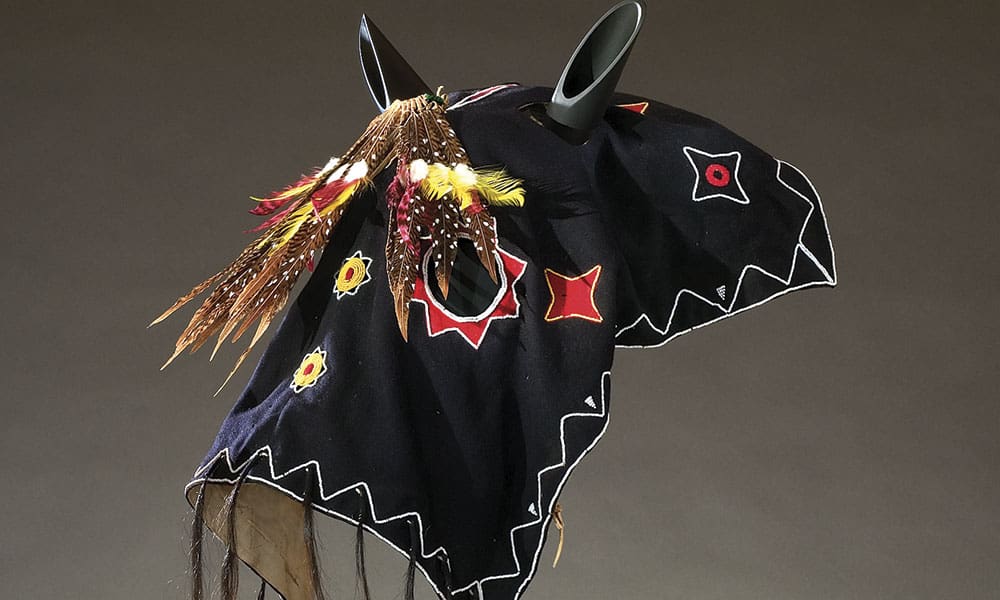
As a new symbol of wealth, “the importance of horses in Plateau culture is demonstrated by the elaborate material culture associated with them,” such as beaded collars, blankets, stirrups, and bridles (Walker). The equestrian lifestyle also brought about increased warfare. Horse-raiding expeditions garnered prestige along with extra mounts. Adventuring warriors pursued old hostilities and created new feuds with far-flung tribes in attempts to expand territory. “Mounted war parties could strike enemies at greater distances & with greater force than ever before. A war party on horseback could easily defeat a much greater number of men on foot” (Walker).
The reach of the new technology was long. …the Cayuse [quickly turned] the horse into an instrument of imperial power.
This hunting and gathering nation used its early acquisition and mastery of the horse to transform traditional slave raids into a system of tribute stretching from the Great Plains to the Willamette Valley. Others did their gathering and manufacturing for them now.
About 1800 the Spokane prophet Yurareechen (the Circling Raven) revealed a vision that was passed down as follows: “Soon there will come from the rising sun a different kind of man from any you have yet seen, who will bring with him a book and will teach you everything, and after that the world will fall to pieces.” Renewal and the resurrection of the dead would follow destruction.
Another prophecy circulated among the Flatheads. The medicine man Shining Shirt had foretold that white men wearing long black robes would arrive to teach the Indians new prayers and a new moral law that would radically change their lives. The intertribal wars would cease, but it would be the beginning of the end, for a flood of white people would come in the wake of the Black Robes.
NPS:
Captains Meriwether Lewis and William Clark crossed Nez Perce country in the fall of 1805 and again in the spring of 1806. With the exception of their winter encampments, the Corps of Discovery spent more time among the Nez Perce than any other group they encountered in their journey.
Lewis and Clark had entered the region of salmon and the people who relied on anadromous fish species to varying degrees for year-round sustenance. Unlike the buffalo-hunting tribes on the Plains, indigenous groups in the Columbia River Basin mixed hunting, root and other plant gathering, and fishing, living along major rivers and tributaries much of the year and seasonally in upland camps.
The farther west Lewis and Clark traveled down the Columbia River system to the sea, the more the indigenous people based their economies on salmon and the more they hued to the river. In their descent of the Columbia, the captains had to make more adjustments to geography and Indian people than at any other time in their journey. The Columbia, they realized more and more, was nothing like the Missouri.
Down off the punishing Lolo Trail, where two inches of snow had covered the men one night and they had eaten only a little soup, the Corps dropped to the welcoming meadows along the Clearwater River in late September 1805.
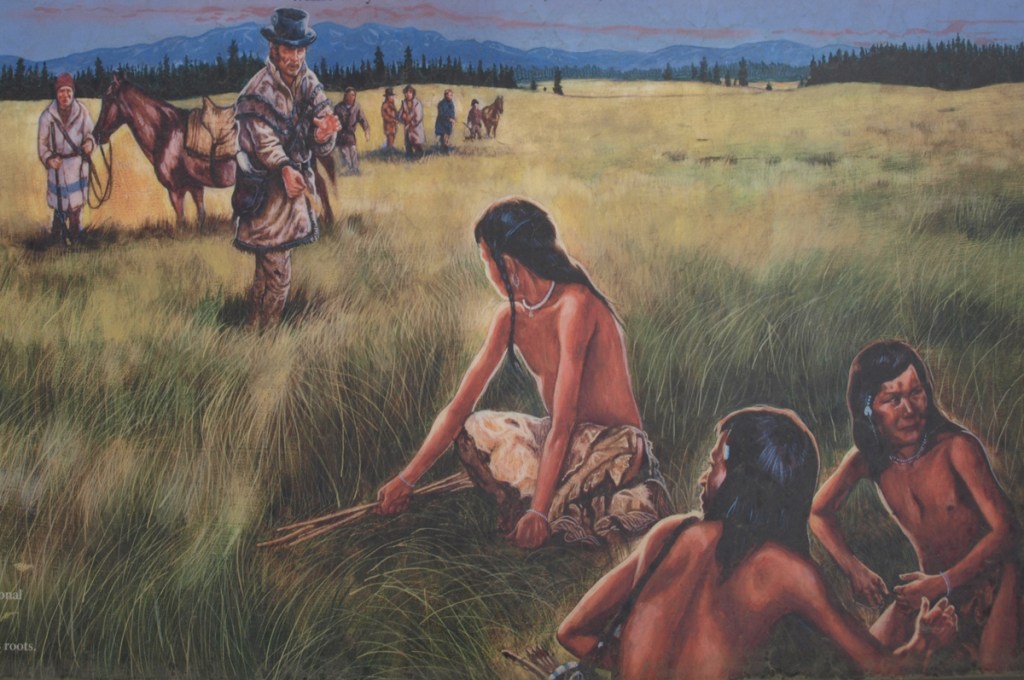
Not unlike their reliance on the Shoshone weeks earlier, Lewis and Clark could only hope that the Indians they encountered would accept their friendly gestures and take pity on them. That hope nearly expired as Clark and then Lewis met with the Nez Perce in their camps.
Fortunately for the Expedition…
A Nez Perce woman who had been captured years before and lived in Canada with whites assured the men that the bedraggled whites should be trusted, thereby preventing a potential tragedy. Instead, the Nez Perce willingly furnished food. As Sergeant John Ordway put it in his journal: “we halted about one hour and a half eat hearty of the Sammon and bread.”
Guided by the Nez Perces, who provided food, Clark the next day reached the Clearwater River at present-day Greer and three kilometers (two miles) downstream stopped at a village whose elderly headman was Aleiya, which Clark understood meant The Twisted Hair. It was in this village that Wet-khoo-weis, the woman who had returned from the east, saw the whites and told her people to do the strangers no harm. Possibly for this reason, the Nez Perces showed the small band of explorers friendship and hospitality. The Twisted Hair welcomed them and the next day accompanied them back to Weippe Prairie where Lewis and the rest of the expedition had arrived weak and starving.
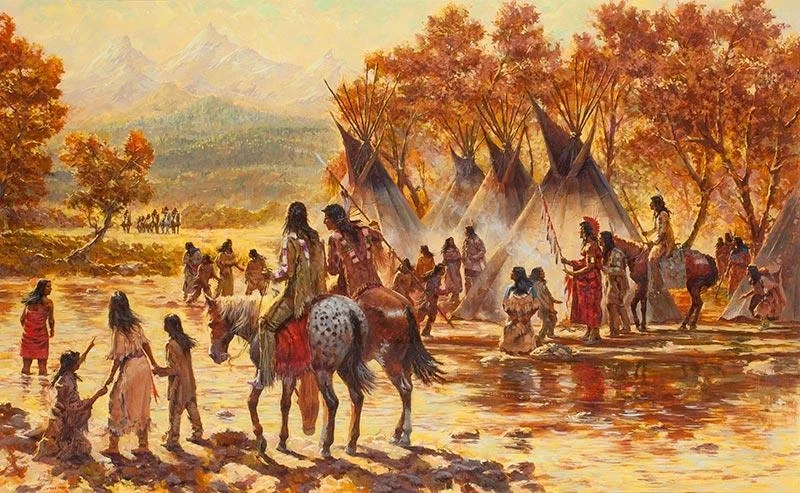
Though many of the whites became temporarily ill from dysentery, the food generously supplied them by the Nez Perces saved their lives, and they gradually regained their strength. At the same time, The Twisted Hair and other Nez Perces made maps on whitened elk skins to show them the water route ahead. Escorted by some Nez Perces—whom Lewis and Clark called the Chopunnish, which may have been a corruption of Sahaptian—they made their way down the Clearwater to a point opposite the mouth of the North Fork of that river, where they halted long enough to construct dugout canoes. On October 7, after caching some of their supplies and entrusting their horses to members of The Twisted Hair’s family until they returned the next year, they left what is now known as Canoe Camp and set off down the Clearwater in the canoes.
They passed many small Nez Perce winter villages and fishing camps and at the site of present-day Lewiston turned into the Snake River. The two Eastern Shoshonis who had conducted them over the Bitterroot Mountains had meanwhile returned to their own tribe, but The Twisted Hair and another Nez Perce man went along with them down the Snake and Columbia rivers, helping them negotiate with the new peoples through whose countries they passed. At the great Dalles fishing center, the explorers finally parted with the two helpful Nez Perces and continued their journey to the Pacific Ocean.
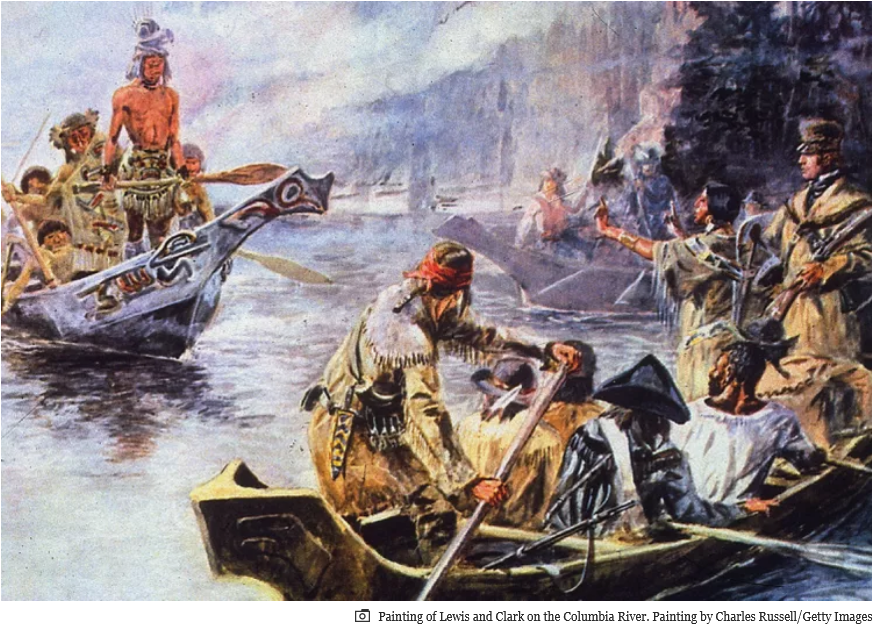
The following spring, the explorers started up the Columbia again on their return trip home and by May 1806 were back among the Nez Perces on the Clearwater River. They recovered most of their horses from The Twisted Hair, who told them that the great war chiefs, who had missed them the previous fall, wanted to meet them.
The explorers distributed trade medals and American flags to the chiefs, and with the help of their Eastern Shoshoni traveling companion, Sacajawea, and a Western Shoshoni, who had been captured by the Nez Perces and spoke the Nez Perce language, described the powerful American nation in the east which they represented and the expedition’s purposes. One goal, they explained, was to establish peace among all warring tribes so that they could erect trading houses where the people could go in safety and secure white men’s goods.
The chiefs were skeptical that their enemies would agree to peace, but the prospect of being able to acquire white men’s arms and other goods was appealing, and they said that they would consider the proposal.
The chiefs finally agreed to recommend to their bands “confidence in the information they had received” from Lewis and Clark. Broken Arm addressed all the people, “making known the deliberations of their council and impressing the necessity of unanimity among them.” There was not a dissenting vote, and an old civil chief, who Lewis understood was the father of Red Grizzly Bear, told the explorers that the Nez Perces were “convinced of the advantages of peace and ardently wished to cultivate peace with their neighbors.” He concluded with the promise “that the white men might be assured of their warmest attachment and that they would always give them every assistance in their power; that they were poor but their hearts were good.”
Within the context of the history of future relations between the Nez Perces and white men, this council and the Nez Perces’ promise of friendship and alliance with the Americans had an enduring significance. Word of the agreement was spread among the villages, and knowledge was passed from generation to generation that the Nez Perce leaders had given their word to Lewis and Clark, the first white men in their country. The Nez Perces who could later say that they had met or seen the American captains boasted about it with increasing pride and saw to it that the younger people understood the promise given in the Kamiah Valley, and that they honored it.
In 1811, members of John Jacob Astor’s Pacific Fur Company became the first White traders to enter Nez Perce country. Through White traders, the Nez Perce at last secured guns to defend themselves against the warring Plains tribes.
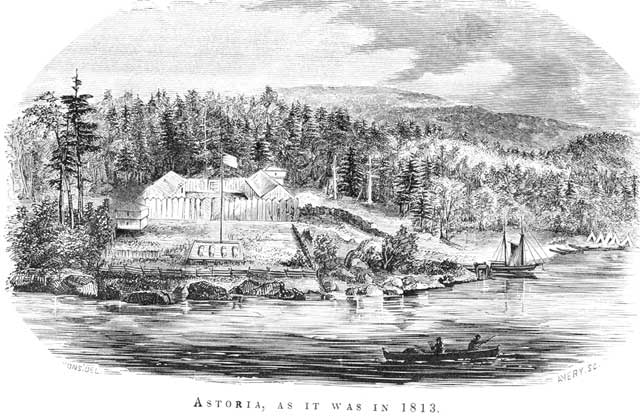
In August 1812, Donald McKenzie of the Astor group opened a post on the Clearwater River in the hope that the Native peoples would trap beaver for him. His expectations were untenable, and the post soon closed. The resulting tensions led to hostilities in 1813 and 1814—including the hanging of a Native American by one of the company’s traders. Peace was reestablished, but only after the Nez Perce and White people had avoided each other for several years.
Eventually, mutual economic interests ameliorated the rancor between the Nez Perce and the White traders. In 1816, McKenzie opened the Fort Nez Perce fur trading post on the Columbia River for the North West Company. He induced the Nez Perce and other tribes to make peace with each other and participate in his trapping brigades.
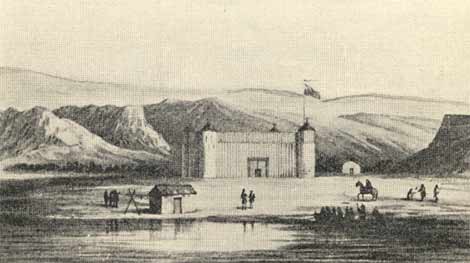
In 1821, the British Hudson’s Bay Company merged with the North West Company, and the company’s expanded forays into beaver-rich Idaho brought trappers into frequent contact with the Nez Perce’s buffalo-hunting bands. However, in 1818, the Americans and British had begun a joint occupancy of the Oregon Country, and the Nez Perce were most anxious to deal with Americans. The Americans simply offered better bargains than did the British. The Nez Perce rapidly became the most influential Native Americans on the Columbia Plateau and eventually assumed a pivotal role in the relations between the US government and the Native peoples of the Pacific Northwest.
Christianity came to the Indian nations of the United States in a variety of ways. Sometimes a single non-Indian missionary was the vehicle, and sometimes it came from a variety of sources including Indian missionaries. In 1825, Governor George Simpson of the Hudson’s Bay Company was besieged by Indians in present-day Washington state seeking Christianity.
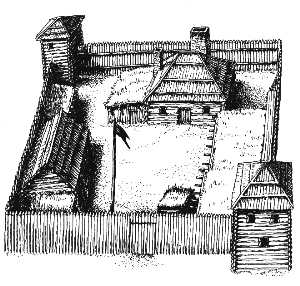
At Fort Okanagon he spoke with a Thompson chief who asked for a missionary. A few days later, a delegation of Flathead, Spokan, and Kootenai asked for a missionary. This delegation was followed by two Nez Perce chiefs who were asking about Christianity.
Inspired by what he saw as an interest in Christianity, Governor Simpson conceived the idea of selecting some Indian boys from the Columbia River tribes and sending them east to be educated. His idea was that these boys could help in “civilizing” the tribes upon their return. Two teenage Indian boys – one from the Spokan in Washington and the other from the Kootenai in Idaho – were sent to the Red River School in Canada. The boys were renamed Kootenai Pelly and Spokan Garry.
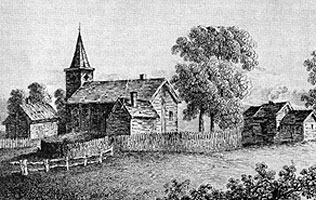
In 1829, Spokan Garry and Kootenai Pelly returned to the northwest from the Red River School in Canada. Garry’s father, Illim-Spokanee, died while the boy was at school and so the Spokan greeted him as a leader’s son who should be heard on matters affecting the welfare of his people. Spokan Garry brought with him the Christianity which he learned in school and preached it to the tribes in eastern Washington. Soon after his return, Spokan Garry built a tule mat church and school along the Spokane River. He taught brotherly love, peaceful behavior, and humility.
The Nez Perce’s material success did not greatly affect integral aspects of their culture, such as their animistic beliefs, their gender roles, or their buffalo-hunting tradition. Yet the determined efforts of Presbyterian missionaries eventually led to deep and lasting changes. A series of lectures in 1829 and 1830 by Spokan [Garry] and Kutenai [Pelly] … extolled the benefits of Christianity, and in 1830 the Nez Perce sent two youths to the mission. Christian influences spread among the tribe, to the point that one group of Nez Perce would not join an American trapping brigade for a Sunday hunt.
In a significant gesture, four Nez Perce warriors accompanied an American fur-trading group to St. Louis in 1831. There the Native Americans told William Clark, the superintendent of Indian Affairs, and the Roman Catholic bishop that the Nez Perce needed Bibles and Christian missionaries.
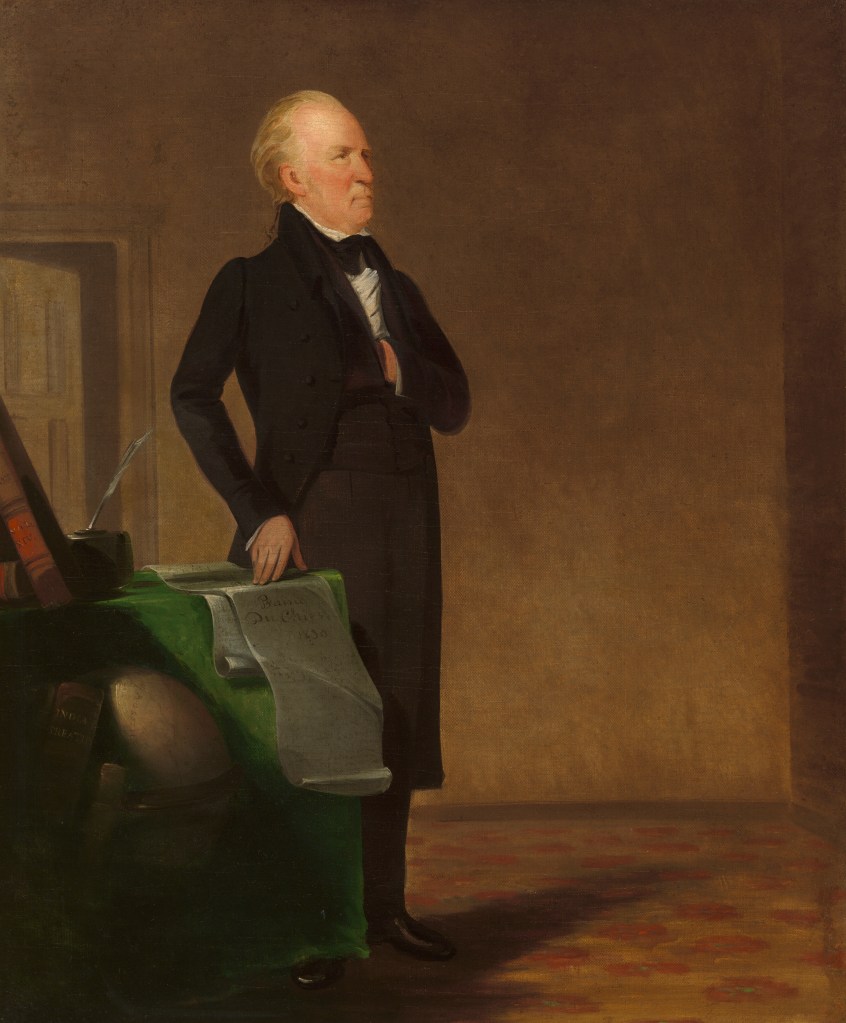
The warriors likely sought increased social prestige and material enrichment more than spiritual benefits. Nonetheless, in 1835, the American Board of Commissioners for Foreign Missions sent Presbyterians Samuel Parker and Marcus Whitman to the Nez Perce.
Dr. Marcus Whitman began his urgent search for a missionary wife after hearing an evangelical minister tell an astonishing story: four Indians from beyond the Rockies traveled to St. Louis in 1831, supposedly in search of missionaries who could teach them about the white man’s God.
The story upended Whitman’s life in late November 1834. He had gone to an evening lecture at the Presbyterian church in Wheeler, a small Steuben County town where he had been practicing medicine for two years and riding on horseback to treat patients across the Burned-Over District. …
Whitman was then thirty-two, never married, and growing tired of his life as a small-town doctor. He had chosen a career in medicine because relatives convinced him it would pay better than his first choice-the ministry. He had been a committed Christian since he was sixteen, having converted at a revival, like so many others during the Second Great Awakening.
His father died when he was seven, and his mother sent him away from the family home in Rushville, New York, to his father’s family in Massachusetts. There he lived for a decade with his grandfather and uncle, whom he later described as “pious” and who, he said, gave him “constant religious instruction and care.” …Whitman attended a private academy that encouraged students to consider careers in the church. When he returned to New York at age seventeen to live with his mother and stepfather, his family actively discouraged his plans to become a minister.
At twenty-one, Whitman became an apprentice doctor, learning his profession by riding rounds with an older doctor for two years. Over the next decade, he took a total of eight months of classroom training at a medical college in Fairfield, New York, which at the time was sufficient to earn him a medical degree.
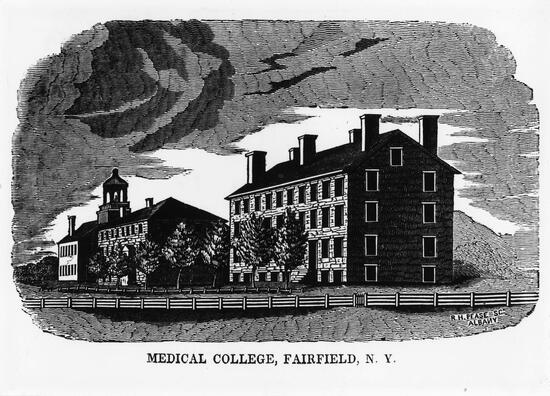
He then moved to Wheeler, where he practiced medicine and became active in the Presbyterian church, teaching Sunday school and serving as a church elder.
But boredom and a sense of religious duty made him restless. He wanted to teach “knowledge of the true God” to “the Heathen,” as he told the American Board [of Commissioners for Foreign Missions] in a letter written in the summer of 1834. It concluded, “My mind has long been turned to the missionary subject. For the last six months I have been more intent upon it than before. I wish soon to have a definite course.”
He found it in church that November night in Wheeler. The story he heard-about Far West Indians seeking the Gospel in St. Louis-was told by the Reverend Samuel Parker, a Presbyterian minister from Ithaca, New York, who was traveling across the Burned-Over District, giving lectures and raising money for a missionary expedition to the West.
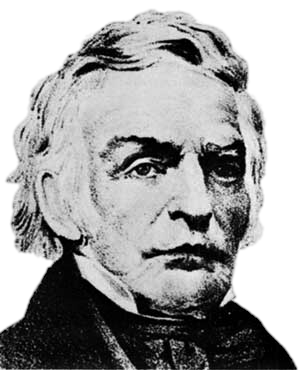
Although he added a few fictional embellishments of his own, Parker had lifted most of his story from the front page of the Christian Advocate and Journal and Zion’s Herald, a Methodist newspaper printed in New York.The story, published in March 1833, had become an evangelical sensation. It energized believers all across the United States for several years, and historians later credited it with setting off a chain reaction that added the Pacific Northwest to the United States.
The single source for the newspaper’s big scoop about Indians searching for Christian enlightenment in Missouri was a letter from William Walker, a white Christian married into a Great Lakes tribe called the Wyandots. Walker claimed that the four Indians were from the Flathead tribe, located in what is now western Montana. To illustrate what a Flathead looked like, editors at the Christian Advocate helpfully placed a drawing of one on the front page. It showed an aboriginal male in profile with a spectacularly flat forehead.
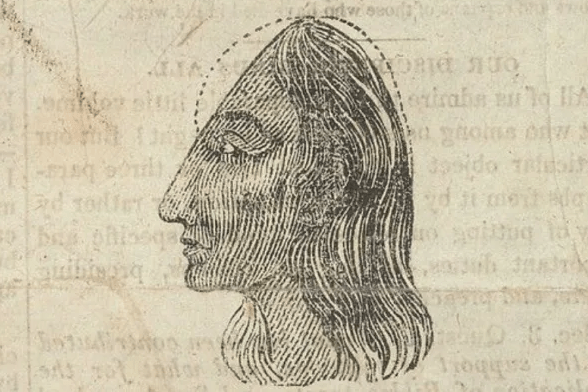
Walker said he saw the Flatheads while visiting the St. Louis office of William Clark, the explorer of Lewis and Clark Expedition fame who had since become superintendent of Indian affairs for the federal government. According to Walker’s account, the Indians in question called Clark their “great father” and told him this story:
It appeared that some white man had penetrated into their country, and happened to be a spectator at one of their religious ceremonies, which they scrupulously perform at stated periods. He informed them that their mode of worshipping the supreme Being was radically wrong, and instead of being acceptable and pleasing, it was displeasing to him; he also informed them that the white people away toward the rising of the sun had been put in possession of the true mode of worshipping the great Spirit. They had a book containing directions how to conduct themselves in order to enjoy his favor and hold converse with him; and with this guide, no one need go astray, but every one that would follow the directions laid down there could enjoy, in this life, his favor, and after death would be received in the country where the great Spirit resides, and live for ever with him. …
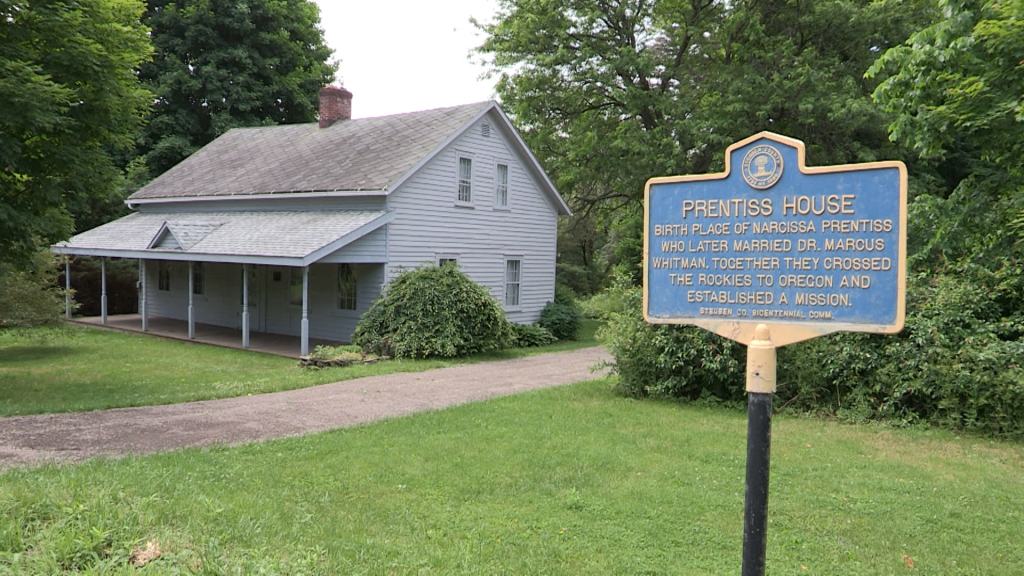
Although Narcissa Prentiss was born six years after Whitman… she was the first to embrace the evangelical movement. In early 1819, when she was just eleven, a revival came to her Steuben County hometown of Prattsburgh, population 1,387. It packed the Congregational church, where parishioners trembled, wept, groaned, and confessed their sins. In June, in an overflow ceremony that had to be held out of doors, Narcissa joined 59 of her neighbors in making a public confession of faith.
Five years later, a few days shy of her sixteenth birthday, Narcissa had a religious epiphany that would be far more consequential. She announced to her family and to her church that she wanted to be a missionary. In a letter to the American Board a dozen years later, she remembered the exact day that her vague teenage yearnings to convert unbelievers became a firm lifelong commitment.
“I frequently desired to go to the heathen, but only half-heartedly-and it was not until the first Monday of Jan. 1824 that I felt to consecrate myself without reserve to the Missionary work.”
Although Narcissa was unusually young when she pledged to become a missionary, her vow was no surprise. As the eldest daughter in a prominent Presbyterian family of nine children, she had been groomed for it from birth.
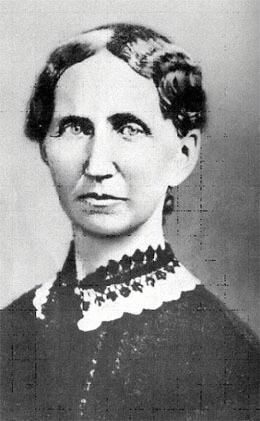
Her mother, Clarissa, was a ferocious evangelical force in Prattsburgh. A Presbyterian convert who insisted that her children spend most of every Sunday in church or in prayer, Clarissa helped found the Female Home Missionary Society of Prattsburgh in the front parlor of the Prentiss house. Clarissa encouraged Narcissa to teach Sunday school, read turgid church histories, and sing in the church choir.
Narcissa was intoxicated by the romance and risk of mission work. She devoured books about missionary women who died young while laboring in foreign lands. She also loved the social aspect of Presbyterian life, becoming a popular participant in church-related parties, concerts, and sleigh rides. She needed little encouragement to show off her fine voice.
For Narcissa, her mother, and legions of American women in the early nineteenth century, church activity was a morally sound and socially sanctified way to break the chains of patriarchy and get out of the house. In the name of God, temperance, and Christian charity, women could travel, entertain, and learn about the world without the permission of a husband or a father. Evangelism also gave prosperous families a means and an excuse for imposing their values on others, especially those who did not have as much money. Narcissa’s father, for example, belonged to a church committee that investigated sinful behavior among members of the Prattsburgh Congregational Church.
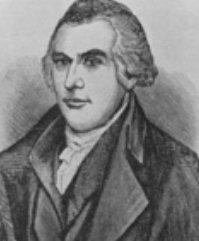
Because Narcissa was a devout young woman of good family, her missionary ambitions opened doors to more formal education than was typical for girls at the time. At sixteen, her parents sent her to a religious academy in nearby Auburn, New York. At nineteen, she enrolled at the private Franklin Academy, in Prattsburgh, where she studied for three years, developing skills that helped her become an affecting diarist and graceful writer of entertaining letters.
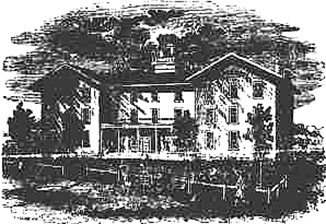
Her education also put her in a position to take teaching jobs in nearby towns, sometimes spending several months away from home. Yet her escape from patriarchy went only so far. When it came to winning an appointment as a missionary, she had a disqualifying liability. She lacked a husband. …
Narcissa Prentiss, Marcus Whitman, and Henry Spalding had come of age in a part of upstate New York that would become famous as the “Burned-Over District,” a term that referred to the spiritual flames of revival evangelism. They were fanned by charismatic preachers, and they flared up repeatedly in more than a dozen “burned-over” counties of central and western New York, an area bordered on the east by the Finger Lakes and on the west by Lake Erie. Traveling revivals were the spark, spiritually speaking, for the Second Great Awakening, the movement that built churches, trained ministers, and converted rural Americans to Protestantism at a breakneck pace in the first half of the nineteenth century.
The awakening took an especially strong hold in booming factory towns along the Erie Canal, which moved industrial goods between the Hudson River and the Great Lakes. The towns were bursting with young people from farm and shopkeeping families-and many of them turned to evangelical Christianity to organize their lives, mold their values, and regiment their social interactions. …
Marcus Whitman had promises to keep in the West. On a scouting trip to the Rockies in the summer of 1835, he had met Indians who told him they would welcome missionaries to their tribal lands in the Oregon Country. Whitman vowed to return within a year.
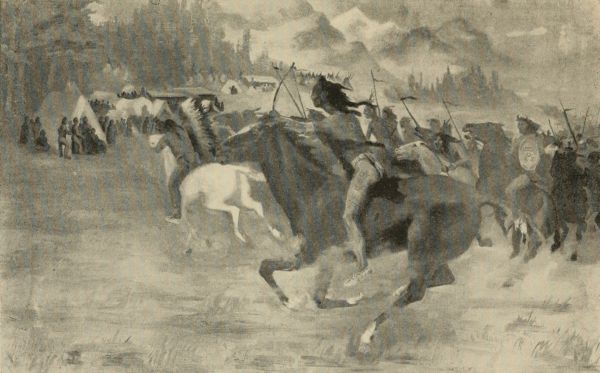
Six months later, he was back home in upstate New York, struggling to keep his word. To get across the continent in time for the planned Indian meetup in the Rockies in the summer of 1836, he needed to marry Narcissa Prentiss by February and head west by March. He also needed to find a second missionary couple for the journey, a couple that included an ordained Protestant minister and a minister’s wife who could provide female companionship for Narcissa. This was at the insistence of the American Board of Commissioners for Foreign Missions, the Boston-based organization that would be footing the missionary bills. The American Board, created in the early 1800s by young graduates of Williams College, was the country’s largest and most important sponsor of missionaries to foreign lands and to Indians across America. It was controlled by Calvinist ministers, most of whom had been trained at elite colleges and seminaries in New England, where they had been drilled in the teachings of Jonathan Edwards, the Puritan theologian and revivalist preacher who instigated America’s religious awakening. Nearly all of the board’s leaders-and many of the missionaries they selected in the first half of the nineteenth century-were members of Congregational and Presbyterian churches in the Northeast.
The supply of road-ready East Coast missionary couples was low in the winter of 1835-36. What few candidates Whitman could locate in New York and New England had turned him down. That left him with no alternative but to try to wrestle a commitment out of Henry Spalding.
By the late summer of 1835, the American Board had accepted Reverend Spalding and his wife, Eliza, as missionaries. It planned to send them to the Osage Indians in what is now eastern Kansas. They were supposed to leave in the fall, but Eliza gave birth in October to a stillborn child, and their departure was delayed until she was strong enough to travel.
It was Narcissa who told Marcus they might be available. Having been born and raised in the middle-class Protestant establishment of upstate New York, she was plugged into the comings and goings of local Christians, especially those who had been chosen by the American Board as missionaries. Narcissa’s willingness to point her fiancé in the direction of the Spaldings suggested that she had no feelings one way or the other for Henry Spalding. It had been about eight years since she turned down his proposal of marriage. She took for granted that his marriage to Eliza, combined with the passage of time and the recent loss of their first baby, had extinguished his animosity toward her.
When Whitman first asked Spalding to travel with them to Oregon, his reply was lukewarm. “If the Board and Dr. Whitman wish me to go to the Rocky Mountains with him, I am ready. Act your pleasure,” he wrote in a late-December letter to the American Board. Within weeks, however, Spalding apparently had changed his mind. He began bad-mouthing Narcissa. He said he would not travel with her because he questioned her judgment. It is not known whether Whitman heard about this; Narcissa’s well-connected family certainly did.
Still, Whitman desperately needed a commitment from Spalding. Without it, he would be forced to postpone his missionary dreams for at least another year. Under deadline pressure, he failed to investigate-or chose to ignore-evidence that Spalding held a grudge against Narcissa and that he was all but certain to become a liability in Oregon.
After an early-February snowstorm, Whitman chased after Spalding as the reverend and his wife traveled by sleigh to a nearby village to speak at a Presbyterian church. “We want you for Oregon,” Whitman shouted from his horse. The three went to a nearby inn, where they prayed together and Whitman pleaded his case. In a letter, Spalding summarized the argument he heard from Whitman: “All the other attempts to obtain a clergyman have failed and if I refused, the Mission to the Rocky Mountains must be abandoned. . . . I felt it my duty to consent to his request.”
Whitman had successfully secured an ordained minister for Oregon and found a female companion for Narcissa. But he expressed his regrets almost immediately. He wrote to the American Board, “I am willing to accompany Mr. Spauldin as an associate yet I know little of his peculiar adaptedness to that station.”
Far more worried was Narcissa’s father. Judge Stephen Prentiss, a businessman and landowner in central New York, questioned the rationality of Narcissa’s traveling across the breadth of North America with a minister who had publicly and repeatedly slurred her character. Judge Prentiss summoned Spalding to his home, where, with Narcissa in attendance, he interrogated the minister about his criticism of his daughter, as well as any feelings he might still be nursing toward her. Spalding somehow managed to mollify Prentiss, who did not object when the Spaldings and the Whitmans went west.
He had clearly been taken in by Spalding: Four years later, in a letter from Oregon to her father, Narcissa wrote, “This pretended settlement with father, before we started, was only an excuse, and from all we have seen and heard, both during the journey and since we have been here, the same bitter feeling exists.”
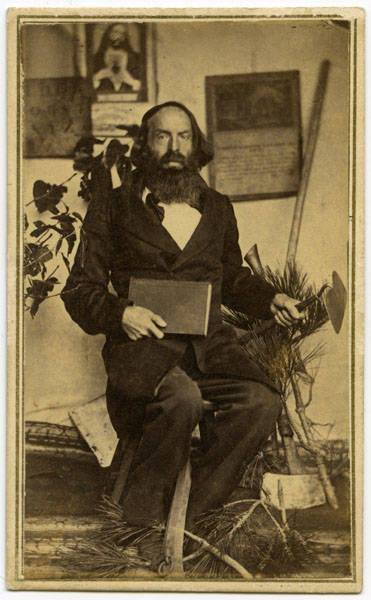
[R]elationships among all the members of the Oregon Mission — including four couples who arrived as “reinforcements” in 1838 – were marked by resentment and contentiousness. None of them got along. They quarreled about everything from how to load a wagon to how to pray. As writer William Dietrich put it, “The same strong-minded idealism that fired people with Christian zeal made it difficult for them to cooperate”. The six couples ended up establishing four separate mission stations, hundreds of miles apart.
NPS:
Pre-existing tensions and hurt feelings amongst the group of missionaries sowed discord throughout the eleven years of the Oregon missions. There is evidence that suggests that Henry Spalding may have proposed marriage to Narcissa earlier in their lives and that Narcissa refused his offer. Whether this was the cause or not, there was personal conflict between the two missionaries for years.
During his time as a missionary to the Nez Perce, Henry faced more serious challenges and issues than his rocky personal history with the Whitmans. He struggled to learn the Nez Perce language, and he often directed his fiery temper and the end of a lash at the Nez Perce people to whom he was ministering.
Spalding believed himself to be the savior to people who had no religion. He saw the Nez Perce as being misled by their spiritual leaders, whom he viewed as sorcerers. He had little tolerance for the Nez Perce cultural beliefs and habits and often erupted into bursts of anger at them.
In the beginning, the missionary couple had good relations with most of the Nez Perces. Counseled by their headmen, the people willingly supplied food and labor to the Spaldings. They were excited by the novelty of having white teachers living among them and, fearful that they might find cause for leaving, did everything they could to help make them comfortable. They also were interested in the house and the material possessions and in everything the Spaldings taught them. They came in large numbers to Henry Spalding’s morning and evening prayers and Sunday services.
Aided by the translations of John, one of the Nez Perce boys whom Whitman had taken east and whom Spalding used as an interpreter, they learned to sing hymns and gospel tunes and followed intently Spalding’s sermons and narrations of bible stories, which he made more graphic to them by holding up pictures he had painted.
Many Nez Perces became especially attached to Mrs. Spalding, a frail woman whose gentle nature contrasted with her husband’s stern gruffness. She printed her own alphabet books to try to help the Nez Perces learn reading and writing, and she began a day school at the mission, attended principally by women, children, and a few of the important older men who hoped that what they learned would augment their status. Soon afterward, she also organized a class of Indian girls, instructing them in sewing and in the chores of running a white man’s house
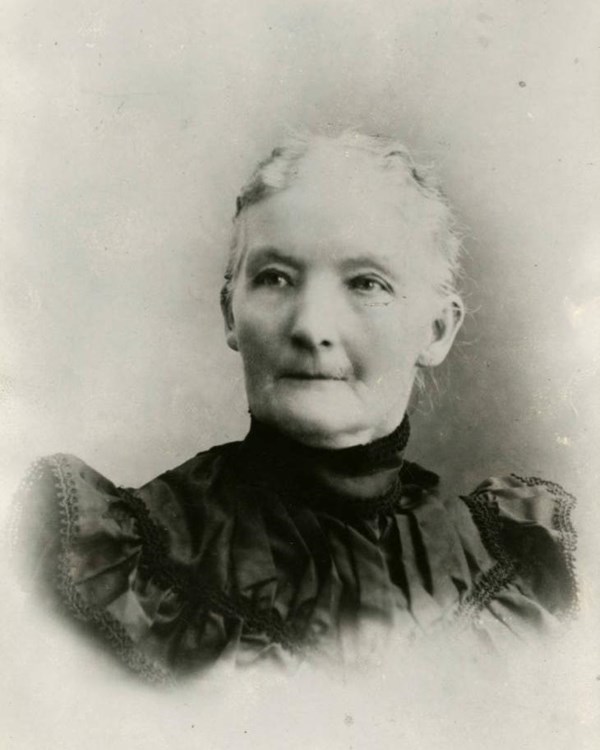
Founding Mother: Eliza Hart Spalding and the Spalding Mission:
Within six months of her arrival, Eliza brought eight Nez Perce children “into their family” as adoptive children. Before she and Henry were able to build permanent structures, they lived in tipis. On December 23, 1836 when they moved into their permanent structure built by the Nez Perce , it was a log home eighteen feet by forty-eight feet. It was the first mission in Idaho and of the structure only an eighteen by eighteen foot space was used as a home by the family. The rest of it was used as a school for the Nez Perce and a church. At the time of their move-in it was missing two doors, two windows, and a portion of the floor. This did not seem to bother Eliza, as she wrote to her parents in February of 1837:
“I need not specify any particulars to satisfy you why this spot is endeared to me, if you will reflect for a moment upon the thousands of miles I have journeyed on horseback through rugged barren uninhabited regions to reach it.”
She referred to it as “this dear place” in a letter to her parents and said “we are located among a people with whom we will be happy to spend our days.” In 1839, they resettled the mission back down the creek two miles to the banks of the Clearwater River. This mission house would become the base for the first white settlement in Idaho, and would grow rapidly during the Spalding’s time there.
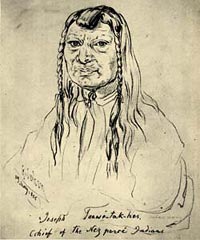
Henry’s regular Sunday service was often attended by over five hundred Nez Perce and on some occasions having upwards of two thousand attendants. One of the earliest of their converts was a Nez Perce named Tuekakas, from the Wallowa River area in Oregon. After his baptism, Henry renamed him Joseph. He became Old Joseph when his son was born, who also took on the name of Joseph. Young Joseph would later be known to American history as Chief Joseph, the Nez Perce chief who tried to lead his people to freedom after they refused to join a reservation.
Teaching
Eliza quickly learned the Nez Perce language and put her new skills to use in her teaching. As Henry noted after the opening of the school, the first in Idaho, in January of 1837:
“Here a scene commenced, more interesting, if possible, than any we had before witnessed. Nothing but actual observation can give an idea of the indefatigable application of old and young, mothers with babes in their arms, Grand-parents and Grand-children. Having no books, Mrs. Spalding with her numerous other cares, is obliged to supply the deficiency with her pen and print her own books, consequently, she can spend but a short time each day in school. But her absence does not close the school. From morning till night they are assembled in clusters, with one teaching a number of others.”
She could not teach each of the hundreds of Nez Perce who showed up daily, so she set up a system of teaching in which she taught a few Nez Perce a song or lesson until they memorized it. They would then teach it to the other members of the tribe. In addition to teaching languages, she also taught many of the girls to sew and knit. She set up the first loom west of the Rockies and taught the girls to make stockings and “civilized” clothing. Eliza also hand wrote lessons in the Nez Perce language. By doing so, Eliza taught many of the Nez Perce how to read and write in their own language. Prior to Eliza’s teaching the Nez Perce had had no concept of a written language, since all of their traditions were passed orally.
Eliza’s school remained different than many of the other missionary schools in the west. She did not require her pupils to bathe, dress in “white” clothing, or cut their hair. In addition, she taught in both English and the Nez Perce language. This probably made her school more successful, because she did not foster as much animosity amongst her students. However, a language barrier still existed and the lack of an “adequate” written language required Eliza to develop two other ways to teach her pupils. The first was through the use of song. She taught them to sing Protestant hymns and created a hymnal in the Nez Perce language, the first book written in the language. The second teaching method was the use of story and illustrations. Eliza would draw an illustration of a Biblical story and would then teach the story to a member of the tribe who spoke some English. This member would then pass on the story to the rest of the tribe in their language. This strategy worked particularly well because the Nez Perce had an existing tradition of oral history.
Relationship with Nez Perce
Through her work as teacher and missionary to the Nez Perce she developed a positive relationship with them, which was important as Henry often left Eliza alone with three thousand Nez Perce when he traveled to visit the Whitmans. She was often followed around her home by Nez Perce women who wanted to see how the “white woman” cooked, cleaned, dressed, and cared for her children. She was quickly liked by them and respected for her courage and for her attempts to act as a buffer between the Nez Perce and Henry, who was not always as well liked. He was inflexible on gambling, liquor, and polygamy and reproved many people and even went as far as whipping some Nez Perce or having them whip each other. This led to him being ridiculed and denounced by some. Henry was the opposite of Eliza in his relationship with the Nez Perce; where she sought to understand them, he sought for them to understand him.
Nez Perce elder Allen Slickpoo:
“Many of our elderly people have related stories about Spalding using Nez Perce labor without any compensation to perform hard chores except being told that they were ‘doing it for the Lord.’ Related stories were also told of Spalding tying a person to a flogging tree and giving him twenty lashes for being disobedient. To many of us this is an act of slavery, whether it was for ‘the Lord’ or not.”
In contrast, one Nez Perce man is known to have insulted Eliza and he nearly lost his life at the hands of his own people but was spared when Eliza pleaded with his captors to not kill him. Eliza Spalding Warren, the eldest daughter of Henry and Eliza, later recounted another story demonstrating the respect and love between the Nez Perce and Eliza:
“Once, when she had been sick for a long time and we all feared that she would never recover, the Indians were most solicitous, and never a day passed that they did not ask about her condition. One of the old chiefs used to sit by her bedside and watch her quietly. He broke his stolid reserve at one time, and in his broken Indian manner said to her: ‘Oh, that I might be taken in your place and you could be spared to teach my people!’”
Another story comes from missionary William Gray. One day a Nez Perce man insulted Eliza, thinking she could not understand his language. However, “her cool quick perception of the design enabled her to give so complete and thorough a rebuff to the attempted insult, that to hide his disgrace, the Indian offering it fled from the tribe, not venturing to remain among them.”
There were often conflicts between the Nez Perce and the missionaries. In 1837, one of the missionaries ordered two Nez Perce leaders whipped. One of the leaders, Ellice, simply rode away with his people. The other leader, Blue Cloak, was seized and tied by a young Nez Perce. The missionary then ordered the Nez Perce to whip Blue Cloak saying:
“I stand in the place of God. I command. God does not whip. He commands.”
This Christian crusade set the stage for the first significant rifts within the tribe since they had met White people. Anxious to keep the Nez Perce under his influence year-round, Spalding encouraged them to give up their annual buffalo hunts and farm instead. By May 1, 1837, the Native people were cultivating about 15 acres of vegetables. Acceptance of the new lifestyle was not universal; some men objected to manual labor as being women’s work, while others saw agriculture as a desecration of Mother Earth. The religious conversion was not total either, especially when material benefits and social status failed to accrue.
The Whitmans established a Protestant mission on Cayuse land next to the Walla Walla River at Waiilatpu (pronounced Why-ee-lat-poo, meaning “Place of the Rye Grass”) in 1836…
Relations between the couple and their hosts were initially cordial. The Cayuses helped cultivate land, plant and harvest crops, and build structures for the mission. The missionaries supplemented their diet with horsemeat provided by the Indians until they could raise enough food of their own.
Tribal members celebrated the birth of the couple’s first and only child, Alice Clarissa, in 1837. “The little stranger is visited daily by the chiefs and principal men in camp, and the women throng the house continually waiting an opportunity to see her,” Narcissa wrote to her parents.
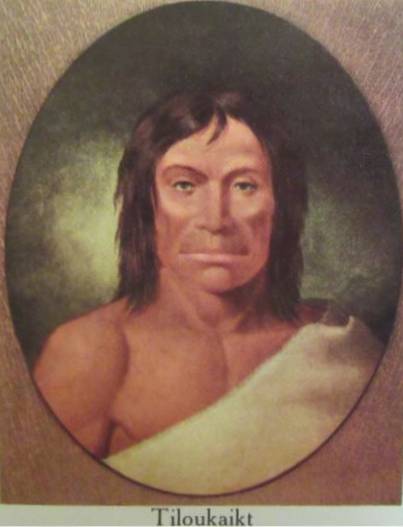
Among those who came to pay homage was a headman named Tiloukaikt, “a kind, friendly Indian,” who welcomed the baby as a “Cayuse te-mi” (Cayuse girl), because she was born on Cayuse land. “The whole tribe are highly pleased because we allow her to be called a Cayuse girl” (Letters, March 30, 1837).
However, disappointment and disillusionment built up over time, on both sides. The Whitmans expected the Cayuses to be eager to take up farming, convert to Christianity, and live like white people. The Indians were interested in some aspects of the newcomers’ culture and religion, but only to supplement, not replace, their traditional way of life.
Cultural misunderstandings contributed to the tension. The Whitmans’ ideas about privacy conflicted with Indian standards of community and shared space. Gift-giving was an essential part of social and political interaction in Cayuse life; the Whitmans regarded the practice as extortion. When the Cayuses adopted Euro-American notions about private property and demanded payment for their land and resources, the missionaries were offended and refused.
“[A] message arrived and took my husband away as in a moment. It was from our Brother Smith, about a hundred and eighty miles from here. We wrote that the Indians were asking him to give them property and food, and wishing him to pay for the land he occupied. He told them he could not say anything about it; they became very angry and told him to move off tomorrow; he said he could not, but they still insisted upon it with great insolence, until he was obliged to tell them he would go. Sister Smith writes me that they are afraid for their lives and they ask for help immediately to come and remove them. Husband has gone and expects to be obliged to bring them away here. What the result will be the Lord only knows. The two principal instigators are brothers to the Indian who went to the United States for some one to come and teach them, that we read about as the first news west of the Rocky mountains. How transient is the missionaries’ home. I believe we most often feel that ‘we have no abiding city here.’” – Narcissa Whitman
When the Cayuse didn’t immediately shed their heathen ways and embrace Christianity and Anglo customs, the Whitmans became repulsed by them, finding them sinful, lazy and “filthy.” Narcissa further noted in her journal that, “We have come to elevate them and not to suffer ourselves to sink down to their standard.” As one biographer stated concerning Narcissa’s journal entries, “Her attitude toward those among whom she lived came to verge on outright repugnance.”
As for their failure to convert the Natives where other missionaries elsewhere had seen much more success, analysis of their journal entries and other such primary sources seems to indicate that the Whitmans made no attempt to frame their religious message in a way that the Cayuse would find understandable or relatable, nor did they make any accommodations for the Native’s existing beliefs.
“I began to write about the state of the people. Of late my heart yearns over them more than usual. They feel so bad, disappointed, and some of them angry because husband tells them that none of them are Christians; that they are all of them in the broad road to destruction, and that worshipping will not save them. They try to persuade him not to talk such a bad talk to them, as they say, but talk good talk, or tell some story, or history, so that they may have some Scripture names to learn. Some threaten to whip him and to destroy our crops, and for a long time their cattle were turned into our potato field every night to see if they could not compel him to change his course of instruction with them. These things did not intimidate us; it only drove us to a throne of grace with greater earnestness to plead for blessings to descend upon them.” – Narcissa Whitman
The Whitmans’ two-year-old daughter, Alice Clarissa, however, picked up the native language as quickly as English and was reportedly a great favorite among the Cayuse. The child may have served as a bridge between the Anglo and the Native worlds, but, unfortunately for all, the little girl drowned on June 23, 1839 after bending over to scoop some water out of a river and slipping and falling in.
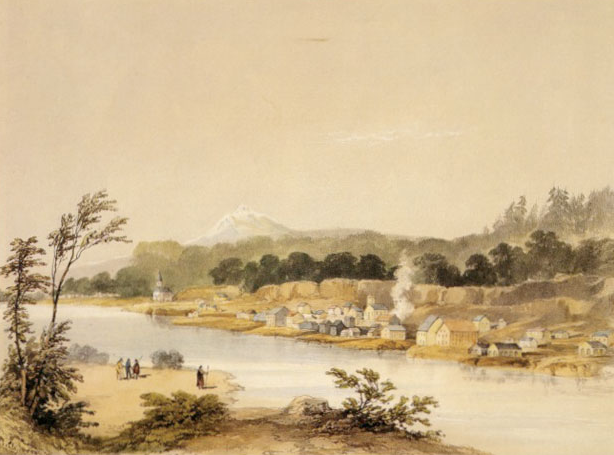
An important link between the Whitmans and the Cayuses was broken… when… Alice Clarissa toddled into the river behind the mission and drowned. Narcissa sank into a depression that never fully lifted.
Whitman turned his focus away from “the benighted Indians” and concentrated instead on attracting and supporting white settlers. He became an ardent advocate of American expansion into “Oregon Country,” which was not yet a part of the United States (a boundary dispute between the U.S. and Great Britain would not be settled until 1846). “He wanted to see the country settled,” wrote Reverend Henry K. Perkins, a Methodist missionary who knew him well. “The beautiful valley of the Walla Walla he wanted to see teeming with a busy, bustling white population.”
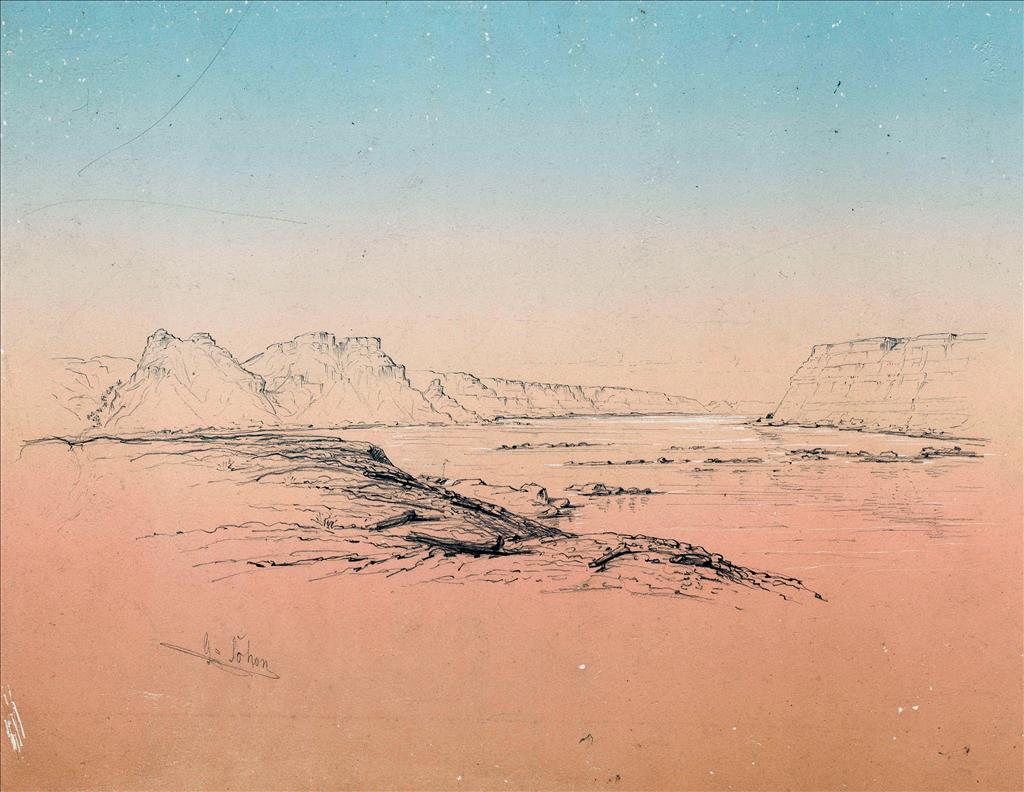
Whitman enthusiastically greeted a group of former mountain men and their families who arrived at Waiilatpu in the fall of 1840 with three wagons — the first to be driven over what would become the Oregon Trail. Whitman himself had tried to bring a wagon to Oregon four years earlier but had been forced to leave it behind at a fort in present-day Idaho.
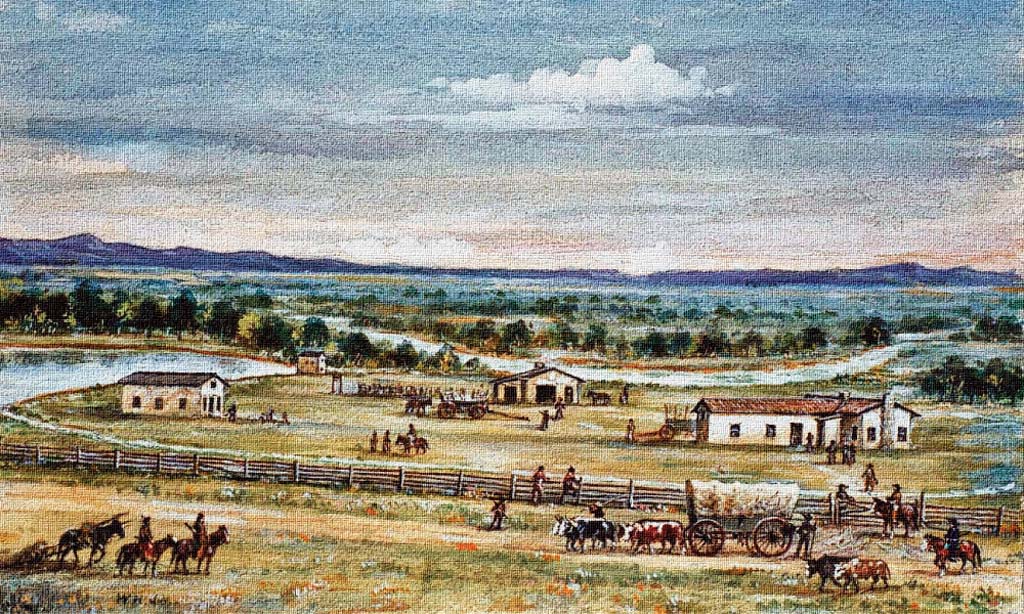
“[Y]ou have broken the ice,” he reportedly told Robert Newell and Joseph L. “Joe” Meek, the leaders of the party. “[W]hen others see that wagons have passed, they too, will pass and in a few years the valley will be full of our people”.
A group of 24 emigrants from Missouri reached Waiilatpu the next year. “Doubtless every year will bring more and more into this country,” Narcissa wrote [on October 2, 1841]. “Our little place is a resting spot for many a weary, way-worn traveler and will be as long as we live here.”
By that point, the American Board was sponsoring four missions in Oregon Country, located hundreds of miles apart, staffed by missionaries who incessantly quarreled among themselves. The board became increasingly exasperated by the stream of complaining letters from Oregon and by the missionaries’ lack of progress in converting Indians. In February 1842, it ordered the closure of Waiilatpu and two other stations, recalled two of the most troublesome missionaries, and assigned Whitman to the remaining station, near Spokane.
Whitman received the news seven months later. With the consent of his fellow missionaries, he made a dangerous mid-winter ride back to Boston to protest the board’s decision. He argued that Waiilatpu was a strategic rest stop and supply station for travelers to Oregon and that “Papists” (Catholics) would take it over if the Protestants abandoned it. The board reluctantly rescinded its order. Whitman returned in the fall of 1843 at the head of a wagon train of more than 800 emigrants. “I have no doubt our greatest work is to be to aid the white settlement of this country,” he wrote to Narcissa’s parents. “The Indians have in no case obeyed the command to multiply and replenish the earth, and they cannot stand in the way of others doing so.”
“All are scattered in little groups far and near, digging their kamas root and taking salmon. Here is the missionary’s trial in this country. The people are with him so little of the time, and they are so scattered that he cannot go with them.”
– Narcissa Whitman writing about the Cayuse, 1841
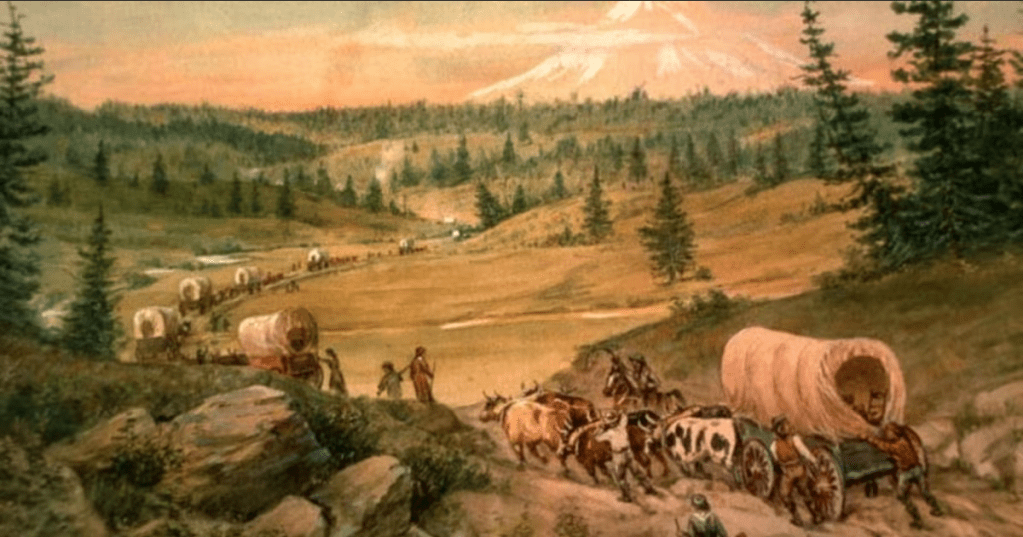
For one year after Dr. Whitman’s return to his mission, quiet had reigned in the upper country. The Indians there, as has been said, were filled with an ambition to acquire wealth by stock-raising, and not being able to purchase many animals from the immigration, had formed a company of about forty Cayuses, Walla Wallas, and a few Spokanes, to go to California and exchange peltries and horses for Spanish cattle.
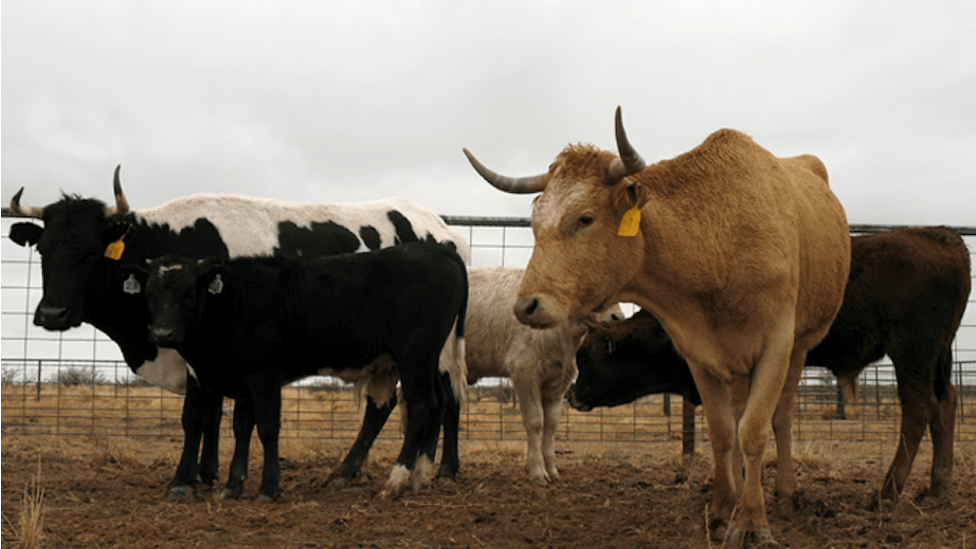
This was a courageous under taking, as their route lay through the country of the warlike Klamaths, Rogue Rivers, and Shastas. But the expedition, led by Peu-peu-mox-mox, was well mounted and armed, the chiefs attired in English costume, and their followers in dressed skins, presenting a fine and formidable appearance to the wilder denizens of the southern interior, and they arrived safely at their destination with only some slight skirmishing by the way.
Spokane Garry and Young Chief of the Cayuse were also on this expedition. -ed.
The reception met with by the expedition was cordial, the Spaniards being quite willing to dispose of their numerous herds at the good prices exacted of their customers. As for the native Oregonians, they found California much to their liking, and roamed about at pleasure until misfortune overtook them in the following manner: Being on an excursion to procure elk and deer skins, they fell in with a company of native California bandits whom they fought, and from whom they captured twenty-two horses which had been stolen from their Spanish or American owners.
On returning with their booty to the settlements, some of the horses were claimed by the original owners, under the Spanish law that required animals sold to bear a transfer mark. As these bore only the brand of their former owners, the Spaniards claimed them. The Oregonians, on the contrary, contended that while if any property were taken by a member of any allied tribe they were bound to give it up, they considered any property captured from a common enemy as belonging to the captors; and hence that the horses taken by them from robbers, at the hazard of their lives, belonged thenceforth to them.
To this reasoning the Spaniards were deaf, but offered to compromise by allowing ten cows for the horses, and finally fifteen, to all of which overtures Peu-peu-mox-mox answered not, except by a sullen silence, and the negotiations were broken off. Before any settlement was arrived at, an American recognizing a mule belonging to him among the captured animals, claimed it, with the declaration that he would have it.
Among the Oregonians was a young chief named Elijah Hedding, a son of the Walla Walla chief, who had been taught at the mission school in the Wallamet, and was a convert to Christianity. When he heard the American declare his intention to take his mule, he quickly stepped into his lodge, loaded his rifle, and coming out, said significantly: “Now go and take your mule.”
The American inquired, in alarm, if he was going to be shot. “No,” said Elijah, “I am going to shoot yonder- eagle,” pointing to a neighboring pine tree; and the American being unarmed, precipitately left the place.
On the following Sunday a part of the cattle company went to Suiter’s fort, where religious services were to be held, and among them Tauitowe and Elijah. During the afternoon the two chiefs were enticed into an apartment, where they were confronted by several Americans, who had come to California via Oregon, and had suffered annoyances from the Indians along the Columbia river, who now applied such approbrious epithets as “thieves” and “dogs” to the Cayuses and Walla Wallas indiscriminately, and a quarrel ensued, in the midst of which the American who had been threatened by Elijah, drawing a pistol, said: “The other day you were going to kill me, now I am going to kill you.”
On hearing this Elijah, as it was told to [Indian agent Dr. Elija] White by the Indians, begged to be allowed to “pray a little first,” and while kneeling, was shot dead.
Spokane Garry narrowly avoided being shot, and the expedition was able to break out of New Helvetia without any additional losses. – Wikipedia
They were driven out of California by Spanish authorities, who pursued them with cannon, arriving home in the spring of 1845, having left the cattle, for which they had paid, in California, and having endured many hardships by the way.
The effect of the disastrous failure of the cattle company and the death of Elijah was to deepen in the minds of the mission Indians their mistrust of the white race, and particularly of Americans; for, however much they may have been at fault, they were in no mood to make allowances for the natural consequences of that fault, but were instead in that dangerous temper which caused Dr. Whitman to send a hasty arid excited communication to the sub-Indian agent, expressing his fears that Elijah’s death would be avenged upon his mission. And following immediately upon this letter, White received a visit from Ellis, who had been delegated to visit both himself and Dr. [John] McLoughlin, to get from them an opinion as to what should be done in their case.
“I apprehended,” says White, “there might be much difficulty in adjusting it, particularly as they lay much stress upon the restless, disaffected scamps late from Willamette to California, loading them with the vile epithets of dogs, thieves/ etc., from which they believed, or affected to, that the slanderous reports of our citizens caused all their loss and disasters, and therefore held us responsible.”
According to Ellis, the Walla Wallas, Cayuses, Nez Percés, Spokanes, Pend d’Oreilles, and Snakes were on terms of amity and alliance; and a portion of them were for raising two thousand warriors and marching at once to California to take reprisal by capture and plunder, enriching themselves by the spoils of the enemy. Another part were more cautious, wishing first to take advice, and to learn whether the white people in Oregon would remain neutral. A third party were for holding the Oregon colony responsible, because Elijah had been killed by an American.
There was business, indeed, for an Indian agent with no government at his back, and no money to carry on either war or diplomacy. But Dr. White was equal to it.
Among early migrants to the Oregon Country from the United States, Elijah White was remarkable for his role in shaping Oregon’s political culture. As a physician at the Willamette Mission, he established an early medical service. He also was a subagent to Native tribes, led the first large overland wagon train journey to Oregon, and petitioned Congress for aid to Oregon.
Historians have been critical of White’s actions and attitudes, calling him a “schemer” and “a transparent opportunist”; an anthropologist portrayed him as “a contentious sort and somewhat of a flimflammer.”
The characterizations are likely justified, but there is no ignoring that his actions as a vocal proponent of U.S. government sovereignty in Oregon and as a willful Indian agent helped shaped relations between Plateau tribes and white authorities during the 1840s and 1850s. – William L. Lang
He arranged a cordial reception for the chief among the colonists; planned to have Dr. McLoughlin divert his mind by referring to the tragic death of his own son by treachery, which enabled him to sympathize with the father and relatives of Elijah…
McLoughlin’s son, John, Jr., had been assigned as Clerk in Charge at Alaska’s Fort Stikine, but was murdered by his men in 1842. A cursory investigation by George Simpson determined that John, Jr., had been abusive towards his men, and that the homicide was justifiable. The conclusion, and the lack of justice for his son, left McLoughlin outraged and heartbroken. –NPS
[Dr. White], on his own part, took [Peo Peo Mox Mox] to visit the schools and his own library, and in every way treated the chief as if he were the first gentleman in the land. Still further to establish social equality, he put on his farmer’s garb and began working on his plantation, in which labor Ellis soon joined him, and the two discussed the benefits already enjoyed by the native population as the result of intelligent labor.
Nothing, however, is so convincing to an Indian as a present, and here, it would seem, Dr. White must have failed, but not so. In the autumn of 1844, thinking to prevent trouble with the immigration by enabling the chiefs in the upper country to obtain cattle without violating the laws, he had given them some ten-dollar treasury drafts to be exchanged with the immigrants for young stock, which drafts the immigrants refused to accept, not knowing where they should get them cashed. To heal the wound caused by this disappointment, White now sent word by Ellis to these chiefs to come down in the autumn with Dr. Whitman and Mr. Spalding, to hold a council over the California affair, and to bring with them their ten-dollar drafts to exchange with him for a cow and a calf each, out of his own herds. He also promised them that if they would postpone their visit to California until the spring of 1847, and each chief assist him to the amount of two beaver skin?, he would establish a manual labor and literary school for their children, besides using every means in his power to have the trouble with the Californians adjusted, and would give them from his private funds five hundred dollars with which to purchase young cows in California.
It must, indeed, have been a serious breach to heal, when the Indian agent felt forced to pledge his own means to such an amount. That he succeeded in averting for the time an impending disaster should be placed to his credit, even though he was prevented redeeming all his pledges through the loss of his office by a change in the form of the provisional government of Oregon, and his ambition to figure as the delegate of this government to the United States. He did, however, write to Sutter, and the agent of the United States government in California, Thomas 0. Larkin; a good deal of correspondence on the subject being still extant, from which it appears that Sutter had given the Walla Wallas as they were all called in California permission to hunt for wild horses to be exchanged for cattle. In the quarrel which arose between Elijah and Grove Cook, an American, over the ownership of a mule, the young chief was shot in Sutter’s office during his temporary absence. The white witnesses all agreed that Elijah was the aggressor; but do not white witnesses in similar circumstances always agree to the guilt of the Indian?
It may as well be mentioned here that in the autumn of 1846, Peu-peu-mox-mox went again to California with a company of forty men, to demand justice for the killing of his son, their arrival on the frontier causing great concern and excitement. Commodore Stockton coming up from Monterey to San Francisco, and a military company being sent to protect exposed points.
John Adam Hussey and George Walcott Ames Jr.:
AT SUNSET one evening early in September 1846, Mrs. William B. Ide and her family of children were terrified at the appearance before the door of their lonely cabin in the upper Sacramento Valley of a band of fierce-looking Indians from the north. Her husband and her two eldest sons were away from home, and Mrs. Ide had no choice but to parley with the savages. Through an interpreter, a chief asked the family if they “belonged to Captain Sutter.”
“No,” replied Sarah, Ide’s only daughter, “we belong to our father.”
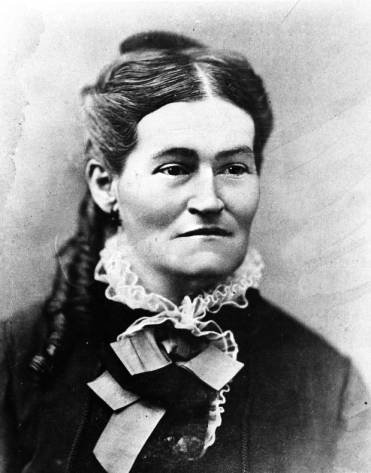
To questions regarding Sutter’s fighting forces and his wealth Sarah answered as best she could. Finally, after minutely examining the firearms in the cabin and consulting among themselves in their own language, the Indians mounted their ponies and rode off into the woods, singing as they went.
The family’s fears were somewhat allayed when James Meadows, their neighbor from across the Sacramento River, arrived with assurances that the Indians meant no harm. A woman living near him, said Meadows, could understand the visitors’ language and had learned from them that they were Oregon Indians coming to get satisfaction for the death of their chief’s son. He had been killed at New Helvetia the previous year during a cattle-trading expedition, and his tribesmen held John A. Sutter responsible. The chief, in particular, was determined “to have one of Sutter’s men to shoot,” or at least a compensation of horses or cattle, and was fully prepared to enforce his claim.
Meadows remained at the Ide house that night. The next morning he set out down the river to take his information to settlers living some seven miles below, about on the site of the present Tehama.
Arrival of the Indians in California was not entirely unexpected. Reports had come down from Oregon by immigrants and letters from the Indian agent that Chief Yellow Serpent (Peo Peo Mox Mox) and his Walla Wallas were determined to avenge the chief’s son, Elijah, who had been murdered by Grove Cook. Thus the settlers in the Sacramento Valley were fully prepared to believe the worst when Yellow Serpent and his men appeared before their isolated homes. One settler asked the chief whether or not there were more warriors yet to come. On being informed in sign language that nine men had been left wounded on the trail, he jumped to the conclusion that nine hundred additional armed savages were advancing from the north.
As the alarm flew from ranch to ranch by mounted messengers, the reports became more and more exaggerated. The most prevalent version seems to have been that the Walla Wallas, a thousand strong, were planning to assault Sutter’s Fort from motives of vengeance, and if thwarted in this action they would drive off all the cattle belonging to the settlers in the Sacramento Valley. At Peter Lassen’s ranch on Deer Creek the residents fully expected to be attacked and prepared to resist, only to find that they had exhausted their supply of bullets. “Fortunately for us,” one of them later reported, “the Walla Wallas moved on & left us unmolested.”
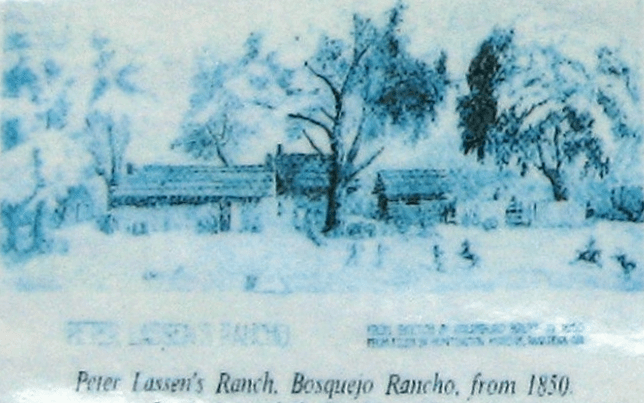
From Deer Creek, Daniel Sill, a veteran trapper and a settler on the Lassen rancho, slipped away on his fleetest horse; he rode “as if the fiend were at his heels” to warn the people at Sutter’s Fort of their danger. He arrived on September 8, and from him or other sources it was learned that by that date Chief Yellow Serpent and his “advance guard” of reportedly two hundred warriors had already reached Feather River, only twenty miles from the fort.
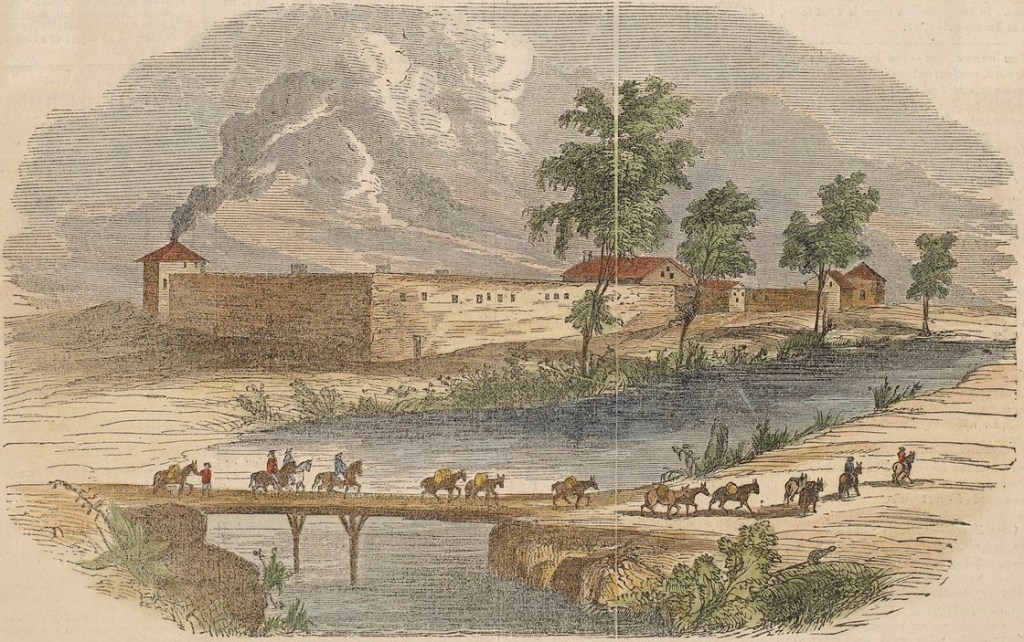
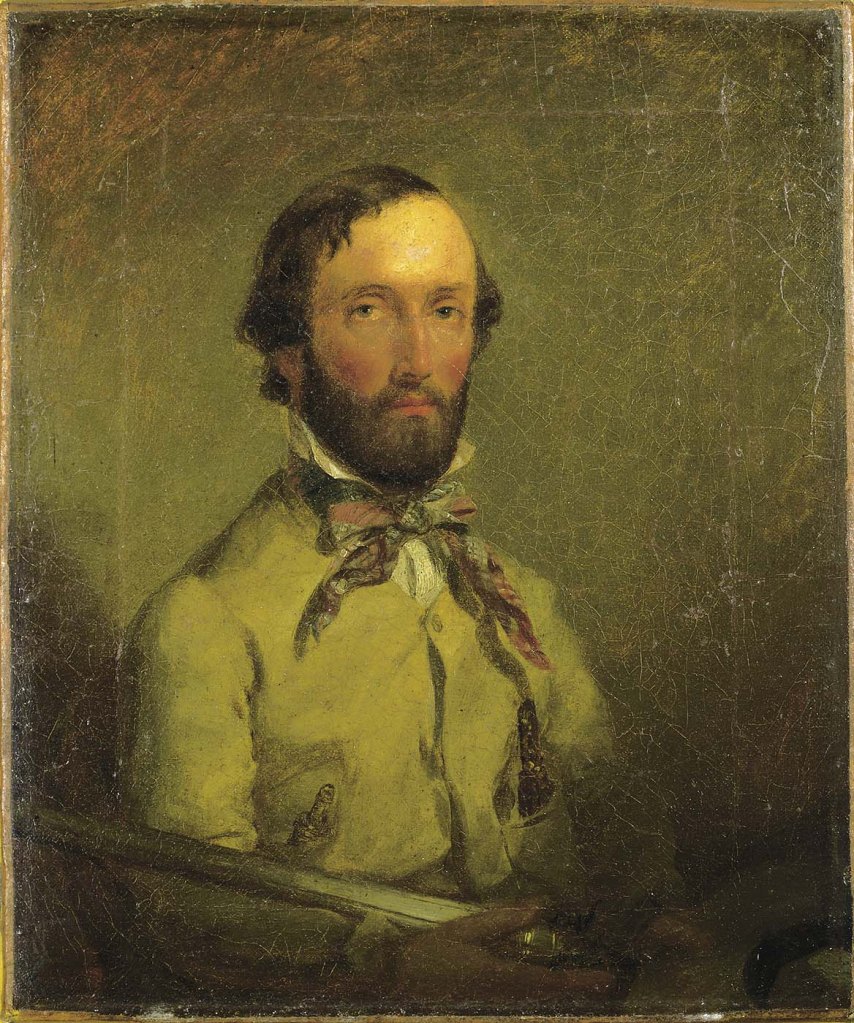
These reports caused genuine consternation at Sutter’s New Helvetia, or Fort Sacramento as the place had been officially designated by the United States Naval authorities when California was occupied in July. The garrison, consisting of about thirty white men and a few of Sutter’s trained Indians, was believed to be entirely inadequate to withstand an attack by a thousand well-armed, straight-shooting Walla Wallas. Edward M. Kern, the young Philadelphia artist whose appointment in June as commander of the fort by Frémont had been approved by Commodore Stockton, acted promptly to improve his position.
Couriers were immediately dispatched to spread the alarm among all the settlers in the vicinity. Recently arrived immigrants and older residents alike volunteered their services. Sutter’s dilapidated pieces of artillery were put in order, and, in the words of one observer, all inside the walls “were busily employed in preparing for the expected combat.” Indian scouts were sent out to discover the actual number and position of the invaders. Finally, messengers carrying urgent appeals for reinforcements started for Sonoma and the United States Sloop of War Portsmouth anchored in San Francisco Bay.
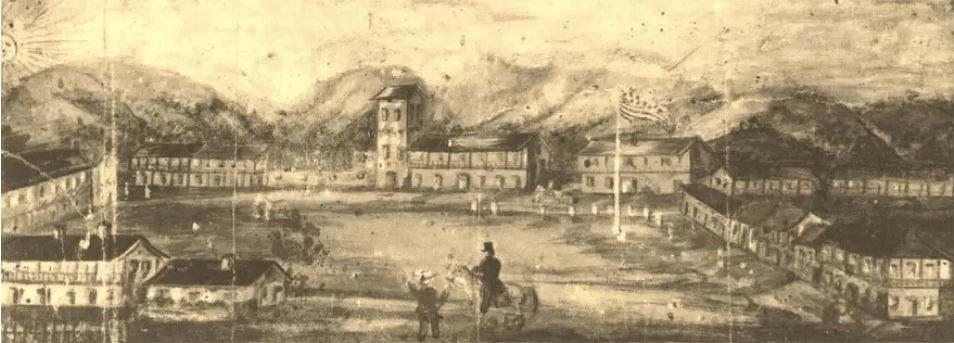
Kern’s message reached Sonoma just as its commanding officer, Lieutenant Joseph Warren Revere, United States Navy, was returning from an inspection tour in the vicinity of Clear Lake. The news was joyously received by the lieutenant and his command of about fifty mounted settlers. “The prospect of an engagement with a strong force of warlike savages, at a time when we were threatened with a most tedious tranquillity, was extremely welcome and cheering, especially in view of the fact that the enemy were the aggressors,” he later recollected.
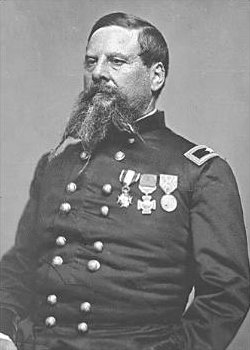
Without delay, messengers were sent out to raise the entire population of Revere’s district—Californians, Americans, foreigners, and Indians alike. But the lieutenant did not wait for this levy en masse to be organized. Leaving instructions for the recruits to report themselves “with all convenient speed” at Sutter’s Fort and sending word of his activities to his superior officer, Commander Montgomery, he departed with his company of mounted rifle-men for the scene of action.
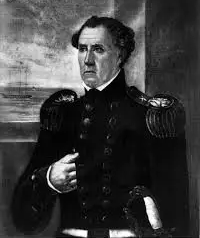
Commander John Berrien Montgomery of the Portsmouth, who was in charge of the Northern Military District, received Kern’s express at Yerba Buena on September 10. …Montgomery felt that the Walla Wallas presented a major threat to the security of his district, and his response was quick and decisive.
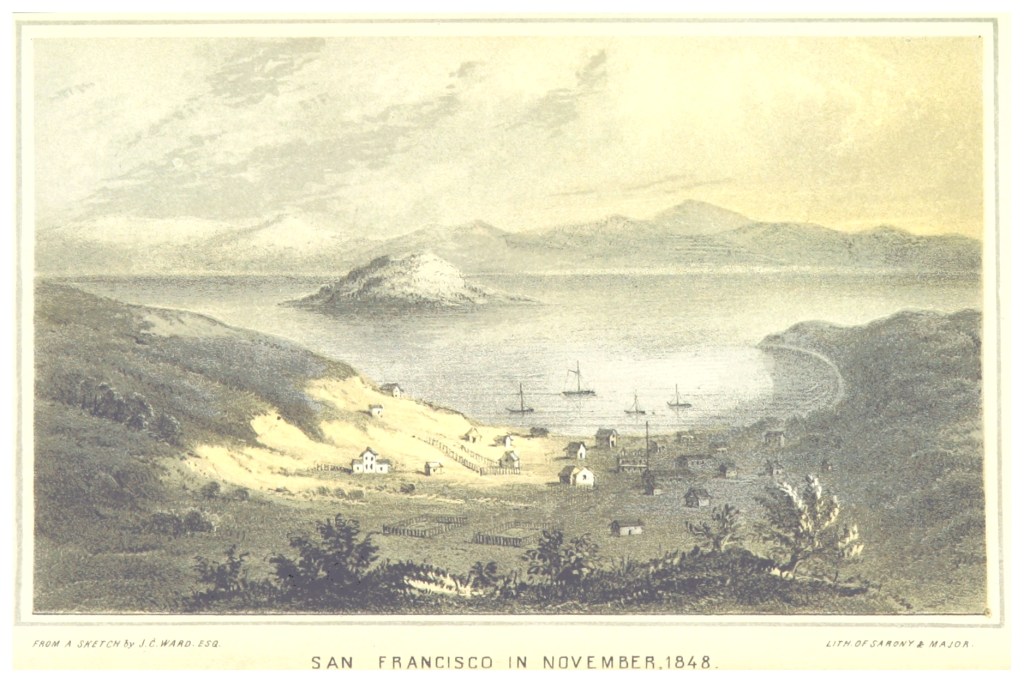
Prospects for a peaceful settlement of the difficulties began to improve as soon as reports from Lieutenant Revere arrived. He had reached New Helvetia with his company by September 12, finding preparations still under way for an energetic defense and a considerable body of settlers already assembled. He promptly informed Montgomery that without any further additions to his garrison he could hold the place against an Indian attack. The Walla Wallas, he reported, had made no demonstrations of hostility on their march southward. They had conversed with various settlers and with a scout from the fort in a very friendly manner, saying to the latter that they had come to demand the unconditional surrender of Grove Cook and the payment of a debt due to them by Captain Sutter. …
Meanwhile, having taken what measures he could to protect his district from immediate attack by the Walla Wallas, Montgomery started to formulate a policy for the peaceful settlement of the Indians’ grievances. From the first, Montgomery was determined to treat the Walla Wallas fairly and to see that their claims, if just, received satisfaction.
On September 12, Revere was instructed to show a “proper regard” for any proposals made by the Indians if they should prove willing to treat for redress instead of investing the fort at once. As a preliminary to any negotiation, however, the Walla Wallas were to be required to retire to a distance of fifty miles from New Helvetia and to remain there until the wishes of Commodore Stockton concerning the matter could be determined.
If the Indians did not first submit a statement of their grievances, Revere was directed to send, as soon as his forces were collected, some “suitable, responsible person” to inform the Oregon chiefs of the change of government and to ascertain their motives in coming to California. Montgomery gave it as his opinion that the Indians had been grievously injured by certain individuals of the country. However, he believed the chiefs would be “readily brought to acquiesce in the course which the Commander in Chief shall deem it just & expedient to pursue in the premises.”
The commander’s desire to see justice done is shown by the fact that, even before he knew definitely whether or not the invaders were determined on hostilities, he ordered the arrest of Grove Cook, the man who had shot Yellow Serpent’s son in 1845. The decree was countermanded, however, when Cook assured him that he had already been tried for the crime.
By the morning of the thirteenth it was generally understood at New Helvetia that the reported “advance party” of hostile Walla Wallas was in reality a small band of forty or fifty men, women and children whose “disposition was entirely pacific.” So much had the alarm abated that some of the emigrant volunteers departed for San Francisco.
Revere, however, seems still to have believed that a larger band of warriors was yet to come, for he continued to organize his little army, whose weapons ranged from the rifles of the Americans and the lances and reatas of the Californians to the bows and arrows of the Indians. When his arrangements were complete, he held a formal inspection before taking up the march against the savage foe. “It was extremely gratifying to review such a gallant body of men,” he later recollected; “I flattered myself that if we came across the enemy we should give a good account of ourselves.” The troop was just about to mount when the lieutenant was “surprised and confounded” by the arrival of Yellow Serpent himself and several other Walla Walla chiefs.
Peo Peo Mox Mox:
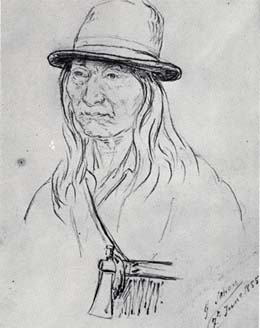
“I have come from the forests of Oregon with no hostile intentions. You can see that I speak the truth, because I have brought with me only forty warriors, with their women and little children, and because I am here with few followers, and without arms. We have come to hunt the beasts of the field, and also to trade our horses for cattle; for my people require cattle, which are not so abundant in Oregon as in California. I have come, too, according to the custom of our tribes, to visit the grave of my poor son, Elijah, who was murdered by a white man. But I have not travelled thus far only to mourn. I demand justice! The blood of my slaughtered son calls for vengeance! I have told you what brought me here; and when these objects are accomplished, I shall be satisfied, and shall return peaceably to my own country. When I came to California, I did not know that the Boston men [Americans] had taken the country from the Spaniards. I am glad to hear it; for I have always been friendly to the Boston men, and have been kind to those who have passed through my territories. It must be plain to you that we did not set out on a hostile expedition against your countrymen.”
In reply, Revere expressed gratification at hearing of the chief’s peaceful intentions and promised to consider his demands. “If I think it right to interfere at all,” the lieutenant said, “I will make the case known to the civil authorities, who will do what is right.” He then gave the Indians permission to proceed with their trade.
Disappointed as he was at the turn of events, Revere was nevertheless inclined to believe the chief and dismissed a portion of his volunteers. Many of the settlers, however, suspected that some sort of treachery lurked behind Yellow Serpent’s peaceful words. As a precautionary measure, Revere sent a scouting party of “old Indian hunters” to the headwaters of the Sacramento.
Before these scouts returned, the lieutenant decided to go on an expedition up the valley himself. He believed the country safe enough, but thought the occasion “favorable for making a demonstration of our strength to overawe the local Indians, who were sometimes disposed to be troublesome.” Accompanied by Kern and a sizeable force, Revere marched as far as the Marysville Buttes and camped in their vicinity. At this place his “old Indian hunters” rejoined him, reporting that no sign of any additional Walla Wallas could be found and that the rumors of a large-scale invasion had been entirely false.
This news had a most depressing effect on Revere’s recruits, many of whom had hoped to the last for a clash with Yellow Serpent’s warriors. Now that this pleasure was denied them, a few wished to find solace in exterminating a rancheria or two of the nearby native Indians. Curbing such desires, Revere moved his company southward to the Walla Walla camp, located in the bend, “just where the Feather river falls into the Sacramento.” Here they were courteously received by Yellow Serpent, and if there was any remaining fear of the Walla Wallas it was promptly dispelled, for practically every Indian in the camp was ill with the ague*.
*Revere and “all the men who went to the Walla Walla war” contracted the ague as a result of this visit. Revere to Kern, Sonoma, October 17, 1846.
The ague is the 19th century name for malaria.
Relations between the settlement and the visiting Plateau natives were then repaired. John C. Frémont arrived in the area shortly after the expedition encamped near New Helvetia.
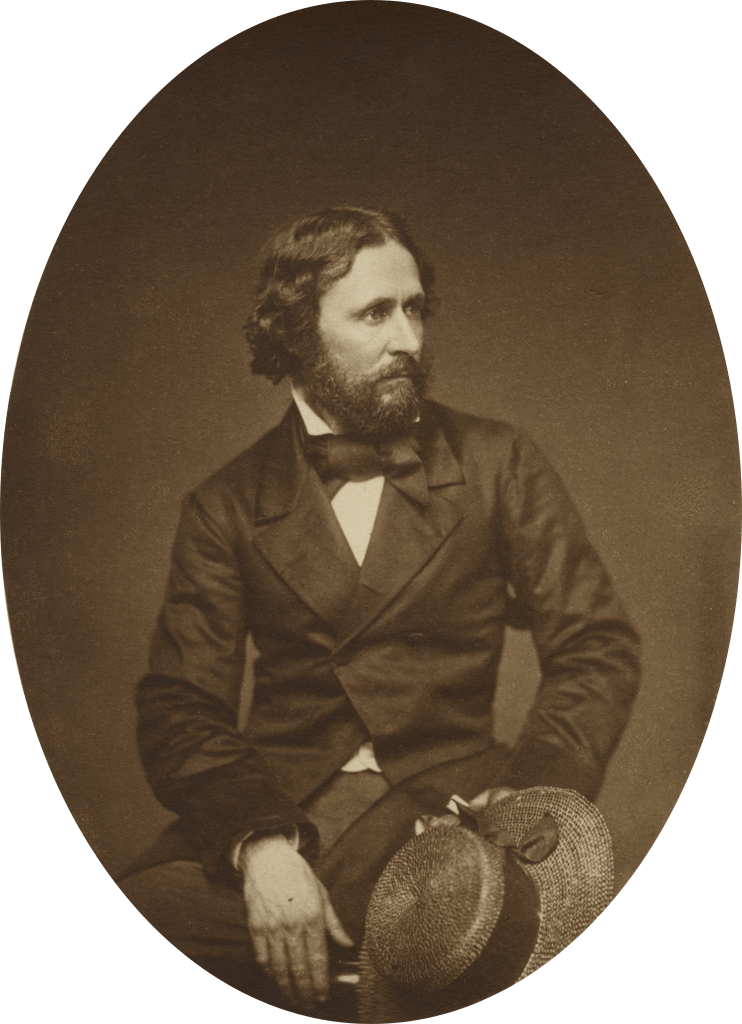
Ten Walla Walla men were recruited into the California Battalion as scouts. They would fight with distinction at the Battle of Natividad against the forces of José Castro. The remainder of the expedition remained in the Sacramento Valley. Records kept by Sutter’s officers note interactions with Piupiumaksmaks until July 1847. He was given compensation for previous grievances, the primary being his son’s death. The expedition then returned north to the Columbia Plateau, with the Walla Wallas bringing back herds numbering close to two thousand head of cattle.
More than 4,000 settlers reached Oregon Country in 1847. Their arrival coincided with a virulent epidemic of measles among the Cayuses, who had no natural immunity to the infectious diseases introduced by Euro-Americans. The source of the outbreak is not clear: possibly one of the emigrant wagon trains, possibly a Cayuse-Walla Walla cattle-trading party that had recently returned from California. In any case, the effects were devastating.
How measles arrived at Sutter’s Fort is unknown, but in June 1847, August Sutter wrote in his diary that an unidentified sickness was epidemic in the Indian tribes that surrounded that place. The diary also mentioned that the Walla Walla Indians were in the vicinity of Sutter’s Fort in May and June of 1847.
…from Robert Boyd’s book, The Coming of the Spirit of Pestilence:
The return of the California party to Fort Nez Perce [Walla Walla] on 23 July 1847 was recorded in a poignant passage in the journal of artist and explorer Paul Kane:
“A boy, one of the sons of Peo Peo Mox Mox, the chief of the Walla Wallas, arrived at the camp close to the fort [in advance of the party of 200] bringing the most disastrous tidings, not only of the total failure of the expedition, but also of their suffering and detention by sickness… After describing the progress of the journey up to the time of the disease making its appearance, during which he was listened to in breathless silence, he began to name its victims one after another. On the first name being mentioned, a terrific howl ensued, the women loosening their hair and gesticulating in a most violent manner. When this had subsided, he, after much persuasion, named a second and a third, until he had named upwards of thirty. The same signs of intense grief followed the mention of each name… The Indian’s statement occupied nearly three hours…
From the Indian camp outside Fort Nez Perces Native men rode in every direction, bringing the news of the deaths to all their neighbours. They must have carried the measles virus with them, and it spread rapidly through all the Indian tribes who lived in the Columbia district. Then the Americans coming over the Oregon Trail arrived at Fort Nez Perces. They carried Dysentery and Typhus fever, and picking up the measles virus carried it west to Fort Vancouver. Dysentery, at least, was passed to the Natives in the territory around Fort Nez Perces, and by September 1847 many Natives were dying of a combination of measles and dysentery.
The measles hit especially hard among the Cayuse people who lived near the Waiilatpu Mission house, which Dr. Marcus Whitman had occupied for the past eleven years. Unfortunately, Whitman was unpopular among some of the Cayuse chiefs, and that put him and his people in danger. He ignored the danger, though it was very real.
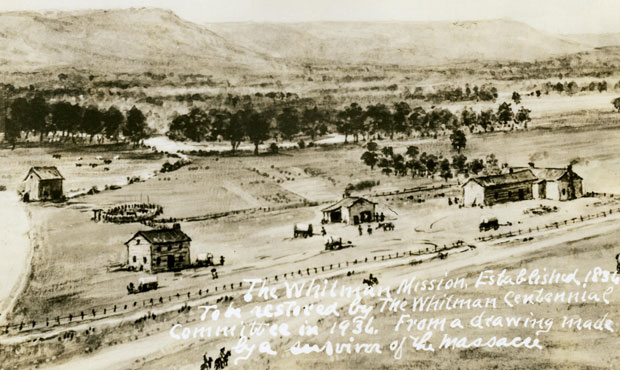
NPS:
Suspicions rose as Cayuse children overwhelmingly died of diseases like measles more often than the sick white children who came to Marcus Whitman for treatment. … According to Cayuse tradition, there was no question of their right to dispose of a doctor (medicine man, or tewat) whose patients were dying of disease. He was a healer who did not heal. The Whitmans had long been aware of this practice and had discussed staying in Walla Walla despite rising illnesses and potential for Cayuse retaliation.
According to some estimates, nearly half the Indians living near the Whitman Mission died. More than a dozen white people at the mission also were sickened by measles but only one — a six-year-old from an emigrant family — died. Noting that Whitman’s white patients usually recovered while his Indian patients did not, some Indians began to suspect him of deliberately killing Cayuses in order to take their land.
In Cayuse tradition, a healer or shaman (“te-wat”) whose patients died could be considered guilty of misusing his spirit power and put to death himself. Whitman, a medical doctor who had been introduced to the Cayuses as “a sorcerer of great power,” was well aware of his vulnerability. Just months after settling in at Waiilatpu, he had been called to treat the wife of a Cayuse head chief. The chief told Whitman he would kill him if his wife died. That patient survived, but others did not. In a letter to the American Board in 1845, Whitman noted that he had recently been accused of causing two deaths — one a young man who “died of apoplexy;” the other, a chief. The chief’s son “came to me as he was dying and in a passion told me I had killed his Father and that it would not be a difficult matter for me to be killed”.
When Mary [Saunders] and her family neared the Protestant mission at Waiilatpu, Oregon, they were met by the founder of the mission Dr. Marcus Whitman…
Luke Saunders was a highly educated man, a judge in Oskaloosa prior his to leaving that city. The Waiilatpu Mission had lost it’s school teacher so the missionary asked Luke to winter at the station and be its school master for a time.
Whitman also asked Mary’s husband to write a letter to the U.S. Congress, requesting that they send more troops to protect the Oregon trail from hostile indians. Judge Saunders obliged in both requests.
The Saunders family didn’t know it when they settled into the mission’s emigrant house on the 12th day of October 1847 but some of the local Cayuse Indians were already problematic. In a few short weeks Mary’s husband would be dead at the hands of these same Cayuse.
I want to talk about the poison theory and why the Indians felt that Dr. Whitman might be trying to kill them. My sources for this information, however, are not very reliable.
In ’41 a man called William Gray worked as a carpenter for Dr. Whitman. According to hearsay, (mainly from John Munson, one of the half breed Indians who were allowed to leave the Mission), one day William Gray injected a strong emetic (antimony potassium tartrate) into watermelons to keep the natives from stealing them. Dr. Whitman got the blame and this was part of the reasoning behind the idea that Whitman was trying to poison them. “Gray used to tell us all about this,” said Munson, reminiscing about them as a comic occurrence. “We did not put in enough to kill them, and only in the biggest melons, but only to make them sick. And we told them that some of the melons were poisoned and they must not take them.”
A far more serious reason which made the Indians feel that Dr. Whitman was attacking them arose from poisoning animals which preyed on their sheep. John Munson said, “I spent the winter of ’46 in Dr. Whitman’s employment. I generally worked at the sawmill. During the time I was there, I observed that he had the habit of poisoning the wolves. Two young men from his house were poisoning meat and putting it near places where wolves often came, a short distance around the Doctor’s house. He once gave me some arsenic to kill the wolves around the sawmill. By his order I poisoned some pieces of meat which I fixed at the end of short sticks about 1/4 mile from the sawmill. Some Indians who happened to pass there took the meat, ate it and were near dying. The doctor told me, laughing, that they would have certainly died if they had not drunk a great quantities of water to excite vomiting. “I had told them very often,” he said “not to eat of that meat which we distributed for the wolves, that it would kill them; they will take care now, I suppose.”
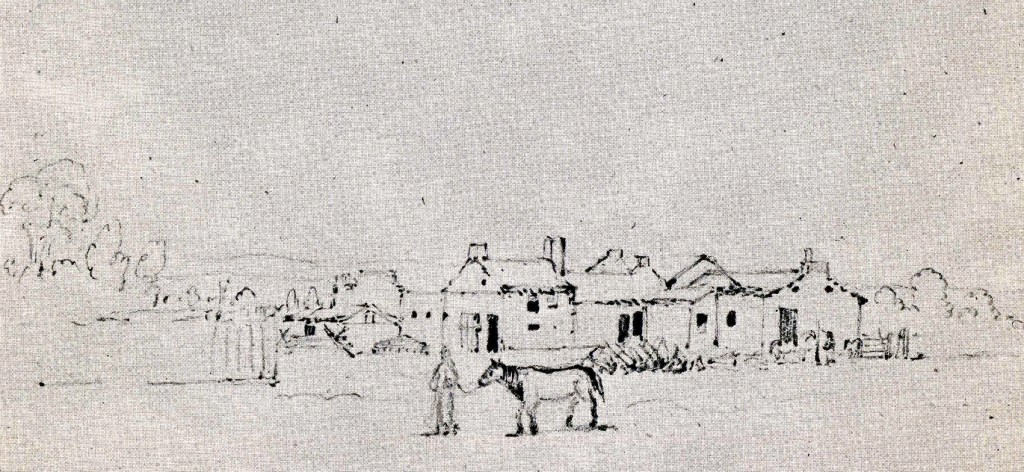
Cassandra Tate:
More than 60 people were at the Whitman Mission on the morning of November 29, 1847, including eight newly arrived emigrant families, a school teacher, a tailor who had been hired to make a new Sunday suit for Whitman, half a dozen laborers, and 10 children who had been taken in by the Whitmans over the years (among them seven orphans whose parents — Henry and Naomi Sager — had died on the Oregon Trail in 1844). Two other families were living in a cabin at the mission’s sawmill in the Blue Mountains, some 20 miles away. It was a cold and foggy day. After the noontime meal, several of the men began butchering a steer. Some of the children went to the schoolroom, on the second floor of the main Mission House, with their teacher. Narcissa gave two of the Sager girls a bath downstairs. Whitman sat down in the living room to read.
Sometime after 1 p.m., a small group of Cayuses — 14 to 18, by most estimates — armed themselves with clubs, tomahawks, and guns; covered the weapons with blankets, and went to the mission complex. Two Indians pushed their way into the kitchen at the Mission House and demanded medicine. Roused by the noise, Whitman went to the kitchen. Mary Ann Bridger, 12-year-old mixed-race daughter of mountain man James F. “Jim” Bridger (1804-1881), who had spent half her life with the Whitmans, was the only eyewitness to what happened next. She said later that when Whitman turned toward a cupboard, presumably to get some medicine, one of the Indians plunged a tomahawk into the back of his head. Tribal historians speculate that the assailant may have been trying to release the evil spirits he thought lay within.
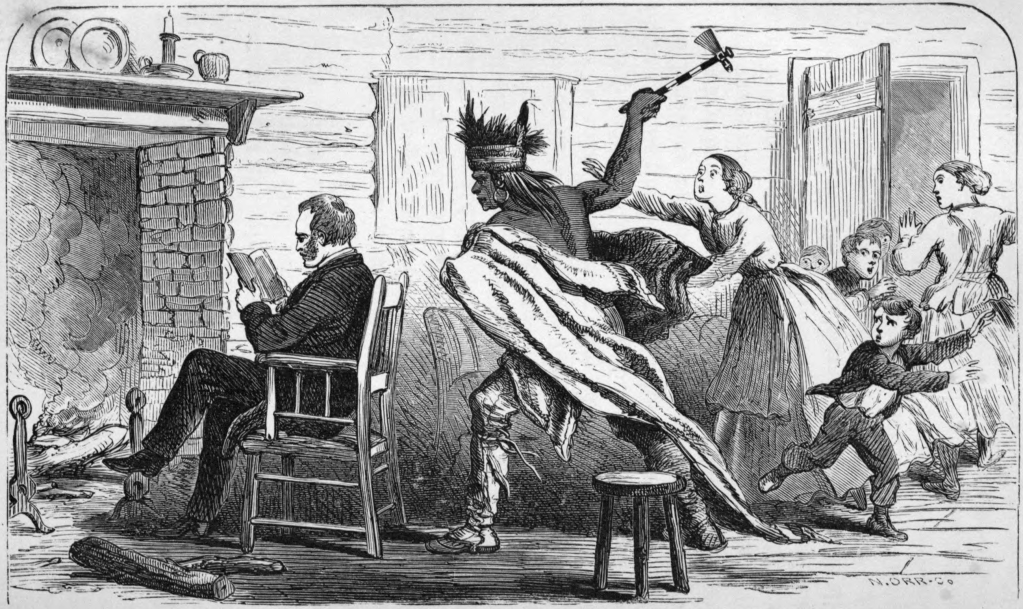
Dennis Saunders:
Eye witness accounts of his assault say it took several indians wielding knives, pistols and tomahawks to take down the wiry Judge Saunders. In the end, the Cayuse warriors cut off the school master’s head. Looking through a window of the schoolhouse, Helen Saunders, Mary and Luke’s 14 year old daughter, clearly saw her father’s murder. Mary was at the emigrant house some distance away but could see an indian on horseback killing a man with a tomahawk. It was a foggy day and she didn’t know until later that the man being butchered was her own loving husband Luke. …
At days end on the 29th, the mission’s men were either killed, in hiding, very sick or had run away. The 8 women and 40-some children at the complex were all taken captive. Two men lay in their beds very ill with the measles. Mary’s protective instincts and sense of responsibility compelled her to take charge. Fearing for the lives of the others, particularly the children, Mary boldly and bravely went to the war chiefs. The other women begged her not to go and even her 9-year old daughter, Phoebe, told her,”Oh mother you will be killed.”
She appealed to the Cayuse leaders to spare the women and the children of the mission. The tribal leaders were in powwow at the time of her intervention apparently discussing whether they should kill or not kill the remainder of the mission’s residents. Mary sat on some skins at the lodge door and spoke to the head war chief Tiloukaikt through an interpreter. The chief told Mary that he feared that her husband was already dead but that the women and children would be spared and allowed to go on to the Willamette Valley.
Turns out that Mary and a peace-loving indian known as Chief Beardy, are credited with saving the lives of the women and children that day. This chief, a local indian, had no previous knowledge of the attack and was very upset when he saw his friend Dr. Whitman dead. Like Mary, he did not want any more bloodshed. He asked to bury the missionary and when the other chiefs refused him he pulled a pistol and said he would fight them. Tiiloukaikt and the war council backed down.
Immediately after the massacre, one of the participants rode into Peu-Peu-Mox-Mox’s camp on the Touchet River. The Cayuse man told the Walla Walla chief about the massacre, and Peu-Peu-Mox-Mox asked him what part he played in it.
He replied I have killed so and so. Then said the chief to his men “take that fellow and hang him to the nearest tree,” and it was done.
As a result of Peu-Peu-Mox-Mox’s action in support of the missionaries who had just been murdered, the Cayuse Natives threatened to kill him. William McBean, who was then in charge of Fort Nez Perces, told the Gentlemen at Fort Vancouver, that “I have just learnt that the Cayuse are to be here tomorrow to kill Serpent Jaune, the Walla Walla Chief.” He may not have known why, but Peu-Peu-Mox-Mox’s killing of the murderer was almost certainly the reason.
Cassandra Tate:
Two men managed to escape [from the mission the day of the massacre]. One of them, a carpenter named Peter D. Hall, reached the Hudson’s Bay Company’s Fort Walla Walla, 25 miles west of the mission, on the morning of November 30, bringing the first news of the attack to the outside world. He is believed to have drowned while trying to travel on by boat to Fort Vancouver.
An emigrant family of five hid under floorboards in the Mission House and eventually also escaped to Fort Walla Walla. Two other men were killed the day after the initial attack. One of them, a 24-year-old who had been working at the sawmill, was shot as he approached the mission with a load of lumber. He was buried where he lay by a French Canadian named Joseph Stanfield, one of the Whitmans’ hired hands.
Stanfield then began digging a mass grave for the other victims. He was preparing bodies for burial on the morning of December 1, 1847, when Father J. B. A. Brouillet arrived. Brouillet, a Catholic priest who had established a mission on the Umatilla River about 25 miles south of Waiilatpu just a few days earlier, described what he saw in a letter to officials at Fort Walla Walla:
“Ten dead bodies lying here and there, covered with blood and bearing the marks of the most atrocious cruelty — some pierced with balls, others more or less gashed by the hatchet. Dr. Whitman had received three gashes on the face. Three others had their skulls crushed so that their brains were oozing out”.
The survivors watched and wept as Brouillet and Stanfield put the dead in a wagon — “all piled up like dead animals,” one of the Sager girls recalled — and then buried them in a long, shallow trench. Two of the Whitmans’ wards — Louise Sager, age 6, and Helen Mar Meek, 10 (mixed-race daughter of mountain man Joe Meek) — died of measles a few days later. Shortly after that, two young emigrant men, both in their 20s and ill with measles, were dragged from their beds and bludgeoned to death, in a final flurry of violence at the Whitman Mission.
Dennis Saunders:
Mary kept the children as safe and as comfortable as possible during the month-long ordeal that followed the massacre. She also secreted a letter to nearby Fort Walla Walla soon after the killings. This fort was a trading post not a military installation, but in that letter Mary informed the outside world of the terrible events that had taken place at the mission. Mary risked her own life another time when she learned that there were 5 youngsters still in hiding at the school house hours after the killing was over. Like a protective mother she went to them and brought the children back to the emigrant house to be with her and the other captives.
Mary firmly stood her ground when dealing with the indians, and the Cayuse, especially the head war chief, Tiloukaikt, respected Mrs. Saunders for her strength and courage.
When some of the older girl captives were forced to marry young chiefs, Mary’s wit saved her daughter, Helen, from that fate. Whenever the prisoners needed something in the way of food or clothing, Mary went to the chief and usually got it for them.
After several weeks the captives were ransomed and set free. They were taken down the treacherous Columbia River in 3 flat boats. Mary and the other ladies were the first white women to go through the Descutes Rapids. Peter Ogden of the Hudson Bay Fur Company had used these same boats to bring trade goods to exchange for the captives. Captain Ogden played a key roll in the actual release of the prisoners and he and his French boatmen got all the refugees safely to Oregon City after their ordeal.
Mary who had just lost her husband, not only took care of her own fatherless children but became a temporary mother to several non-family as well. Mary took the 4 Sager girls under her wing after they had become orphaned twice. Dr. and Mrs. Whitman adopted the 7 Sagers and 4 other children whose parents died along the trail. The two oldest of the Sager children, teenage boys, were both killed during the attack. One of the younger sisters died of the measles during the captivity. Mary comforted and protected every one of the children in her charge until they were all safe in Oregon City weeks later.
Cassandra Tate:
The survivors — mostly women and children — were held as hostages for a month and then ransomed by Peter Skene Ogden, a Hudson’s Bay Company official from Fort Vancouver.
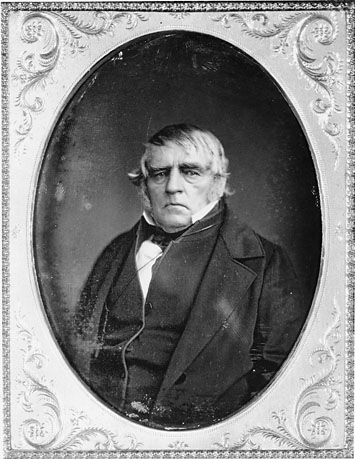
Shortly after Odgen and his men left, to escort the former captives to Fort Vancouver, the Indians learned that settlers in the Willamette Valley had destroyed Cayuse villages and property on the upper Deschutes River. Angered, they returned to the mission; piled wagons and other property into the buildings, and burned them.
The settlers’ reactions to the “horrid massacre” at Waiilatpu were reflected in the pages of the Oregon Spectator, published in Oregon City. One editorial demanded that “the barbarian murderers … be pursued with unrelenting hostility, until their lifeblood has atoned for their infamous deeds; let them be hunted as beasts of prey” (January 20, 1848).
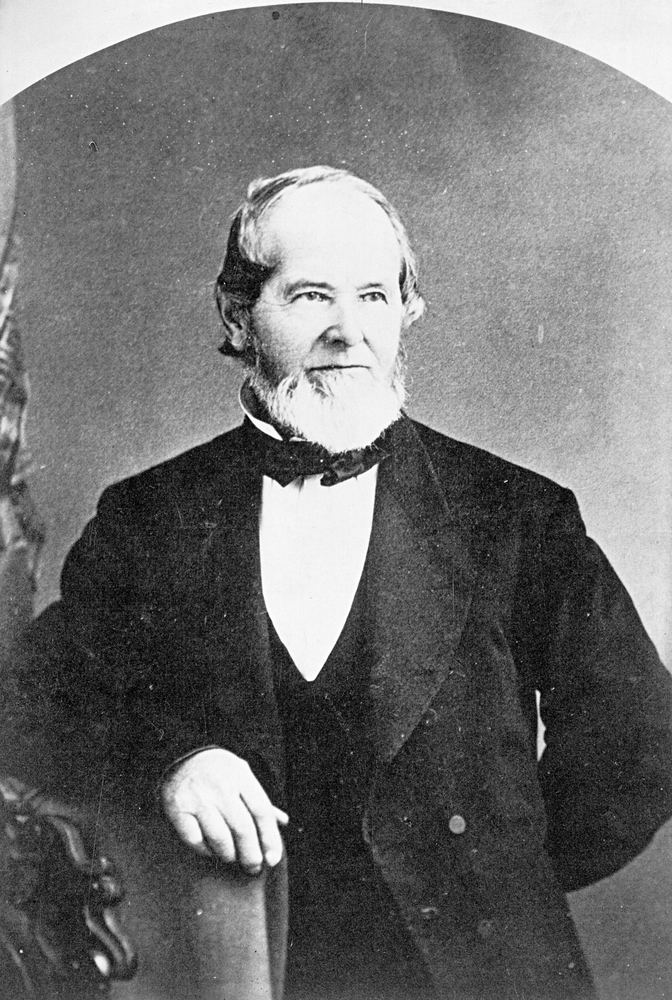
George Abernethy, recently elected as the provisional governor, called for “immediate and prompt action” to punish the perpetrators. A volunteer militia of about 500, led by Colonel Cornelius Gilliam, set out to do that in January 1848.
Dennis Saunders:
Something not commonly known is worth mentioning here. Christmas 1847, was bleak for the Cayuse prisoners. They had been held captive for nearly a month. Mary and the other women tried to make the day special for the children. Mrs. Saunders baked pies out of some dried peaches and bread out of white flour. She had carried both these delicacies across the plains in the family wagon and was saving them for a special occasion. Chief Beardy, their usual protector, was invited to the dinner and allowed to eat as much as he wanted. Old Beardy went back to his lodge after the feast but soon developed a bad belly ache. He reasoned that Mary had tried to poison him, though he couldn’t understand why. He led some war-like indians back to the emigrant house and was about to kill Mary and start his own personal massacre when an indian squaw intervened. She told the chief that he had just eaten too many of the lady’s delicious peach pies. All ended well.
Cassandra Tate:
Meanwhile, Joe Meek, who had settled near Oregon City and become a member of the provisional legislature, was commissioned to take news of the attack to Washington, D.C. He arrived in May 1848 with petitions demanding federal protection for the settlers.
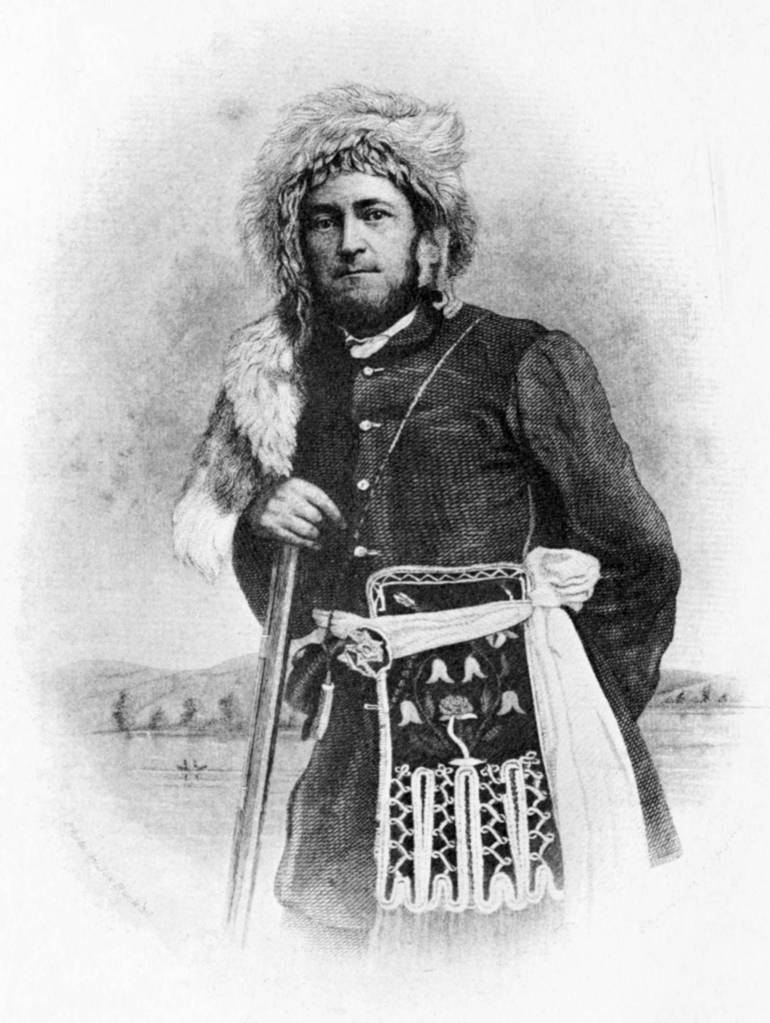
Congress responded by passing a long-delayed bill to establish Oregon Territory as a federal entity. The bill had been stalled for two years by a debate over whether slavery would be permitted in the new territory (in the end, it was not). President James K. Polk signed the measure in August 1848. He then appointed the first slate of territorial officers, including Joseph Lane, a Mexican War veteran from Indiana, as territorial governor, and Meek as U.S. Marshal.
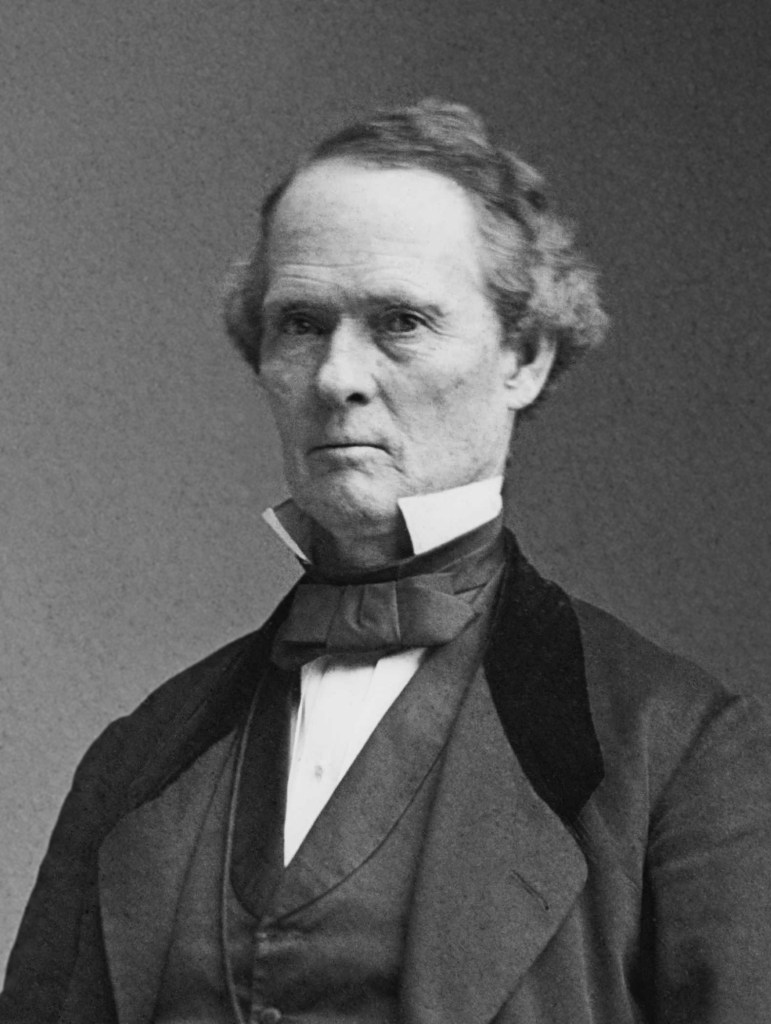
Lane arrived in Oregon City in March 1849. By then, the Cayuses and their neighbors, the Walla Wallas and the Nez Perce, had been subject to more than a year of harassment by volunteer militiamen. Lane arranged a meeting with tribal leaders at The Dalles in April, offering peace if those who were guilty of killing the whites at Waiilatpu were given up. If not, he promised the Cayuses a war “which would lead to their total destruction,” because “we could not discriminate between the innocent and guilty”. The tribe still held out for another year.
Finally, an elder known as Young Chief (Tauitau, sometimes spelled Tawatoe or Tawatoy) arranged for the tribe to surrender five men for trial on charges of murder in connection with the attack. Among them was Tiloukaikt, the “kind, friendly Indian” who had christened the Whitmans’ infant daughter as a “Cayuse te-mi” when she was born.
The five prisoners were brought to Oregon City, tried, found guilty of murder, and sentenced to death by hanging. The sentence was carried out on June 3, 1850, by Marshal Joe Meek.
Over the subsequent decades and up through the present time the phrase “Whitman Massacre” became shorthand for the brutal cost of forcing change on members of an established civilization who had little taste for their supposed salvation. At the time of the massacre the British government had ceded the land south of the 49th parallel (including Waiilatpu) to the United States but the area had not formalized a Territorial government. On August 13, 1848, largely as a result of the public outcry when word of the Whitman Massacre reached Washington, D.C., Congress created Oregon Territory.
From the time of the massacre until June 3, 1850, when five Cayuses who had voluntarily gone to Oregon City were subjected to a trial that was largely or wholly sham, and executed for the Whitman murders, volunteer militias fought the Indians. This conflict was later called the Cayuse War. The Cayuse who were hanged for the murder of Marcus Whitman (the only charge tried) all admitted being present at Waiilatpu on the day of the massacre but at least one of them and very likely more denied participating in any killing. They were not called to testify on their own behalf. Their names were Telokite, Tomahas, Clokomas, Isiaasheluckas, and Kiamasumkin.
Dennis Saunders:
After a long two-year war with the white man, five Cayuse Chiefs surrendered. They were taken to Oregon City and tried in a make shift frontier court, convicted, hung and buried in an unmarked grave. According to some historians, Mary [Saunders] would have made the best witness at the indian trial. She had testified three times before the grand jury yet she wasn’t called during the trial itself. It seems that even with everything she had been through she was sympathetic toward the indians, especially Chief Tiloukaikt, one of the five.
Cayuse Request for a Material Witness during the trial for the Whitman Massacre 1851:
Telokite one of the defendants makes oath that a certain Indian named Quishem now in the Cayuse country he thinks will be a material witness for the defendants in this case. That the materiality of said witness was not known in time to have him in attendance at this term of the court.
He expects & believes that said witness will prove that the late Dr Whitman administered medicines to many of the Cayuse Indians and that afterwards a large number of them died, including amongst them the wives and children of some of these defendants.
He expects further to prove by said witness that a certain Joseph Lewis, who resided at Waiilatpu, informed these defendants a few days before the 29 November 1847 that the Cayuse Indians were dying in consequence of poison being administered to them by the late Marcus Whitman and he had heard Dr. Whitman say that he would kill off all of the Cayuse Indians by the coming of the ensuing spring — that he would then have their horses and lands. Witness will also prove it is the law of the Cayuse Indians to kill bad medicine men.
NPS:
They were hanged in 1850, and buried somewhere near Oregon City. Before he was hanged, one of the accused named Tomahas is reported to have said, “Much like your savior Jesus Christ gave himself for you, we are giving ourselves up for our people in order to stop the Cayuse War.”
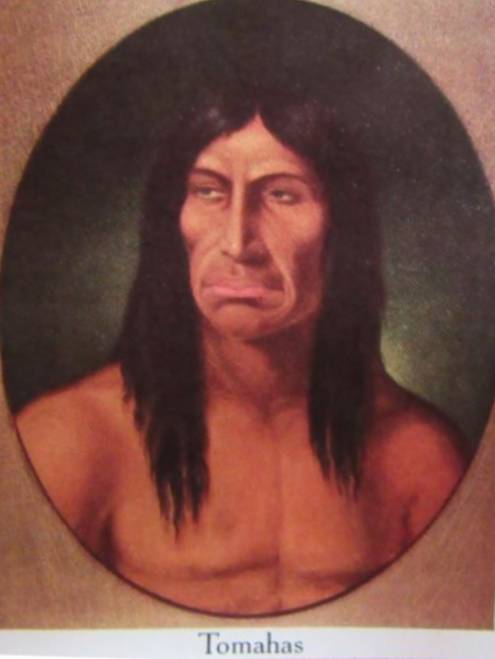
Before his execution… Tiloukaikt accepted Catholic last rites while refusing to deal with the Presbyterian missionaries. Defiant and angry, Tiloukaikt spoke on the gallows, “Did not your missionaries teach us that Christ died to save his people? So we die to save our people.”
Over the next several years the Whitman massacre came to play a central role in Americans’ understanding of and identity with the frontier experience. At the hands of late nineteenth-century romantics, Marcus and Narcissa bore the burden of martyred sainthood while early twentieth-century novelists depicted them as the quintessential pioneer family, as trailblazers with patriotic and nationalistic intentions, and as civilizers of the wild Pacific Northwest.
The “martyrdom” of both the missionaries and the Cayuse Five would have lasting repercussions that reverberate to this day.
NPS:
The Indians’ problems were not solved by the hanging. The wars did not stop. For the next generation intermittent Indian wars plagued the Pacific Northwest. The events at the Whitman Mission inspired the arrival of the United States Army in the Pacific Northwest and decades of Native American relocation to reservations.
As the Cayuses struggled for their very survival, Henry Spalding despaired of his new life among American settlers in the Willamette Valley. Despite having spent the first three decades of his life in the uniformly white small towns of upstate New York, he wrote that he “never felt at home among the whites.” Short of money and with four young children to provide for, he jumped from job to job in the 1850s, working as a teacher, farmer, school commissioner, postmaster, roving minister, justice of the peace, Indian agent for the federal government, and pontificator in local and East Coast newspapers. All the while, he ached to return to Nez Perce country, where he wanted to resume the only thing he had ever been good at: missionary work among Indians whose language he had learned, whose leaders he had trained, and whose culture he felt he understood. If he could find a way to return to the Nez Perces, he believed, his Christian followers, especially Chief Lawyer and the devout headman Timothy, would welcome him back and allow him to rebuild his ministry.

Spalding’s abrasive personality, though, stood in the way of his return, costing him federal appointments and forcing him out of jobs, which made him wild with resentment. When he pleaded with the American Board in the 1850s to send him back to the Nez Perces, several of his fellow missionaries strongly advised against it. They said Spalding was unstable. “I deem him wholly unfitted in body and mind,” wrote the Reverend Elkanah Walker, who had known Spalding since 1838. The Reverend Cushing Eells, another longtime acquaintance, said that Spalding “does not possess very largely of a cooperative disposition. . . . He has not been a discreet, prudent missionary—is often precipitous. He appears to suffer from mental or moral obliquity, which has occasioned much reproach.”
Deepening Spalding’s darkness was the death of his wife. Eliza had been a loving and moderating presence in his life. She had also been crucial to his success among the Nez Perces. Her steady temperament won trust and devotion and helped rein in her hotheaded husband. With Eliza gone, Spalding told foolish lies. He recklessly created conflict. He even turned his wife’s gravestone into anti-Catholic agitprop. “She always felt that the Jesuit Missionaries were the leading cause of the massacre,” it read. In later years, Spalding repeatedly claimed that Eliza had been murdered in 1847 by the Cayuses at the Whitman mission and that Catholic priests were “the instigators of that heart sickening & bloody butchery.” In fact, Eliza died in bed of natural causes, on January 7, 1851, four years after the massacre, surrounded by her husband and family at their home in the Willamette Valley.
As we know, when the American Board sent Spalding to Oregon, it told him, “Do nothing to irritate.” As a middle-aged minister in the 1850s and ’60s, he was, if anything, more irritating than ever. Whenever he could, Spalding published his anti-Catholic, paranoiac, and false fulminations in the newspapers. In so doing, he offended a number of very important people, in Oregon and in Washington, D.C. He falsely accused Dr. John McLoughlin, a former friend, of saying that “Doct. Whitman and Mrs. Whitman got just what they deserved” and that “Spalding ought to be hung.”
In 1851, after he was dismissed, for absenteeism, from a job as a federal Indian agent, Spalding wrote and published a series of letters that accused his former supervisor of being a crook, an incompetent, and a papist who discriminated against Protestants. One of these letters was published in a Christian newspaper on the East Coast, where it came to the attention of President Millard Fillmore. Fillmore wrote a letter in 1852 noting that Spalding’s claims were “destitute of truth.”
That assessment of nearly everything Spalding said and wrote was shared by some of the most prominent newspaper editors in the Pacific Northwest in the second half of the nineteenth century. “They all refused their columns to Mr. Spalding,” according to a letter in the Portland Morning Oregonian. “He felt it keenly. It troubled him, and he often spoke about it to his friends, and blamed the papers considerably.”
Asahel Bush, the influential editor of the Oregon Statesman, described Spalding in 1855 as “a lunatic upon the subject of Catholicism” and not “sane on any subject.”
Spalding, though, was never merely a crackpot. There was a cunning to his madness—and to the reckless accusations and fantastic claims that came out of it. He had a keen sense of the prevailing prejudices of Protestants in nineteenth-century America, writing that the “community are indignant at the conduct of the Catholics.” He spent the final three decades of his life inciting that indignation—and feeding off the fires he helped set.
Marcus and Narcissa Whitman were not dead six months before he found a way to wrap the factual particulars of their lives and murders around his most enduring fabrication: the Whitman Saved Oregon story.
It first surfaced, in bare-bones form, in the early summer of 1848, as part of an obituary printed in Protestant newspapers in Chicago and Boston. Although unsigned, “The Death of Dr. Marcus Whitman” bears Spalding’s unmistakable literary fingerprints. It includes details, phrasing, and sectarian venom he would repeat and refine in sermons, letters, lectures, and essays over the coming decades.
“In the winter of 1842, Dr. Whitman made his last visit to the United States, clothed in skins. He then performed, almost alone, the perilous journey across the plains, traversing snows and swimming their icy streams, that he might communicate important intelligence to the American Board in regard to their stations, and prevail upon his countrymen to commence at once an emigration, in order to save Oregon from the grasp of Great Britain, as well as to preserve it from the power of the Jesuits, with whose schemes he had become acquainted.”
After this tantalizing preview, the story slipped out of public sight—for eighteen years. The long dormancy of the incipient lie coincided with a depressing and often desperate time for Spalding, marred by job setbacks, personal loss, an increasingly acrimonious relationship with the American Board, and searing public condemnation from enemies he had made in the Catholic Church, the U.S. government, and local newspapers.
Amid it all, as the editor of the Oregon Statesman called his sanity into question, Spalding began to live a hidden life as the local leader of the secret Supreme Order of the Star-Spangled Banner. He became president of Preble Wigwam No. 38, the order’s chapter in Linn County, Oregon. He hosted meetings in his home, where members vowed to vote only for American-born Protestant politicians who opposed immigration and committed themselves to doing everything in their power to vilify and undermine Catholics.
For Spalding, it was a shrewd—and stealthy—political play. To be appointed to a government job in Nez Perce country, he needed help from elected federal officials and their top regional appointees. And the Order of the Star-Spangled Banner—widely known as the “Know-Nothings” because members denied all knowledge of their society—was fast becoming a formidable political force, with secret cells across the United States and in nearly every community in Oregon. Leading newspapers in Oregon encouraged the group (also called the American Party), attacking Catholics and turning against “foreign influences,” especially the Hudson’s Bay Company, which continued to operate in Vancouver.
The Know-Nothings enjoyed exponential national growth and exercised extraordinary political influence in the mid-1850s. In little more than two years, membership soared from forty-three individuals in New York City to more than a million nationwide. In 1855, the year Spalding joined, the Know-Nothings elected eight governors and more than a hundred members of Congress, along with mayors in Boston, Philadelphia, and Chicago and thousands of lower-ranking politicians. Even Millard Fillmore, after leaving the White House in 1853, became a member. No nativist political organization in the United States had ever grown so fast and achieved so much so quickly.
Then, as now, nativists derived their power from stoking and exploiting fear of foreigners, and there was plenty of fuel for that fire between 1845 and 1854. The influx of immigrants had never been higher—“more than had come in the seven previous decades combined,” according to historian Tyler Anbinder. This amounted to about 15 percent of the population, or about 2.8 million people. They came mostly from Ireland and southern Germany, and their religion was as alarming to many Protestants as their numbers: by the 1850s, most were Roman Catholics.
Spalding’s anti-Catholicism had found formal academic support in the 1830s, when he was a student at Lane Theological Seminary, in Cincinnati. His primary intellectual influence there was the Reverend Lyman Beecher, a Yale-trained Presbyterian minister with a national reputation for attacking Catholics as agents of a plot against America. Just before Spalding traveled to Oregon, Beecher wrote A Plea for the West, a book that explained how Catholic immigrants, priests, and Catholic schools were attempting to steal away the western frontier. When Spalding later claimed that papists had instigated the killings of the Whitmans and schemed with the British to take Oregon, he was not being particularly inventive. Opinion makers like Lyman Beecher had trained Spalding—and Protestants throughout the United States—to perceive the world through the nativist lens of a papist conspiracy. As seen through that lens, Catholics were hell-bent on destroying the ethnic and religious homogeneity of the country—and it was a seemingly commonsense assumption that they were trying to steal the West for the pope. …
Soon after the Whitman killings, a petition to expel Catholic clergy from Oregon was introduced in the territorial legislature. It failed, but seeds of anti-Catholicism found fertile soil, fertilized year after year by Spalding’s sermons and by published claims that priests had played a role in the Whitman Massacre and that Catholics had conspired with the British to try to steal Oregon from Protestant America.
[O]ver the past century and a half the Whitmans have been credited and/or blamed for a dizzying array of stuff: The opening of the Oregon Trail itself; the fact that the U.S. rather than Great Britain ended up with full title to the Oregon Territory; the rise of “Manifest Destiny” as a motivating belief on the frontier; and even America’s loss of rights to a cod fishery off Newfoundland. Their martyrdom has also been used, throughout the years, as “evidence” of a moral superiority of “white civilization,” to justify seizing Indian lands and exiling their former occupants to strange, faraway reservations.
It was pressed into the service of anti-Catholicism when a creative, psychotic Calvinist preacher fabricated a very wicked plot by “Papists” (a slur for Catholics) to encourage the Indians to attack Protestant settlers.
How the Whitman massacre become mythology
[A]mong the Protestant missionaries of Whitman’s organization, Henry Spalding… was piecing together a thunderous whopper using carefully selected bits of the Whitman story, generously leavened with speculation and plenty of straight-up fiction. It’s not entirely clear what his goal was in doing this. In part, he was settling some personal scores. It was also religious prejudice. A fervid anti-Catholic, he bitterly resented owing his life to that priest who warned him to run for his life after the massacre. So out of the fairly boring series of events that led to the massacre, Spalding wove a whopper that would literally change the world.
Here is the story he had when he finished:
A tall tale is told Dateline: Fort Vancouver, November 1845: St. Marcus Whitman of Waiilatpu is dining with those treacherous English pig-dogs at Fort Vancouver when word arrives that a small group of Canadian settlers from Manitoba has just arrived. There is much rejoicing, and a young priest forgets himself and crows, “The country will soon be ours!”
Hearing this, Whitman, as soon as he can courteously disengage, runs for his horse, vaults into the saddle and gallops away into the night. Arriving back at his mission house, he hastily puts together his traveling kit. When a weeping Narcissa begs him to wait till spring to travel, he is unmoved by her tears. “I must fare forth unto Washington D.C. and warn our noble President of this perfidious National peril!” he cries as he gallops away in the snow. “There is nary a moment to waste!”
He arrives back east starved and frozen, still clad in ragged buckskins, just in time to stop President Tyler from signing a deal that would have traded away Oregon, Washington, Idaho, and part of Montana to Perfidious Albion in exchange for rights to a cod fishery off the coast of Newfoundland.
St. Marcus paints a glowing picture of the glorious promise of the Oregon Country, convincing the president to scotch the codfish swap. Then he convincingly argues that Oregon will be forever lost to those scheming, crafty Limeys if America does not act fast. Only a great flood of emigrants pouring across the continent and settling in the Oregon Country can stop the British and their “papist” allies from stealing Oregon for themselves.
Despite the well-intentioned obstructionism of Secretary of State Daniel Webster (who really wants that cod fishery), President Tyler leaps to his feet, seizes the presidential bugle and blows a stirring call to arms. Thus encouraged, St. Marcus sets about in a patriotic frenzy of pamphleteering and public speaking to assemble a mighty armada of prairie schooners crammed with red-blooded American settlers; and next thing you know, St. Marcus is returning in triumph at the head of this massive covered-wagon army, leading thousands of rugged American pioneers to Oregon like a latter-day Moses, foiling the machinations of the British pharaohs and their treacherous Native allies. And that’s how Marcus Whitman saved Oregon … according to Henry Spalding.
It’s easy to see how appealing this myth was for the Protestant American settlers of the day. After all, it’s quite true that the British had been hoping to acquire clear title to Oregon. It’s also true that the wagon train Whitman joined for his return trip was the first big wave of covered wagons that poured over the continent on the Oregon Trail. And what had been a trickle became a torrent of American settlers who quickly made any British claim on Oregon impossible to pursue … and brutally pushed aside the Indians everywhere they went.
So for the beleaguered American settlers in the Oregon Country, it must have looked — in retrospect at least — a lot like a case of Whitman bringing the cavalry. When, shortly after his return, Whitman died in the massacre, it wasn’t hard to interpret that as influenced by British vengefulness. The British, as traders rather than settlers, had much better relations with Indians than Americans did.
The myth got wings and percolated deep into mainstream history in the late 1800s after Whitman College got involved. Whitman College is today one of the best small private liberal-arts colleges west of the Mississippi. But in 1894 it was teetering on the brink of insolvency. A new college president, Stephen Penrose, learned about Henry Spalding’s whopper and bought it hook, line, and sinker. He then spent the next 40 years using it as a fundraising story. In doing so, he saved the college. But he also injected this phony story into every middle-school American History textbook in the country. And it wasn’t until after the turn of the century that the truth came out.
Even then, the myth was so appealing to Golden West boosters that it lingered for decades. This was especially true in Washington State, where Whitman was revered like a patron saint clear up into the 1960s. In 1953 the state commissioned two identical bronze statues of Whitman, in buckskins with a Bible under his arm. One was placed in the foyer of the state capitol in Olympia and one was sent to Washington D.C.
One place where the myth provided a constant source of frustration was the Indian community, especially the Cayuse tribe. Branded by the myth as a pack of renegade murderers, Cayuse members found themselves shunned even by other tribes, who feared antagonizing the non-Natives and making things even worse for themselves. And for the better part of two centuries after that, the Cayuse Tribe could not catch a break.
In the two world wars the Army came for their horses and pretty much wiped out their population of the legendary ponies that bore their tribal name, requisitioning them for war duty. By the time of the Eisenhower Administration, with its mania for tribal “extinguishment,” the tribe really did look like it was about to become extinct. But it didn’t.
In recent years, the collapse of the Golden West triumphalist mythology in general and of the Whitman martyrdom myth in particular has come as a welcome relief to them. And the success of the Wildhorse Resort and Casino in Pendleton has finally given them a taste of the life most of us nontribal members take for granted. It’s a welcome change, but it was a long time coming. Now if only we could find a breeding pair of their famous horses, and bring Cayuse ponies back.
In recent years there has been a decided movement away from the Marcus Whitman myth. The statue in D.C. was pulled in 2021 and given to the city of Walla Walla. A copy of the statue given to Whitman College in 1991 was tucked away in a seldom-visited corner of campus, close to the railroad tracks. Faculty members joked that maybe someone was hoping it would get run over in a derailment.
And despite their newfound reclamation of some status and relative prosperity, the surviving members of the Cayuse tribe still feel the sting of having been branded as a pack of lawless murderers, the “bloodthirsty savages who martyred an innocent holy man.” Even today, nearly 200 years later, it’s not a topic they much care to make chit-chat about. …
For good and ill, the Whitmans’ impact on the world after they died has utterly dwarfed what they were able to accomplish while they were alive. And because those impacts involved both winners and losers, the subject of the Whitman Mission and the Whitman Massacre is still a charged one even today, and the facts can be hard to separate from the wishful thinking and mythologizing that has been done over the years. …
But stories, legends and myths are their own kind of history. This myth, we can now clearly see, was a tissue of lies and half-truths crafted for propaganda purposes, but it profoundly shaped Oregon and the West. The damage it did can’t be undone now… the best we can do is, having set the record straight, use it as a lens to better understand the swindlers who crafted it, and the people who over the years got swindled into using it to make sense of their world.
Blaine Harden:
Nativism and bigotry in Oregon would endure well into the twentieth century. By majority vote, they were enshrined in the new state’s constitution. A Black exclusion provision made Oregon the only free state admitted to the union with a constitutional clause banning African Americans from entering the state or owning property there. Although rarely enforced, the law effectively kept Blacks out. In 1860, a year after it became a state, there were just 128 African Americans in Oregon. The law wasn’t removed until 1926. The state population is still just 2 percent Black, and Portland—for all its progressive bona fides—remains the whitest of America’s big cities.
NPS:
Today, Oregon City is a special place for people from all walks of life. Some descendants of Indigenous people describe this place along the Willamette River as the physical realization of their oral histories and stories. This is the end of the historic Oregon Trail. The place of immigration, relocation, the American Dream, the trials of the Cayuse Five, new beginnings and rock bottoms. The history of Oregon City is a messy one, and the story of many peoples’ relationship with a place. By knowing our messy history, we can better understand who we are.

 Brian Hildebrand Land
#/media/File:Joseph_Warren_Revere.jpg)
Leave a comment