November 9th: Olsztyn
Olsztyn is one of my favorite places to pop in for a visit in Poland. It’s just too bad I always seem to lose something in the journey. When I left the city in 2023 I left my “Mojo” in the milkbar, that is, I forgot my tote at the diner. I had to call them up and try to describe it on the phone like “uh, it is a bag with rainbow colors, a many colors bag,” forgetting that it said “Mojo” on it until something finally clicked over the din of the diner and he said, “Oh, Mojo!”
There was no amusing regaining my mojo moment this time. Just a quickly dawning awareness that I did the thing I told myself not to do after an early sunrise morning – leave my backpack on the overhead shelf on the first train. It wasn’t until the end of the 2nd train in the journey that I looked up at the empty shelf above me and realized what I’d done.
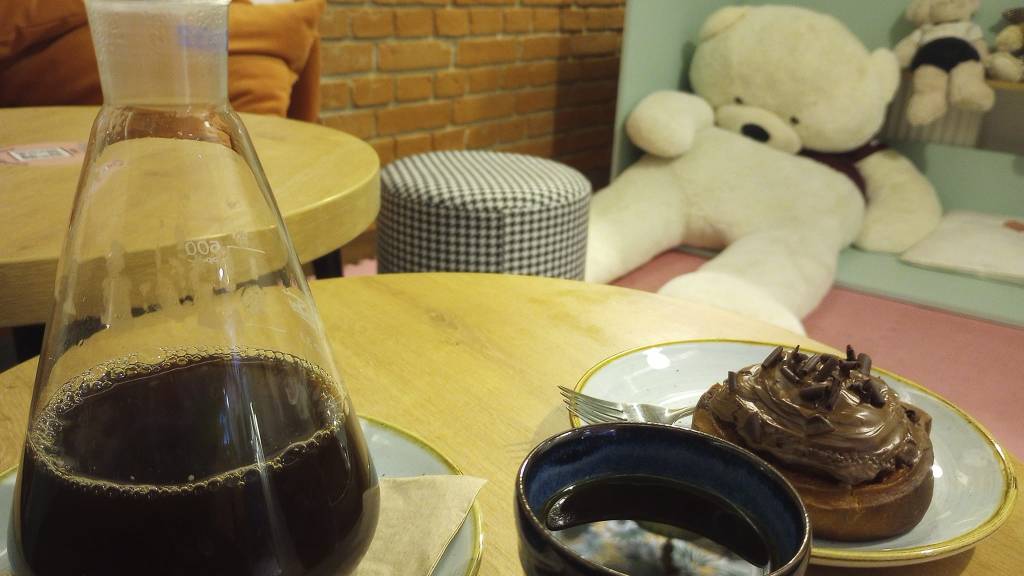
I got into town and collected myself with a cup of coffee and a sweet treat at White Bear Coffee to get my blood sugar up. It was quite busy, but I squeezed into the corner of the playroom and got myself together to figure out the path forward. Eventually a kiddo and her dad came in and shared the space with me.
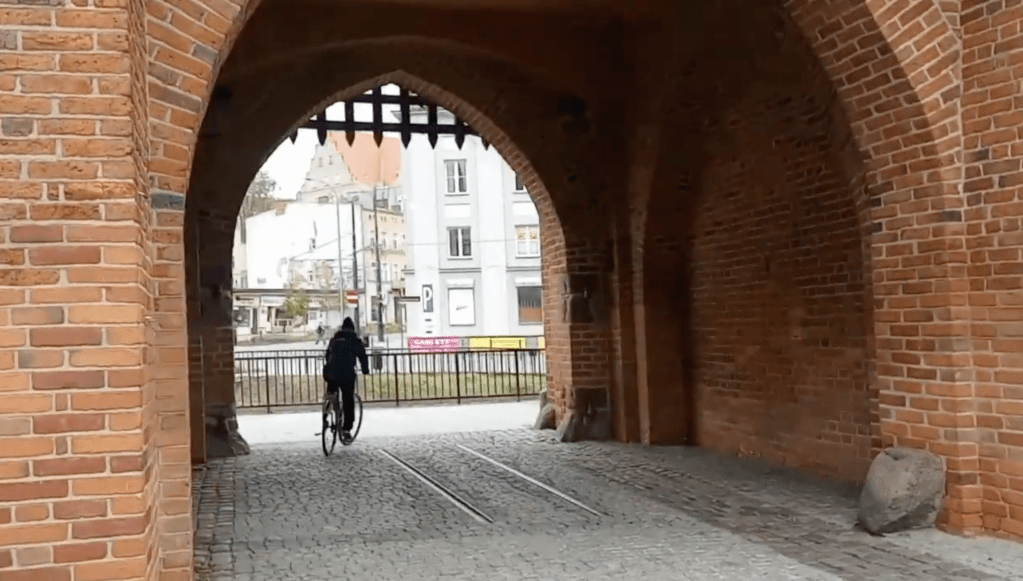
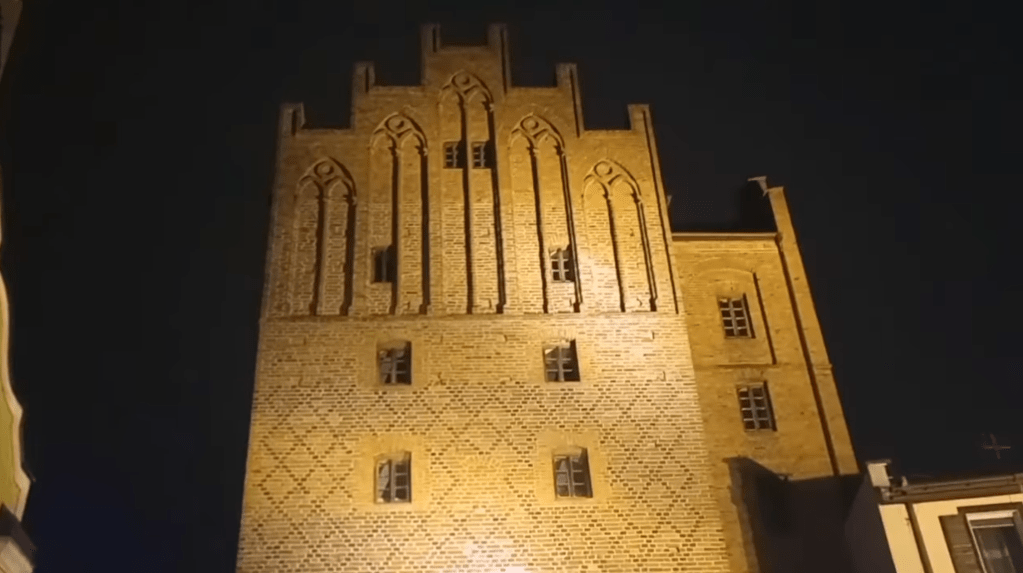
If it had been a single connection I suspect I could have pinned down my train’s scheduled return and hopped on and grabbed it before hopping off at the next stop. But, this far down the line… I added up my losses and realized I’d hung on to everything I needed to make it through the journey. I just needed a couple cords and some clothes. Luckily there was an electronics shop right around the corner of my lodging at Hostel Wysoka Brawa, the hotel built adjacent to the old town gate.
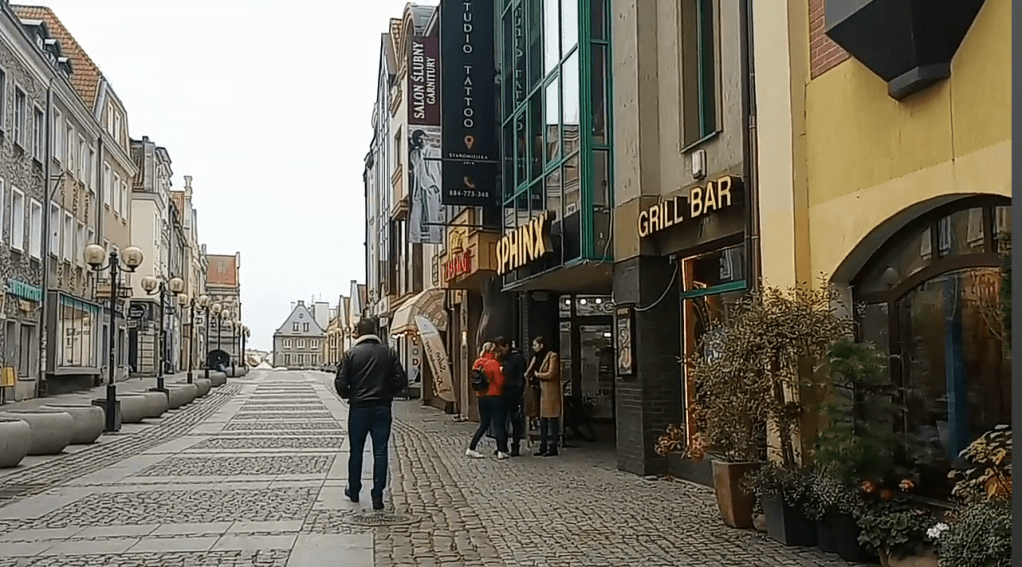
Also lucky was the fact that a thrift store was a 10 minute bus ride away and still open for another hour on a Saturday. Pretty much everything that isn’t a big chain closes on Sunday in Poland, church being more important than commerce. Even a lot of big stores observe the Sabbath.
I made my way to the store and discovered it was really mostly women’s clothing, but I found a couple pairs of sweatpants and some tights and shirts and called it good. It wasn’t as thrifty as I was hoping, but I was almost back in the game.
I grabbed a kebab around the corner and then found a mall nearby and bought a $20 backpack. Now I was in it to win it. My total cost was just under $90 by the time I got toiletries replenished. It might have been worth spending a whole day chasing down that train, but… I don’t think so.
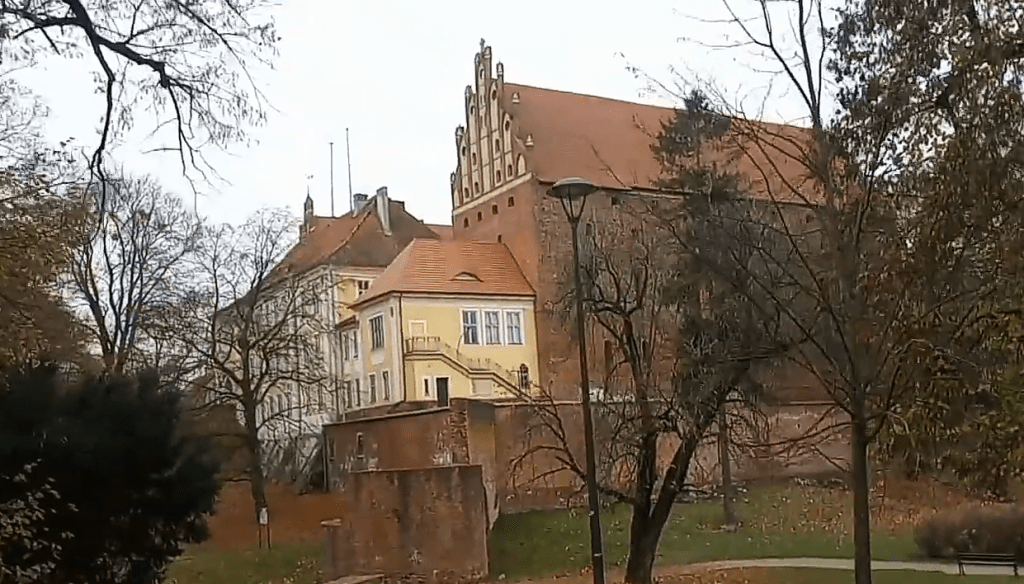
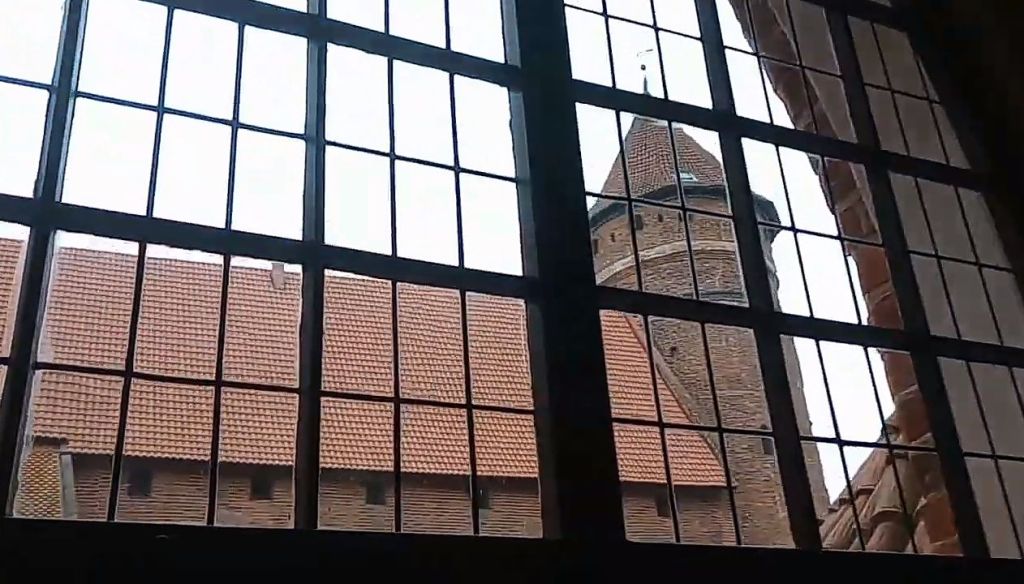
While many stores and restaurants close on Sunday, museums tend to fall outside the stricture of keeping the day for church and prayers, often being closed on Mondays instead. This meant the next morning I was able to get inside the castle museum and enjoy a fascinating look at the history of the region.
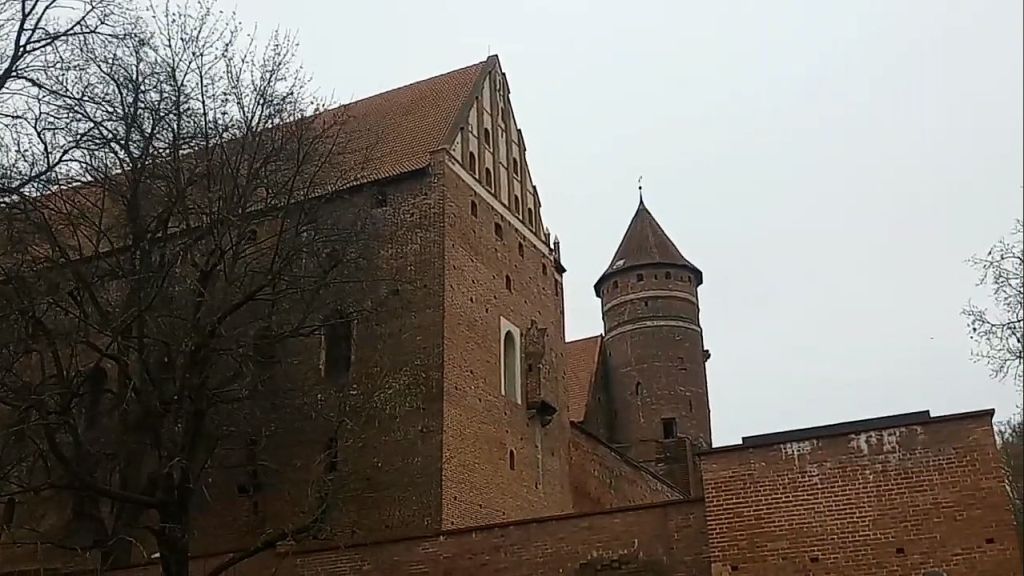
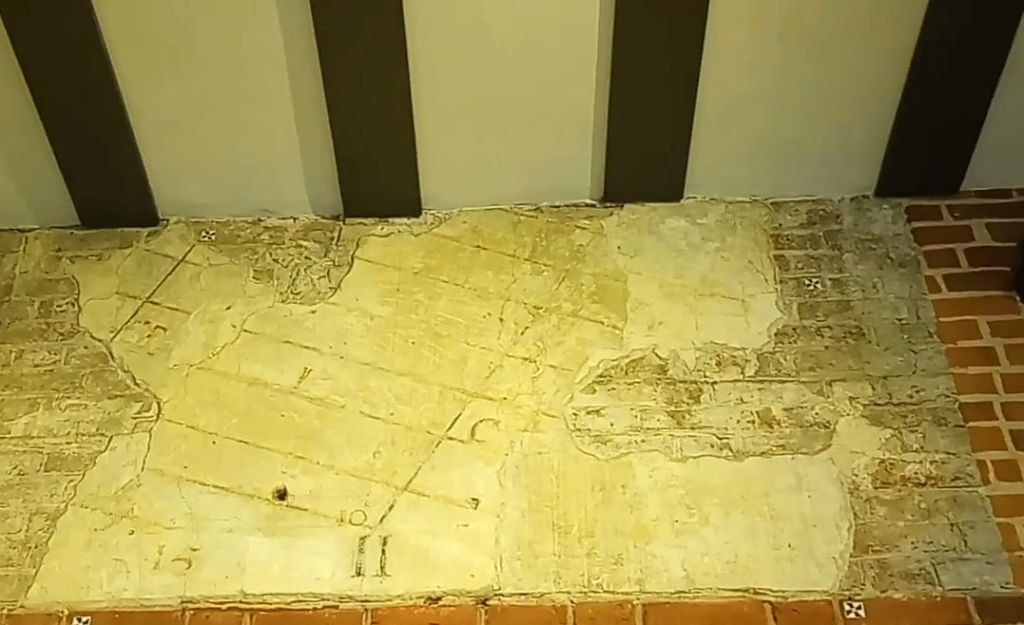
The castle’s biggest claim to fame is the calculations that Nikolas Copernicus charted on its walls, mapping out and testing his heliocentric theory and leaving behind a tantalizing glimpse into that thought process.
Not only that, but he successfully organized the defense of the castle by Polish forces against Teutonic invaders while he resided there. He also organized waves of Polish settlement to the region. A scholar and a statesman, a Renaissance man in a town that was a hub for Poland’s blossoming era of glory.

Almost a hundred years later the town was not so lucky, when, in 1710, epidemics of bubonic plague and cholera wiped out nearly the entire population. At this point the entire Polish-Lithuanian Commonwealth, ravaged by wars and disease, was heading towards collapse. Poland’s golden Renaissance era was over, and the era of imperial domination was about to begin.
Another century later, after the country had been carved up by surrounding empires, Napoleon’s forces arrived in Olsztyn, where the French army clashed with the Imperial Russian army. Napoleon himself was there to see the Russians retreat from the superior numbers of his forces. His promise of liberating Poland would fall apart when he wasted away his army invading Russia.
It was still another century before the foundation stone of Olsztyn’s church on the hill, Our Lady Queen of Poland and the Archangels Michael, Gabriel and Raphael, was finally laid. Built by Prussian authorities in the neo-gothic style so prominent at the turn of the century, a style that deceives the eye by harkening back to the gothic churches of the medieval era, it’s an impressive and peaceful sanctuary.
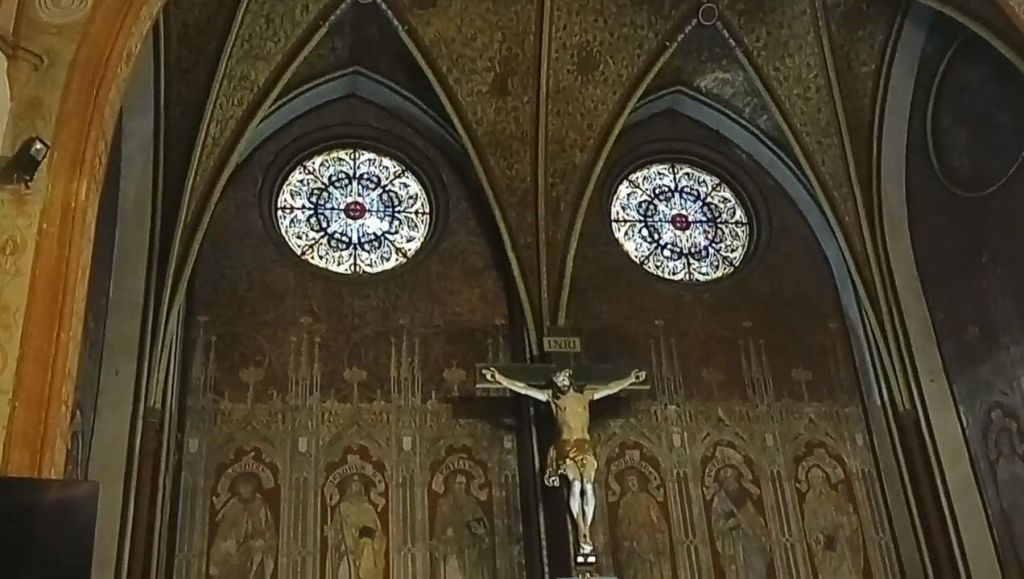
Not typically open except for services, the best way to get a peak is to show up around either end of a mass, while people are gathered for devotion but not actually engaged in observing the rituals that come with Catholicism. I’ve gotten caught up in Polish masses before and had to fake my way through and it’s not a comfortable feeling at all. Plus it’s hard on my wobbly knees to stand and sit repeatedly. I do love to pay my respects to the saints though, and say my prayers for peace and grace.

I don’t know how long it took to construct the church, but I suspect it was still underway when the first world war broke out. By the end of that bloody conflict, Poland would finally re-emerge as a sovereign state.
Olsztyn would be a fascinating town to park a time machine in and just watch the centuries go by.
On November 11th, 1918, in the wake of World War I, after 123 years of domination by the German, Austro-Hungarian, and Russian empires, Poland regained its statehood. General Józef Piłsudski was named Chief of State; he is still regarded as a hero and father of the modern nation, despite much controversy over his later governance. Poles across the land celebrated their nation’s triumphant return.
For Olsztyn, called Allenstein under German rule, its fate was complicated. Its borders fell under what had long been historically considered “East Prussia.” According to articles laid out in the Treaty of Versaille, this region would be allowed to decide whether it rejoined greater-Poland or remained Prussian territory.
In 1920 the East Prussian plebiscite was held to determine the region’s fate. The German authorities organized massive propaganda campaigns, and actively persecuted pro-Polish demonstrations, sometimes violently. A German militia attack led to the beating and subsequent death of Polish activist Bogumił Linka. The plebiscite produced 16,742 votes for Germany, and only 342 votes for Poland. The official outcome remains controversial today, with accusations of voter intimidation seeming to be backed up by the reports of mobs and militias.
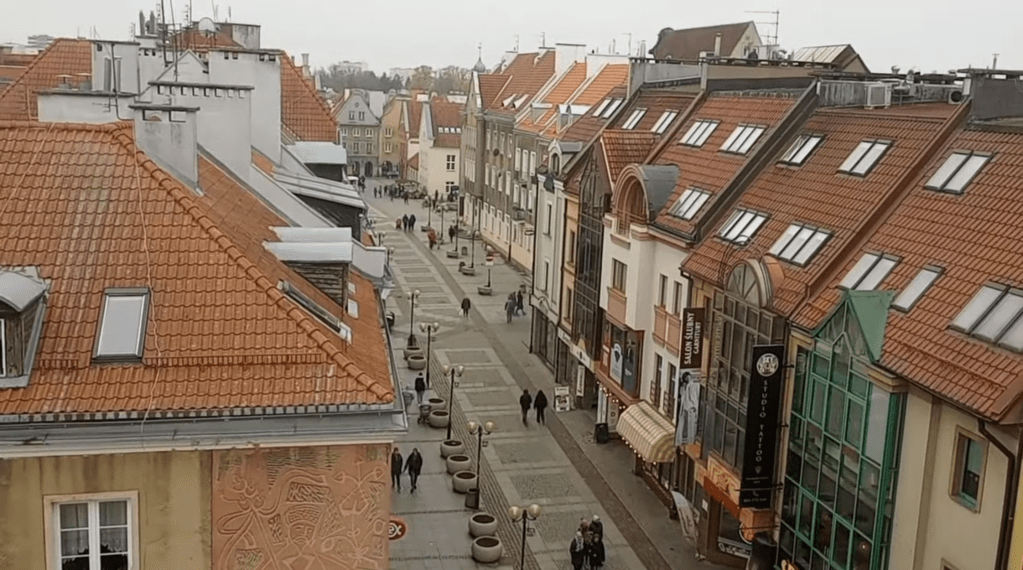
As a part of the German empire between the two world wars, Allenstein witnessed the Nazi rise to power firsthand. Persecution of Jews and Poles began shortly after the Nazis seized power in Germany in 1933; this only increased in the years that followed, with martial law being declared in the months leading up to the war.
After the Nazi invasion of Poland in 1939, the pre-war Polish consul in Allenstein was imprisoned by German authorities, sent to different concentration camps, and then executed. Teachers were deported to the Dachau concentration camp. The Nazis established forced-labor camps in the city, and, in the psychiatric hospital, Nazi doctors conducted medical experiments, killing at least 5,000 people.
When the Soviet Red Army approached to liberate the city in 1945, Allenstein’s fate only grew worse. “Liberate” is probably the wrong word to use, with “brutally conquer” perhaps being more appropriate. It was, after all, German territory. Much of the Germanic population fled the approaching Red Army, but when the Soviets arrived they paid little attention to who was on what side of the population.
Those who remained when the Red Army arrived were mostly Polish, but the soldiers made no distinction between them and the German authorities that had controlled the region. Rape, murder, and looting were common and indiscriminate. The remaining inmates at the psychiatric hospital were all murdered by the Soviets.
I read a paper once that explored the amount of sexual violence perpetrated by the Red Army as they advanced on Germany. Part of it, they claimed, was the Soviet authorities’ complete intolerance of any kind of brothel operations servicing the needs of the fighting men. It’s hard to imagine, but the European allies were quite tolerant and accepting of the oldest trade known to man being readily available for its fighting men. For Soviet authorities the idea was abhorrent, an example of the degradation and exploitation of capitalist society. With the Red Army forces having pushed so far in liberating their own lands and seeing the devastation and horror perpetuated by the Nazis, they were a half-mad mess and out for revenge and release of any kind.
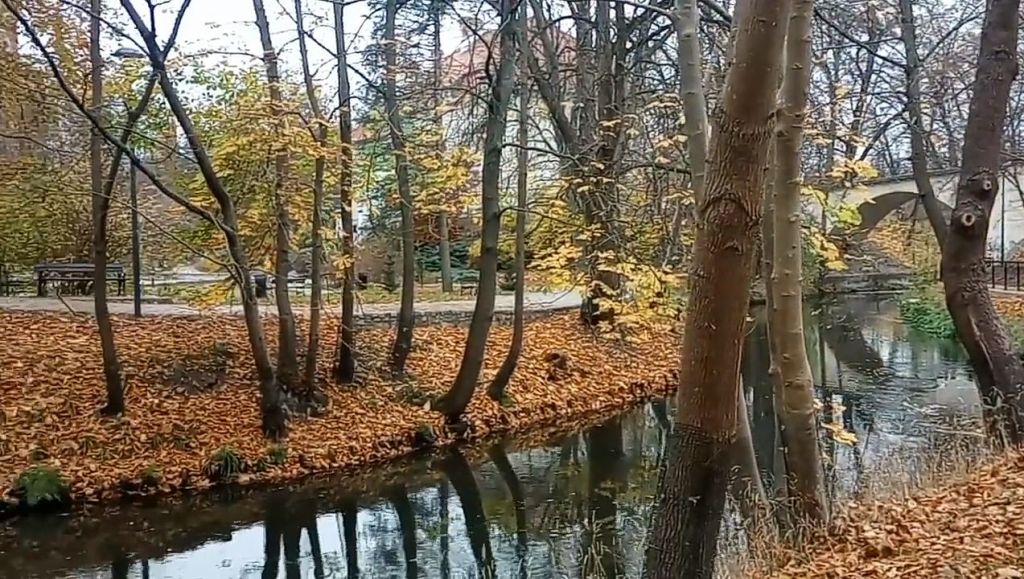
There were still German settlers left in the region, but after the Potsdam Conference they were rounded up and expelled. I’d learned of that history before, but what I hadn’t reckoned with was running into one of the train cars used in that process. Yet, there on the edge of Olsztyn’s central park, was a disturbingly iconic looking car, the same kind of “cattle car” parked outside of the Auschwitz camp. A sign next to the car confirmed that yes, this is one of the German-designed train cars used for human transport, despite its more livestock-worthy looking appearance.
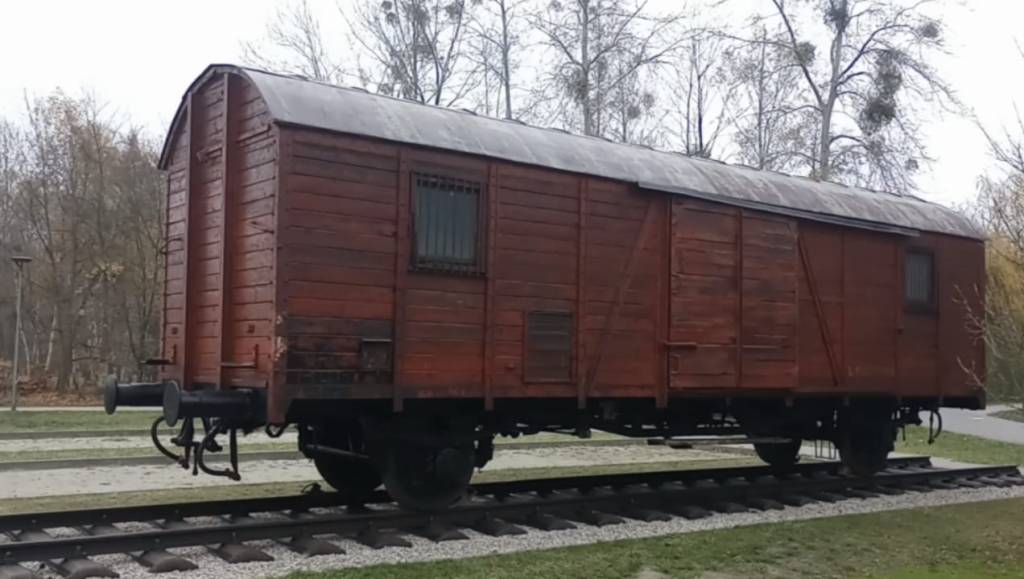
Rather matter of factly, the plaque then confirms it was used for the relocation of Jews by the Nazi authorities, usually to death camps; it finally says that it was later used by Allied forces in the post-war relocation of the German population out of Poland.
This I had never imagined. We were always taught to see the inhumanity in humans crammed into cattle cars, but apparently we used the same infrastructure when it suited our needs. Granted we didn’t oversee their deportation to certain death, but it’s still a shocking bit of moral relativism to reckon with.
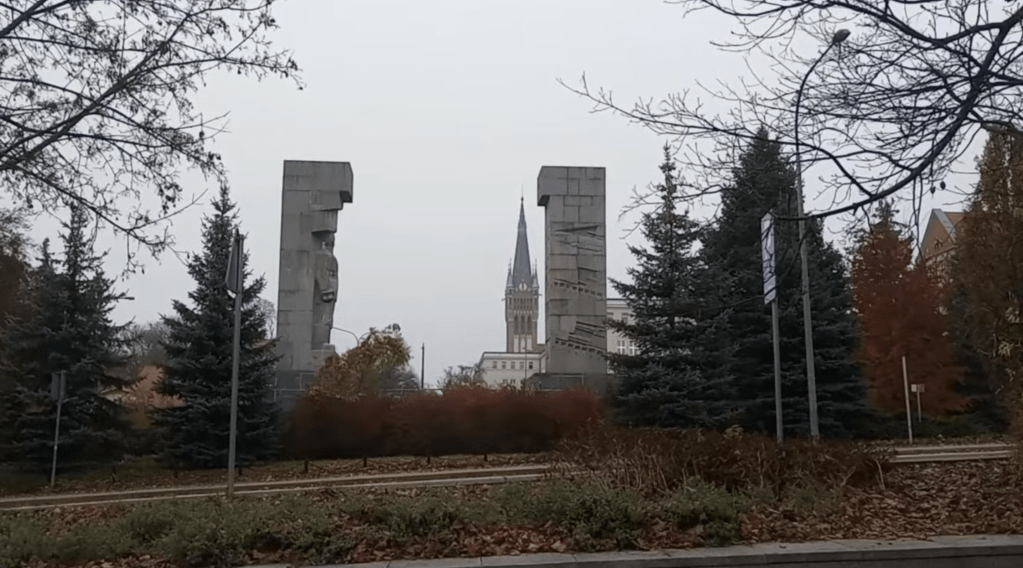
The other side of the horror of war being reckoned with lies at the top of the hill above the park’s entrance. Behind a chain link fence stands the Monument of the Liberation of Warmia and Mazury. For how long we shall see; it is one of those Soviet-era monuments to the glory of the Red Army, this time as liberators of the East-Prussian regions. As you can imagine, this is hard to reconcile for those who remember or are the least bit aware of the true history of that “liberation.” Like many Soviet monuments around the world, particularly since the invasion of Ukraine, vandals have consistently painted red “blood” on its hands. I suspect by the next time I return to Olsztyn it will be gone. Maybe some day they’ll put some picnic tables where it austerely stands.
In the day leading up to Independence day celebrations I decided to check out one of Olsztyn’s multiplexes, where “A Real Pain”, the new Jesse Eisenberg film set in Poland was playing. It was a fascinating experience to see a movie about American characters grappling with the events of the Holocaust and how it reverberates in their family history, with a Polish audience in a Polish city with a real lived trauma of those horrors. It helped that the film itself was so wryly observed and humane, with Kieran Kulkin’s performance as the beloved cousin-from-hell with a heart of gold almost stealing the show, true to the nature of his character. The reactions and reflections of his energy in the people he encounters makes their performances equally compelling in the end, with every moment feeling real and earned. Months later I still reflect on those characters and ponder their fates…
My final Olsztyn escapade was a trip to a club that was adjacent to the old castle. I’d seen the flyers on the door when I first came to town and made note of the fact that a Deep Purple mk 1 tribute band was playing. I had to remind myself where the delineation between mk 1 and mk 2 were, forgetting they’d had a different vocalist before Ian Gillian stepped in to set the classic band “In Rock”, as it were.
Hush was the only song I could recall from the early group, but it had been haunting me the entire stay there so I figured it would be worth a night out. Mandrake Route, as the band was called, really brought a heckuva great show, made all the better by a total lack of “Smoke on the Water”, and random jams that would turn into Dick Dale and Link Ray songs between keyboard shredding.
It was fantastically awesome, climaxing with a version of Hush that brought itself back from the dead with an audience and singer-driven acapella encore and the guy next to me rocking out so hard when the band kicked back in he sent his table crashing forward, causing all manner of chaos. My only complaint, in fact, it was the overcrowding of those tables, leaving little space to rock out full bore, and that was the kind of group that demanded such rocking, whether there was room for it or not. Sometimes the tables just have to get turnt.
When I tried to go to bed like a normal person after a hard rocking good time I realized no one else had the same plans; the reveries of Independence Day began the night before, I soon realize. By the time I gave up on sleep and decided to join the celebration I discovered there was no way for me to leave the premises. I was locked in for the duration.
It seems like I ended up with a few hours of sleep, but I remember being up early struggling to find coffee. That’s what led me through the central park, where I stumbled on that train car. Then I found a McDonalds open and got some coffee and breakfast there. I feel like it was only 8ish by that point.
I tried to get a fresh peep in the cathedral, but it was already in service and I didn’t want to interlope. I’d already caught a good glimpse of it last year, and it’s a real medieval beauty.

In the end, I did a decent job of pulling myself together in Olsztyn. I managed to find a store with some tasty baked goods on the way out of town, and headed on back to Warsaw, feeling like a champ.

 Brian Hildebrand Land
Leave a comment